
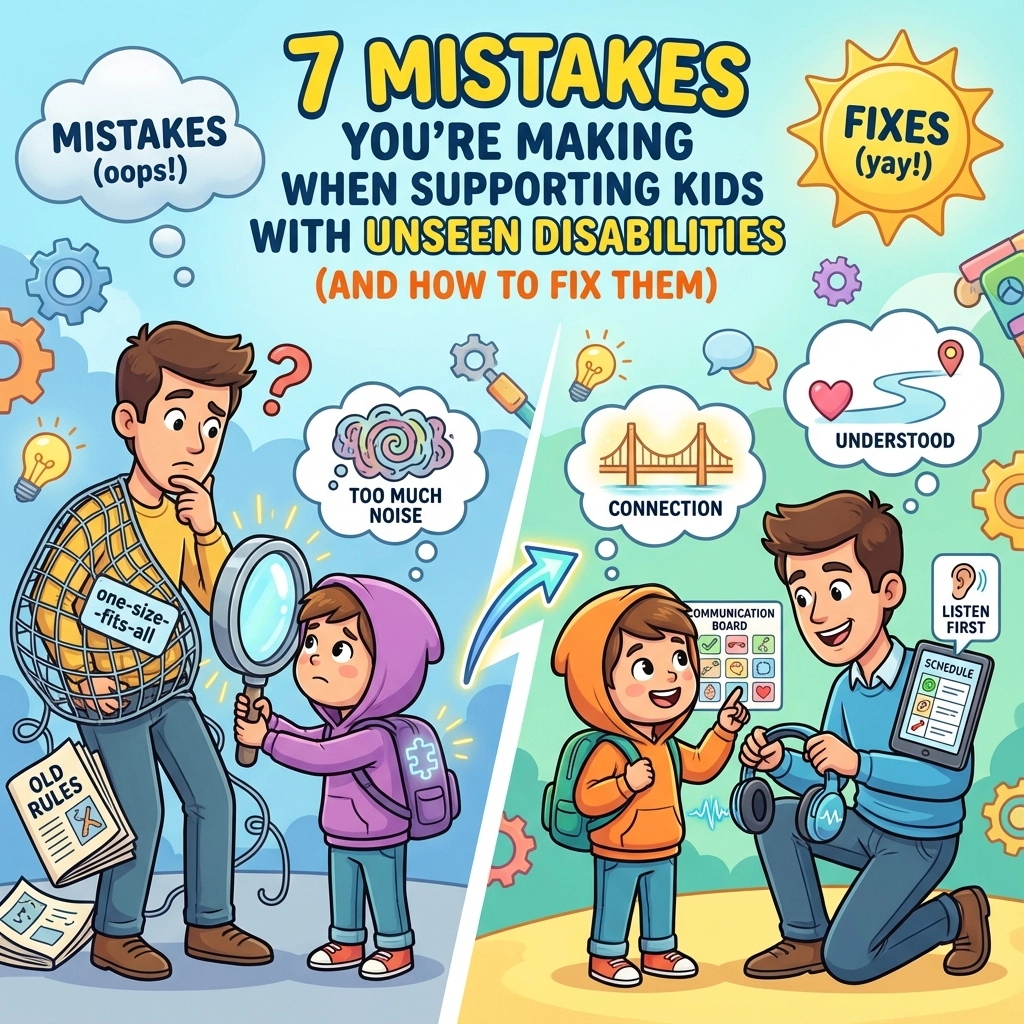
Not Recognizing Individual Learning Differences: “Every Child’s Brain Is Unique”
It’s tempting to think, “I know my kid, I’ve seen what works in the past.” But with unseen disabilities (like ADHD, dyslexia, or sensory processing disorder), the roadmap isn’t always obvious. Many parents, and even teachers, fall into the pattern of assuming what works for one child will work for all.
“One of the biggest mistakes is lumping kids together based on a diagnosis,” says Amy R., special educator and mom of two neurodiverse kids. “What helps my son with ADHD actually makes things harder for my daughter with autism, even if both look ‘invisible’ from the outside.”
The Fix:
- Invest time in learning how your child’s specific disability affects executive function, social interactions, and emotional regulation.
- Ask your child directly what helps, or what makes things harder.
- Use technical terms openly: Talk about “processing speed,” “working memory,” or “sensory thresholds” so your child hears that these differences are normal within your family vocabulary.
Parent Tip: Try family meetings where everyone gets to share what school or play situations feel easiest or hardest, swapping ideas instead of giving rigid instructions.
Letting the School Be the Sole Decision-Maker: “You Are Your Child’s Best Advocate”
It can feel intimidating sitting in an IEP meeting (Individualized Education Program) where educators use terms like “504 accommodations” or “least restrictive environment.” Parents sometimes freeze, thinking the professionals know best, or fearing they’ll come across as pushy.
“I remember my first IEP meeting,” recalls Xavier T., parent advocate. “I sat back and nodded, not wanting to rock the boat. But after my son came home frustrated over missing supports, I realized I needed to ask way more questions.”
The Fix:
- Show up to meetings prepared, with notes and questions. Don’t be afraid to ask for explanations of every term.
- Request copies of reports ahead of time. Write down your understanding of goals so everyone’s aligned.
- Involve your child when possible, in goal-setting or review.
“When parents are informed and involved, schools know you’re watching, not in an adversarial way, but as a teammate,” adds intervention specialist Sarah L.
Focusing Only on the Here and Now: “Long-Term Planning is a Lifeline”
Sometimes survival mode takes over. You’re just thinking: Can we get through this week? But unseen disabilities are lifelong journeys, not day trips. It’s easy to overlook social skills, emotional wellness, or independent living needs in favor of short-term academic checkboxes.
“We spent years firefighting homework meltdowns,” shares Meghan F., mother of a teen with dyslexia and anxiety. “But we never thought about job skills or navigating public transportation until high school, then panic set in.”
The Fix:
- As early as elementary school, think big picture: What might your child need in high school and adulthood?
- Set periodic calendar reminders (use a digital calendar, visual schedule, or planner, whichever suits your family/child) to review growth in all areas, not just grades.
- Talk with your team about “transition planning” (preparing for each next step before it’s urgent).
It’s not about stressing over the future, it’s about building confidence for what’s next.
Overlooking Documentation: “If It Isn’t Written Down, It Didn’t Happen”
Many families and teachers rely on verbal agreements, reassurances, or good intentions. But as kids move from teacher to teacher or school to school, vital information slips through the cracks.
“No one remembered the therapist’s recommendations because I never followed up in writing,” admits Leila N., parent of a child with a non-verbal learning disability. “By middle school, his supports basically vanished.”
The Fix:
- Keep a dedicated “disability folder” with assessment reports, important emails, and meeting notes.
- After every meeting, send a quick recap in writing (‘Thanks for meeting today, here’s what we discussed and what’s next…’).
- Encourage your child’s specialists to document even minor observations. Over time, this becomes a powerful advocate’s tool.
This isn’t just about compliance, it reduces anxiety, ensures continuity, and makes you feel in control, even when life is unpredictable.
Photo: A child holding the XTERMIGATOR KIDS inclusion flag, backpack ready, proud to show “A disability is not an inability.”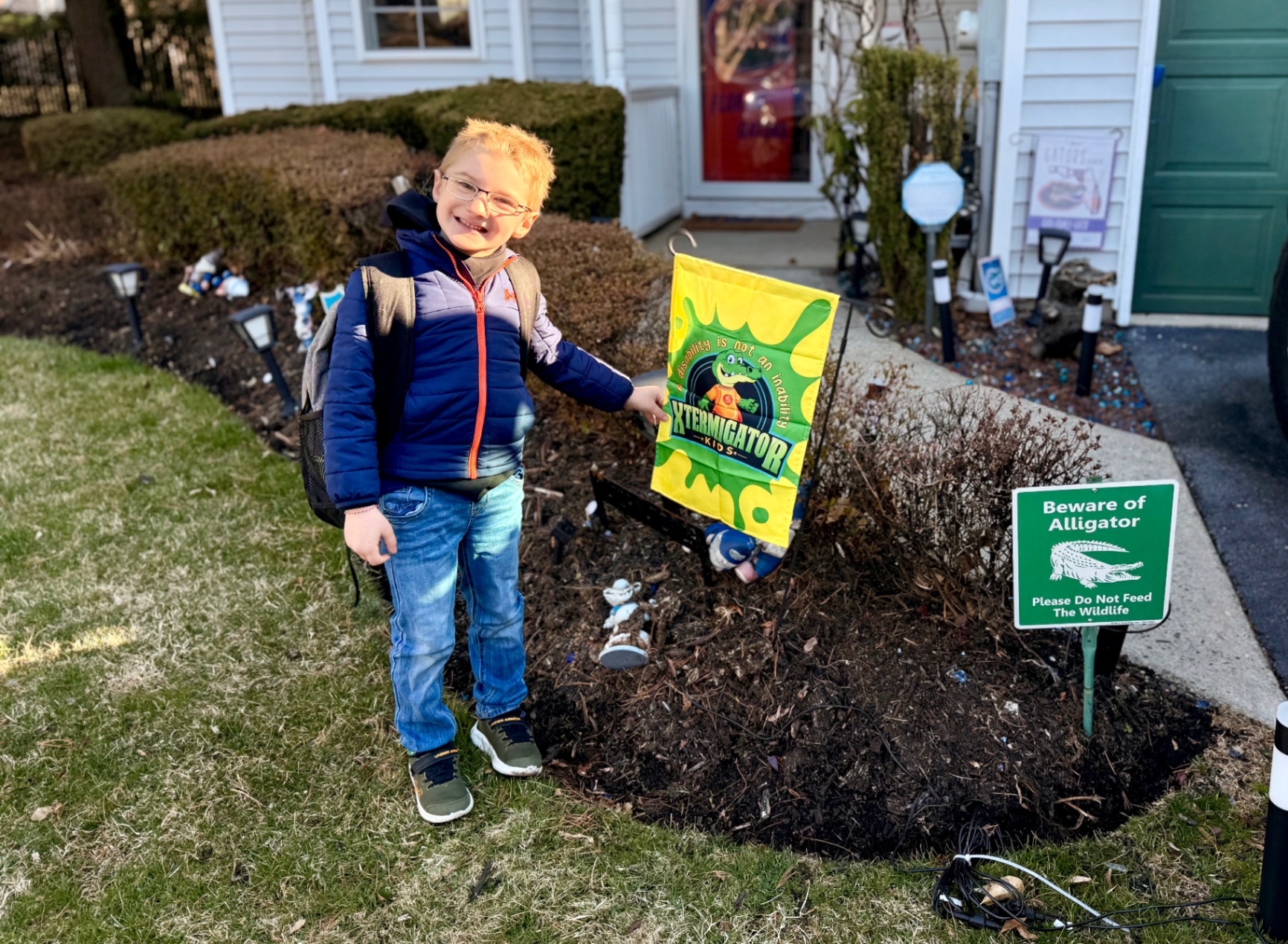
Losing Emotional Control: “Modeling Calm Under Pressure Changes Everything”
Meetings and classroom conflicts can quickly turn heated. When a parent’s frustration spills over, adults may tune out the content and focus only on the volume. Likewise, teachers who lose composure risk alienating both child and family.
“I stormed out after a teacher called my son ‘lazy’,” remembers Zoe B. “But then, nothing changed. The next day I wished I’d channeled my anger into calm requests instead.”
The Fix:
- Try the “pause and draft” approach: Write your concerns, sleep on them, and edit for clarity and calm before sending.
- If a meeting gets tense, suggest a short break or say, “I want to come back to this when I can be constructive.”
- Notice if your child is mirroring your emotions: sometimes a meltdown is a cue from the adults.
True transformation happens the day everyone at the table feels safe being honest and solution-focused. Calmness is contagious, even when you’re faking it at first.
Avoiding Honest Conversations About Invisible Disabilities: “When We Name It, Shame Disappears”
Avoidance is common. Maybe you’re not sure how much to tell a child, or siblings. Maybe you’re afraid teachers will gossip or judge. The result? Kids grow up seeing their differences as secrets or taboos.
“For years, my daughter knew she saw the world differently, but no one gave her language for it,” says Dominic P., educator and dad. “After we read ‘Xtermigator & the Zoomy Frog’ together, she finally asked, ‘Is this like me?’ It was a huge relief for all of us.”
The Fix:
- Use storybooks (like XTERMIGATOR KIDS) or media to introduce concepts gently (“Some people have brains that need quiet time to think, or get super distracted by sounds…”).
- Use positive, capability-focused phrases and normalize the conversation. (“Everyone’s brain works in its own cool way, what’s your brain’s superpower?”)
It’s about progress, not perfection. As one child put it, “When nobody whispers about it, it just feels normal.”
Book highlight: “Xtermigator & The Zoomy Frog” helps families plant the seeds for everyday conversations about difference , and belonging.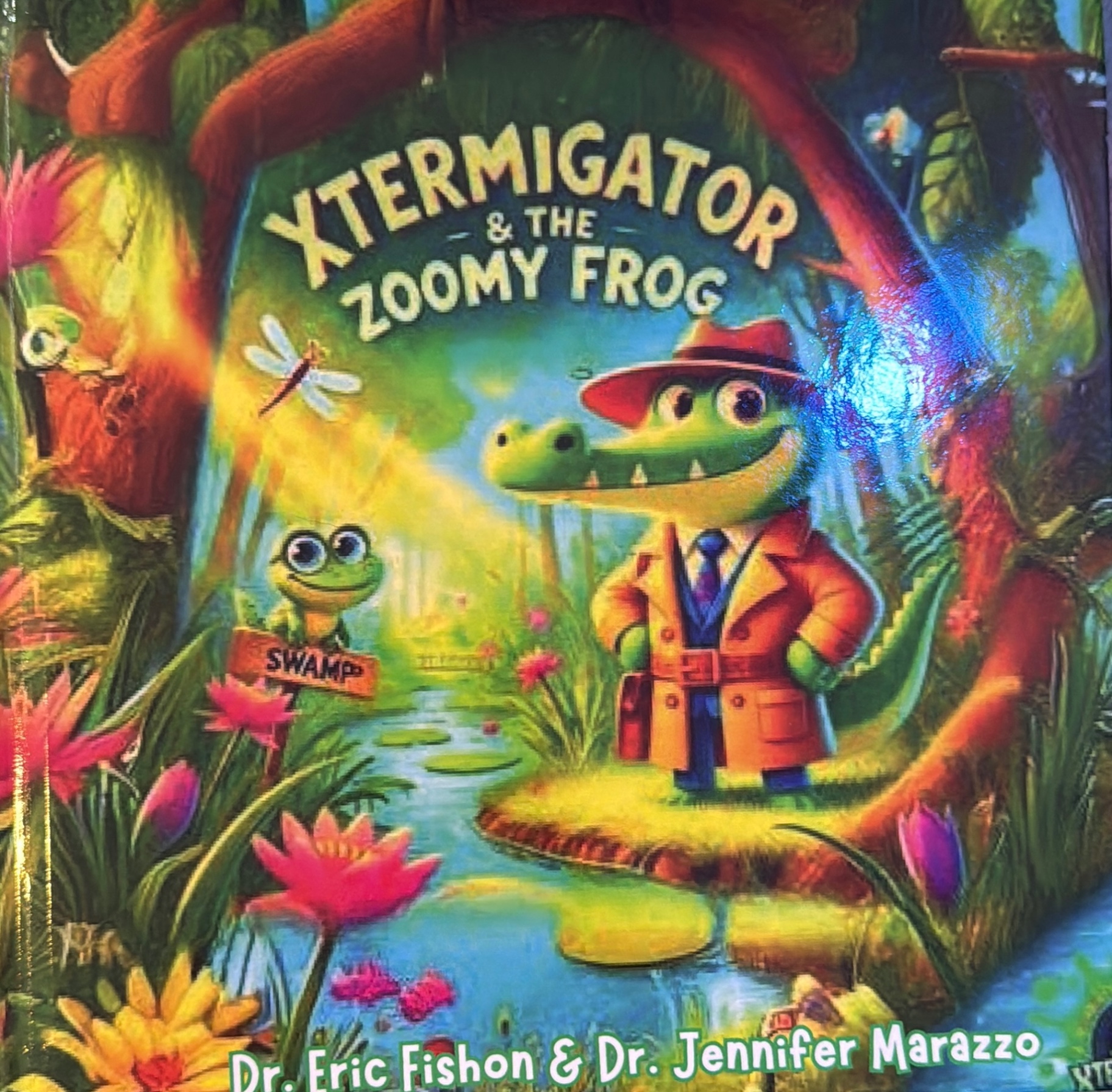
Not Teaching Self-Advocacy: “Empower Kids to Speak Up and Shine”
Too often, adults rush to fix everything for neurodiverse children. But research shows the long-term benefit of teaching self-advocacy skills, how to ask for help, self-identify needs, and communicate boundaries as they grow.
“The turning point for my student came when he realized, ‘I can ask for a break without getting in trouble,’” shares therapist Rachel G. “Before that, he spent the whole day anxious, hiding how hard things were.”
The Fix:
- Coach kids to name their needs (“I need more time,” “Can I use headphones?”) and praise every attempt, even if it’s awkward.
- Role-play scenarios with teachers, friends, and coaches: “What could you say if you’re feeling overwhelmed?”
- Whenever possible, let your child attend parts of IEP or planning meetings, even if just to say hi. This normalizes being part of the discussion.
“Our kids are not just recipients of help: they’re future leaders,” emphasizes psychologist James L.
Aspiring Forward: Creating a Culture of Compassionate Progress
It’s natural to make mistakes: we all do. The breakthrough moments come when you notice, adjust, and keep moving forward “with a swamp-sized dose of kindness,” as we love to say at XTERMIGATOR KIDS. Inclusion is never ‘done’; it’s a lifelong work-in-progress that only gets better when everyone: parent, teacher, and child: learns together.
Ready to keep learning? Explore real-life stories, specialized resources, and conversation guides at xtermigatorkids.com. Because a disability is not an inability: it’s a different way of being brilliant.
*For more on inclusive tools, check out our Kindness Promotion Series
Stay tuned for future content! We’re constantly adding new stories, guides, and empowering resources designed by and for families like yours: helping every child thrive, in and out of the swamp.