
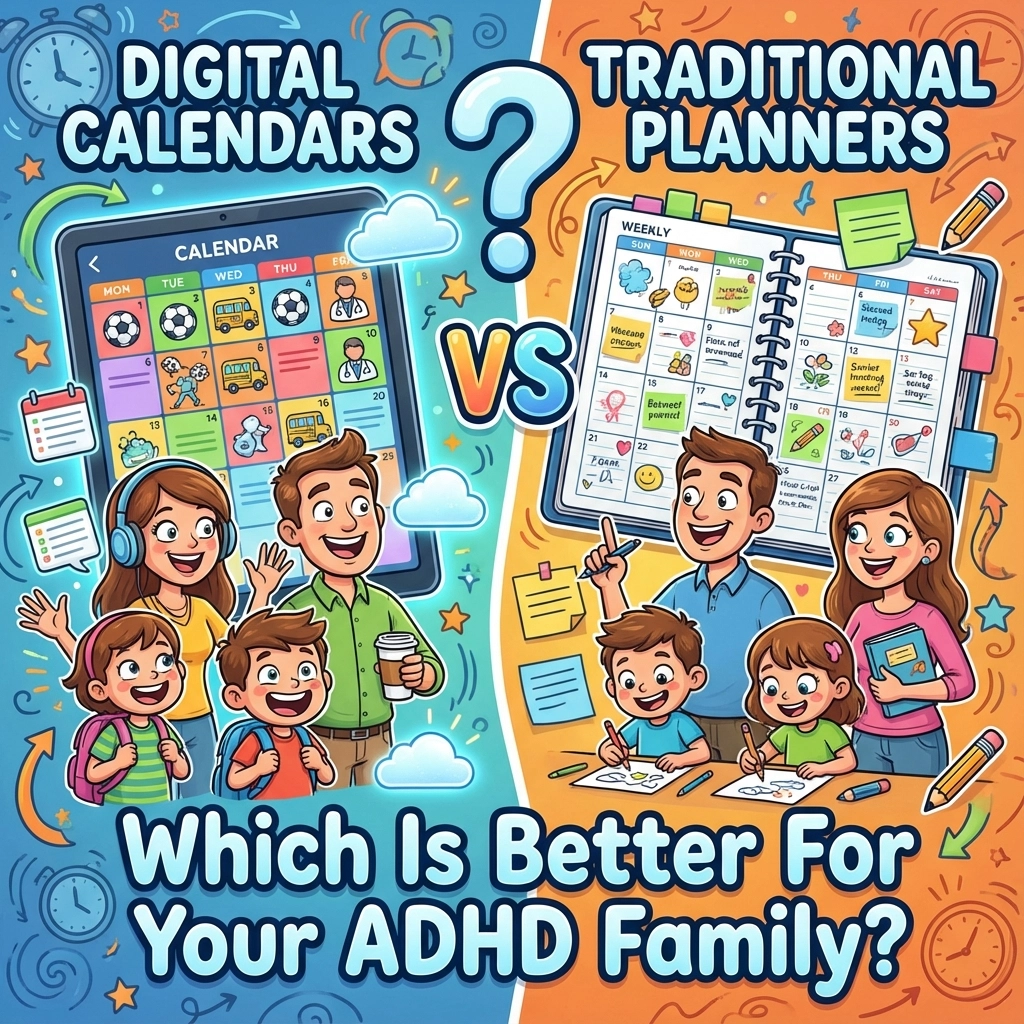
“We just wanted something that actually sticks. Some days, crossing things off a paper planner feels amazing: other times, if the phone doesn’t chime, it simply doesn’t happen.”
The Scheduling Struggle: Why ADHD Families Need Tailored Tools
Let’s get real. If you’re an ADHD family, standard “organization tips” rarely work the way you hope. A calendar isn’t just a calendar. It’s a lifeline: a tool for wrangling chaos, keeping appointments, avoiding forgotten snack days, and soothing spiraling anxiety.
But which tool really helps? Is writing it down old-school best? Or should digital reminders rule the day?
Many families describe mornings as “a tornado of reminders shouted down the hallway.” Each member’s brain: and chaos tolerance: is a little different. Picking the right planning tool isn’t just about preference; it’s about finding real solutions to ADHD-related challenges like time blindness, forgetfulness, and mental overload.
“We Tried Everything”: Honest Pros & Cons From Real Families
The Case for Traditional Planners: Tactile Engagement, Visual Focus
"Writing it down helps me remember, and my son loves decorating his planner with stickers for finished chores."
: Alex (Parent & Teacher, Birmingham)
Real-Life Pros
- Memory boost through physical writing: Putting pen to paper triggers a neurological process that anchors events and deadlines. For many with ADHD, this kinesthetic act is the first step in remembering.
- No digital distractions: Paper planners don’t ping, ding, or tempt you into endless doomscrolling. This makes it easier to “stay in your lane” while mapping out the week.
- Visual customization: Many ADHD families color-code, use highlighters, stickers, and doodles: not just for fun, but to anchor attention visually.
- Intentional, mindful planning: Slowing down to handwrite tasks turns an abstract to-do list into a mindful routine, building in valuable reflection time.
When It Falls Short
"My husband adds appointments to his paper planner: but if it’s left in the car, he’s lost. It doesn’t remind you.”
: Jamie (Family Advocate)
- No rescheduling at a glance: Forget rewriting everything if the Monday therapy appointment moves to Thursday.
- Lack of audible/visual reminders: Unless you actively check, tasks easily slip through the cracks.
- Can be lost, forgotten, or ignored: Sometimes… it just sits in a drawer.
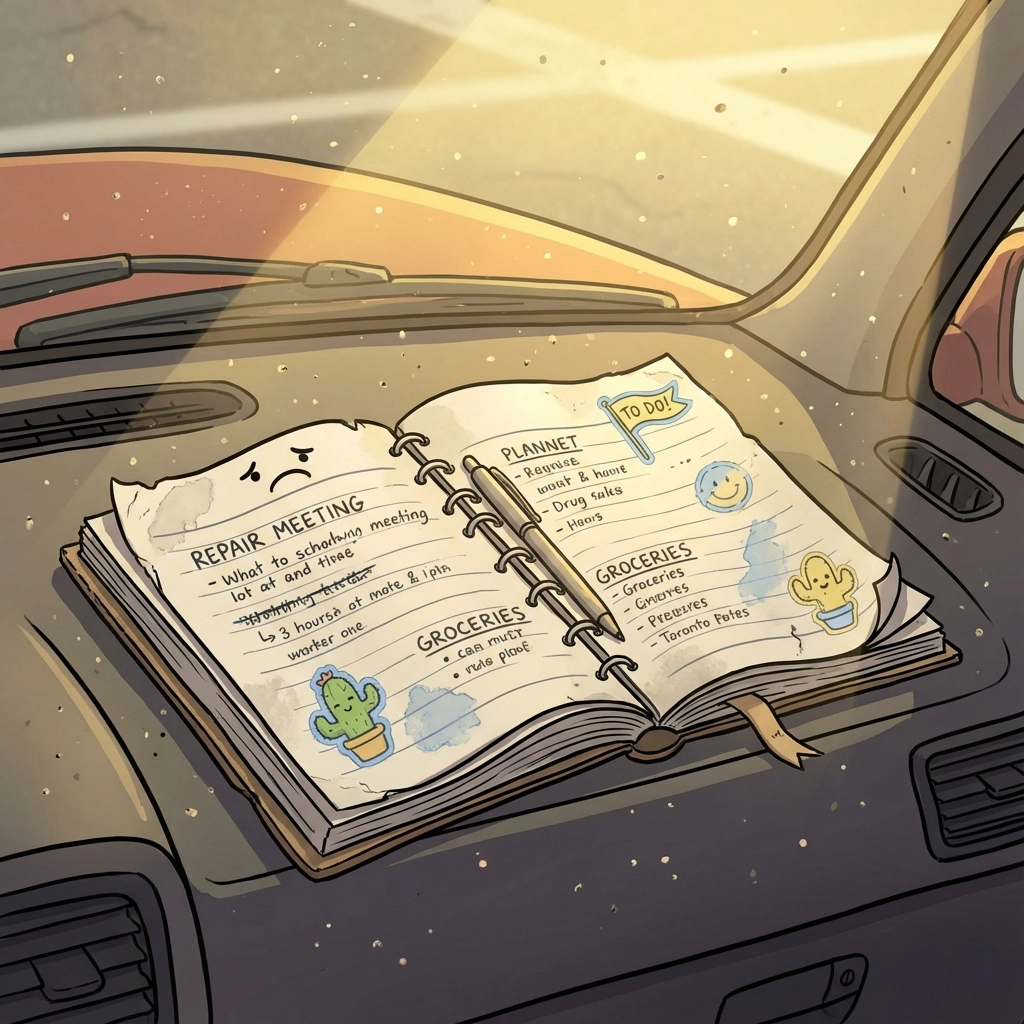
*“Analog doesn’t always equal accessible: a forgotten planner is just another lost tool.” : caption
The Power of Digital Calendars: Reminders, Portability, & Family Sync
"Without the reminders, I would miss every dentist appointment for my twins. Google Calendar notifications are my external brain."
: Jordan (Parent, App Developer)
Real-Life Pros
- Automated alerts & recurring reminders: Digital planners (think Google Calendar or Cozyla Digital Calendar) address time blindness and forgetfulness head-on by pushing reminders to devices before events.
- Calendar syncing across family members: “Shared calendars saved us: when practice is moved, everyone knows right away.” It allows both parents, kids, and even teachers to stay in sync in real-time.
- Handy on-the-go: Your phone (and thus your calendar) is almost always in your pocket or bag, making last-minute checks possible on the school drop-off line.
- Automatic color coding & search: Quickly filter for school-related tasks, doctor appointments, and birthdays: no erasing or sticky residue required.
- Accessibility perks: Many ADHD families love dictation tools (“add dinner with Ms. Chen on Thursday”), built-in voice assistants, and visual contrast settings for easier reading.
When It Falls Short
"There are days when my phone buzzes so much I just stop paying attention. I want to be present, not always reacting."
: Sam (High School Sophomore, ADHD & Dyslexia)
- Notification overload: Too many alerts can cause you to tune out or shut off notifications entirely, defeating the purpose.
- Accidental deletes & tech glitches: Phones die, apps sync incorrectly, or events vanish: sometimes tech isn’t as reliable as we hope.
- Impersonal or disconnected use: Just clicking “remind me” can lead to passivity, with less “ownership” over your plan.

*“Family-wide syncing means less blame, more teamwork: but requires digital comfort.” : caption
Why Not Both? The Modern Hybrid That Actually Works
"We finally found our groove: a family wall calendar for big stuff, everyone’s phones for daily reminders, and a small notebook for lists I want to check off ‘old-school.’ It’s not about the tool, it’s about creating a routine everyone can stick to.”
: Brianna (Parent, School Counselor)
Hybrid Strategies for Real ADHD Families
- Digital for appointments & shared responsibilities:
Use a digital tool like Cozyla Digital Calendar to enter all fixed appointments: medical, school, extracurriculars. Set multiple reminders for each event. - Paper for routines & creative plans:
Maintain a daily or weekly written planner or habit tracker for chores, creative projects, or checklists. (Kids love personalizing these with drawings, making them more likely to engage.) - Big-picture wall calendar:
A visible, central family calendar keeps everyone oriented: especially helpful for neurodiverse kids who benefit from visual structure. - Accessibility hacks:
Combine tools: For example, snap a photo of your paper planner spread and set it as your digital device’s wallpaper for easy reference. Or transcribe important events from notes into your family’s shared digital calendar.
“Pairing tools lets us play to everyone’s strengths. For quick reminders, my phone pings me. For goal setting, it’s me, my kiddo, and her stickers, brainstorming on paper at the kitchen table.”
: Rachel (ADHD Parent)
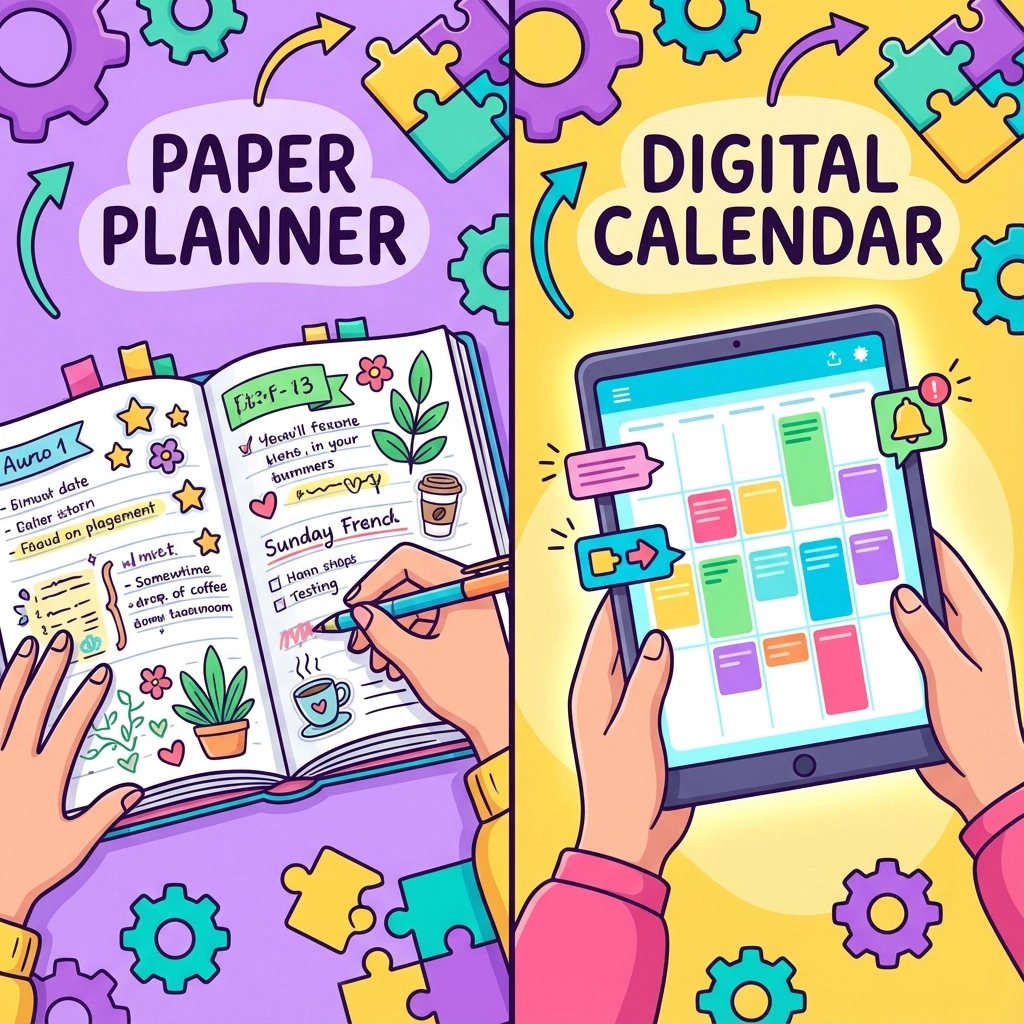
*“Finding flexibility: The hybrid setup grows with your family’s changing needs and tech comfort.” : caption
Emotional Breakthroughs: When Planning Tools Lead to Real Change
"The first time I saw my son calmly checking his planner instead of asking me what to do next: for us, that felt like a miracle."
: Priya (Mom of 3, Pediatric Nurse)
- Kids feel empowered: Accessible planning builds self-awareness, independence, and reduces last-minute panic.
- Less family conflict: Appointment reminders (and visual confirmation) cut down on blame or “I told you so” moments. Everyone has genuine buy-in.
- Reduced anxiety for parents and kids: There’s comfort in a system you trust, rather than relying on memory or last-minute chaos.
Everyday Tech Spotlight: Cozyla Digital Calendar
If you’re thinking about testing the digital waters, the Cozyla Digital Calendar is designed with neurodiverse families in mind: large visual displays, easy color-coding, multi-device syncing, and custom voice alerts.
There’s even an “instant summary” screen for families who get overwhelmed by endless details: see only what’s urgent, with one tap.
“Cozyla sits on our kitchen counter. My daughter checks it every morning before breakfast: she loves the picture icons for soccer, piano, or pizza night. Suddenly, planning is fun, not a chore.”
: Elise (Parent & Cozyla User)
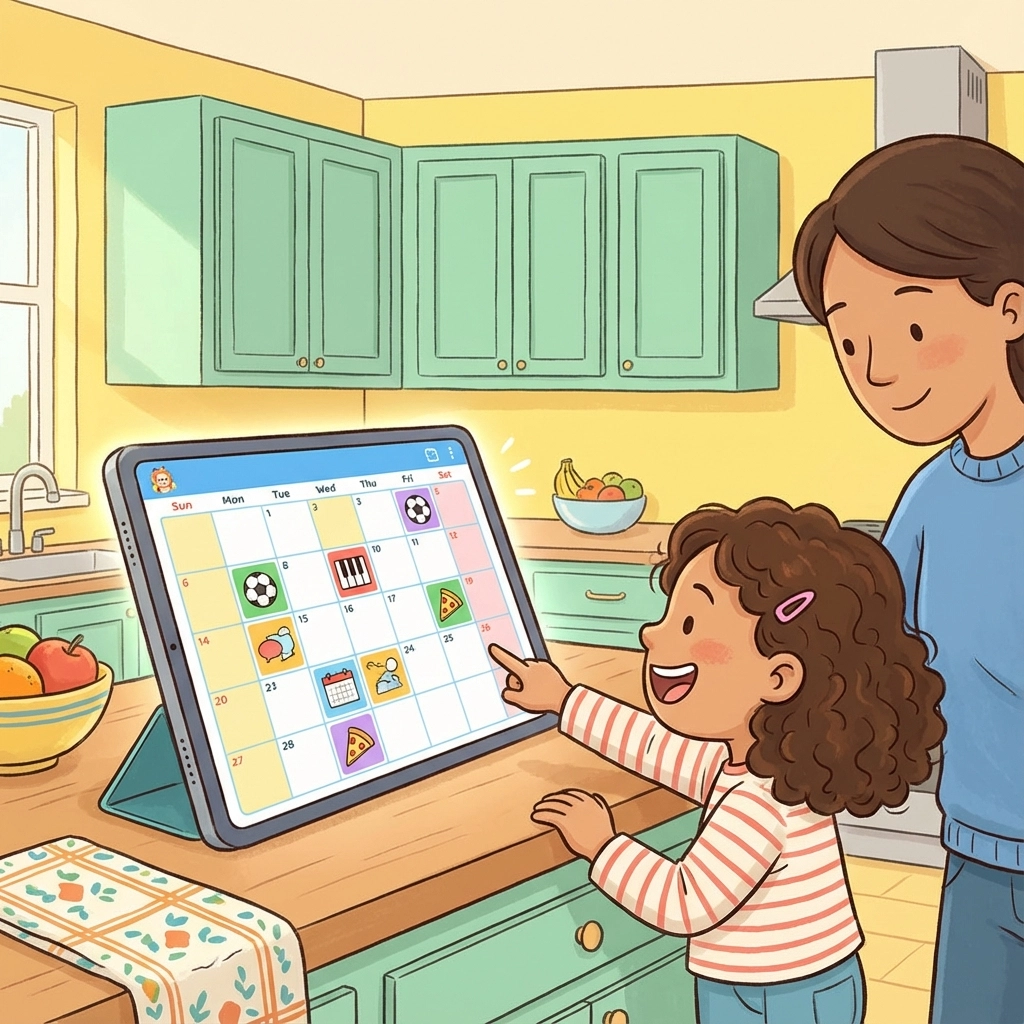
*“Tech designed for neurodiverse brains can turn a point of stress into a new source of connection and routine.” : caption
Looking Ahead: Adapting Your Family’s System Over Time
While there’s no single “right” tool for every ADHD family, your best bet is to observe, iterate, and ask what’s working (and what’s not) as needs shift. What’s perfect for a third-grader may not work for your high schooler, and what’s ideal this season might need tweaking next semester.
“We finally stopped worrying about what’s ‘normal’ and focused on what helps us thrive. That’s been the best change of all.”
: Family in the XTERMIGATOR KIDS community
As you experiment, keep the dialogue open: let every family member chime in with ideas and feedback. Use tech when it makes life easier, embrace paper when it grounds you, and always prioritize accessibility and emotional well-being over perfection.
A planner isn’t just an organization tool: it’s a daily act of care, self-advocacy, and family togetherness. And with a little trial and error, you’ll find the routine that brings more peace (and fewer “Where’s my backpack?!” mornings) to your ADHD journey.
Want more ideas and strategies for neurodiverse families? Visit xtermigatorkids.com for resources, guides, and community stories.