
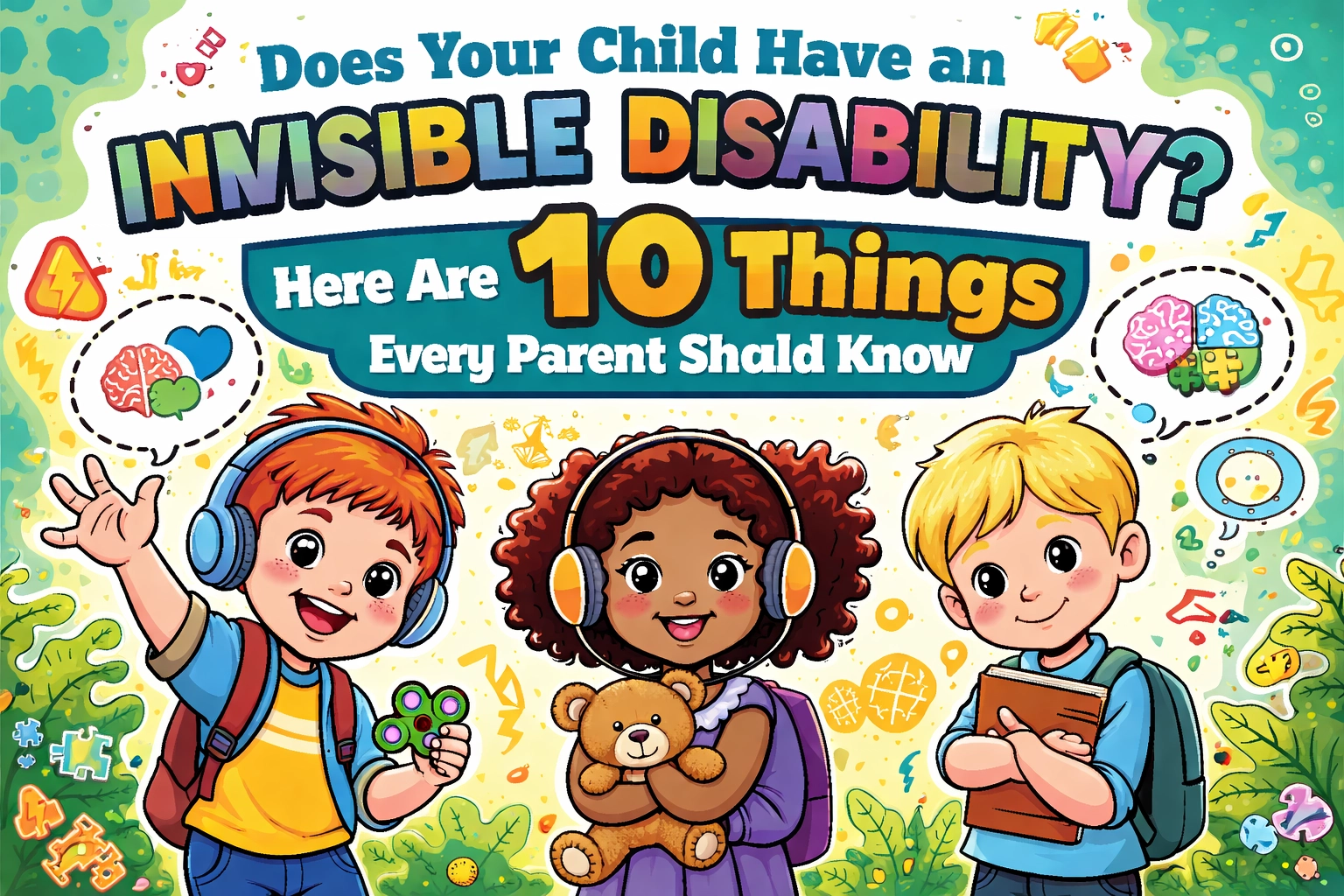
You've watched your child struggle in ways that others can't see. The meltdowns that seem to come from nowhere. The homework battles that leave everyone exhausted. The social situations that somehow always go sideways.
And then comes the comment that cuts deepest: "But they look totally fine to me."
If this sounds familiar, you're not alone. You might be parenting a child with an invisible disability, and that journey comes with its own unique set of challenges, frustrations, and yes, triumphs.
Here at XTERMIGATOR KIDS, we believe that a disability is not an inability. But we also know that invisible disabilities require a different kind of understanding. So let's talk about the ten things every parent needs to know.
What Exactly Is an Invisible Disability?
Before we dive in, let's get clear on what we're discussing.
Invisible disabilities (sometimes called hidden disabilities) are conditions that significantly affect how a child functions: but aren't immediately obvious to others. Think ADHD, anxiety, autism, dyslexia, chronic pain, depression, epilepsy, sensory processing differences, and many more.
Here's a number that might surprise you: the Department of Commerce estimates that more than 90% of all disabilities are invisible. That means the vast majority of people living with disabilities don't "look disabled" to the casual observer.
Your child's struggles are real, even when no one else can see them.
Every child deserves to feel seen and supported: whether their challenges are visible or not.
1. You're Not Imagining Things: Invisible Disabilities Are Incredibly Common
Approximately 1 in 10 Americans lives with an invisible disability. Among people with chronic illnesses, that number jumps to 96%.
So when you have that gut feeling that something is different about your child's experience: trust it. Parents often notice subtle patterns long before anyone else does. Your instincts matter.
2. Your Child Might Be Labeled "Lazy" or a "Problem": But That's Not the Truth
This is one of the most painful realities of invisible disabilities.
Because the symptoms aren't obvious, children with hidden conditions are often perceived by teachers and peers as "slow, lazy, or discipline problems." A child with undiagnosed ADHD might be called unmotivated. A kid with anxiety might be labeled dramatic. A student with a learning disability might be seen as simply not trying hard enough.
These labels stick. And they hurt.
Understanding that there's a real neurological or physiological reason behind your child's struggles can be the breakthrough moment that changes everything: for you and for them.
3. Early Identification Can Transform Your Child's Entire Trajectory
Many children with invisible disabilities go undiagnosed for years. Sometimes it's lack of awareness. Sometimes it's difficulty accessing the right professionals. Sometimes it's the mistaken belief that kids will "grow out of it."
But here's the truth: proper diagnosis opens doors.
It enables access to specialized educational programs, therapeutic interventions, and resources that can genuinely help your child progress. The earlier you identify what's going on, the sooner you can start building the right support system.
4. Your Child Has Legal Rights: And They're More Powerful Than You Might Think
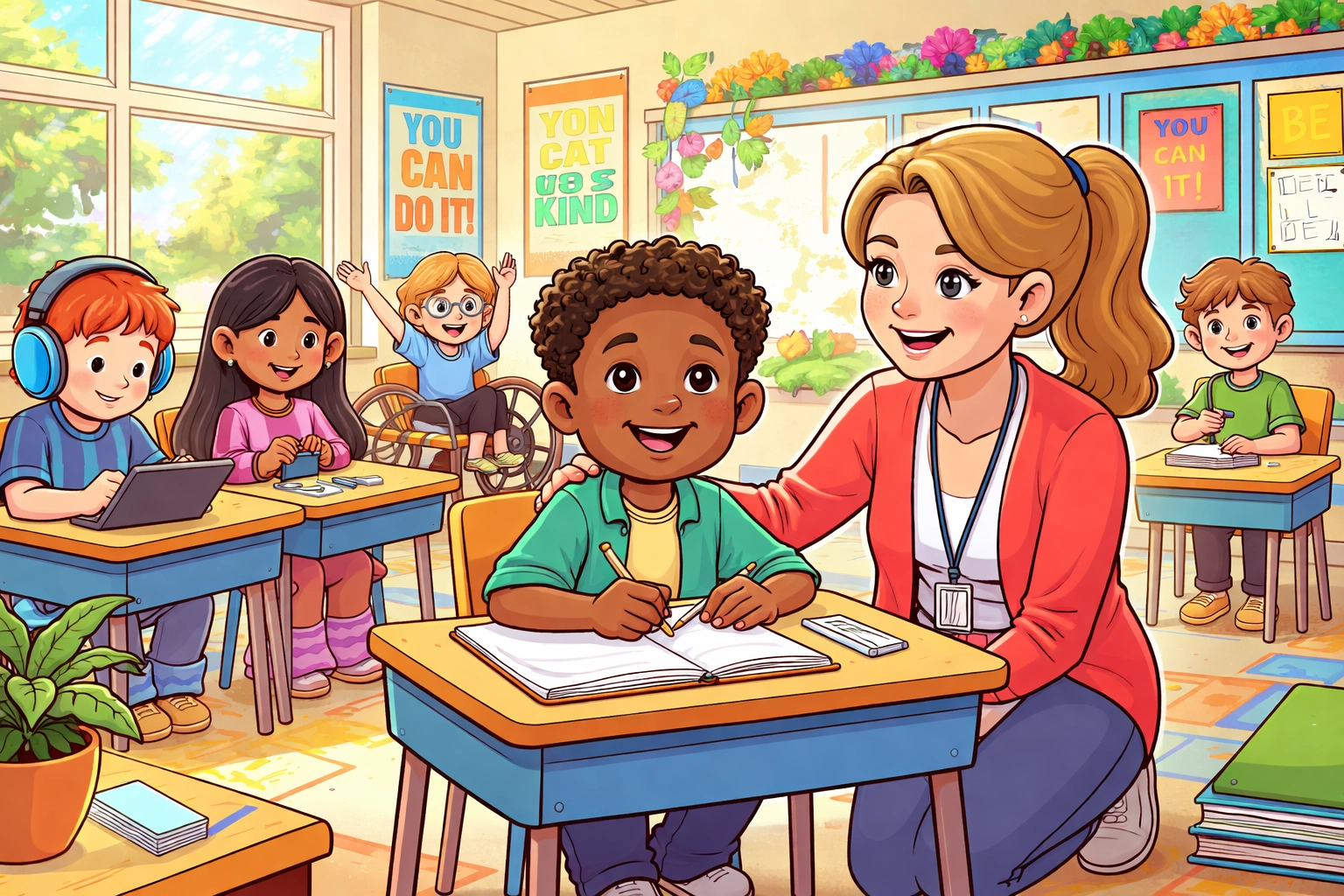
Under Section 504 of the Rehabilitation Act and the Americans with Disabilities Act (ADA), students with disabilities: including hidden ones: are entitled to a free appropriate public education with necessary accommodations and support services.
This isn't optional. It's the law.
You have the right to request school evaluations to determine whether your child needs special education services or accommodations. You can advocate for things like extended test time, preferential seating, modified assignments, sensory breaks, or access to assistive technology.
Knowing your child's rights is the first step toward making sure they're honored.
5. The Fear of Stigma Is Real: And Your Child Probably Feels It
People with invisible disabilities often hesitate to disclose their conditions. The fear of judgment, prejudice, or being treated differently keeps many kids (and adults) silent about what they're experiencing.
This is especially intense for school-age children who desperately want to fit in.
Your child might downplay their struggles, refuse accommodations, or pretend everything is fine when it isn't. They might feel isolated, misunderstood, or ashamed of something they have no control over.
Creating a home environment where differences are celebrated: not hidden: can make all the difference.
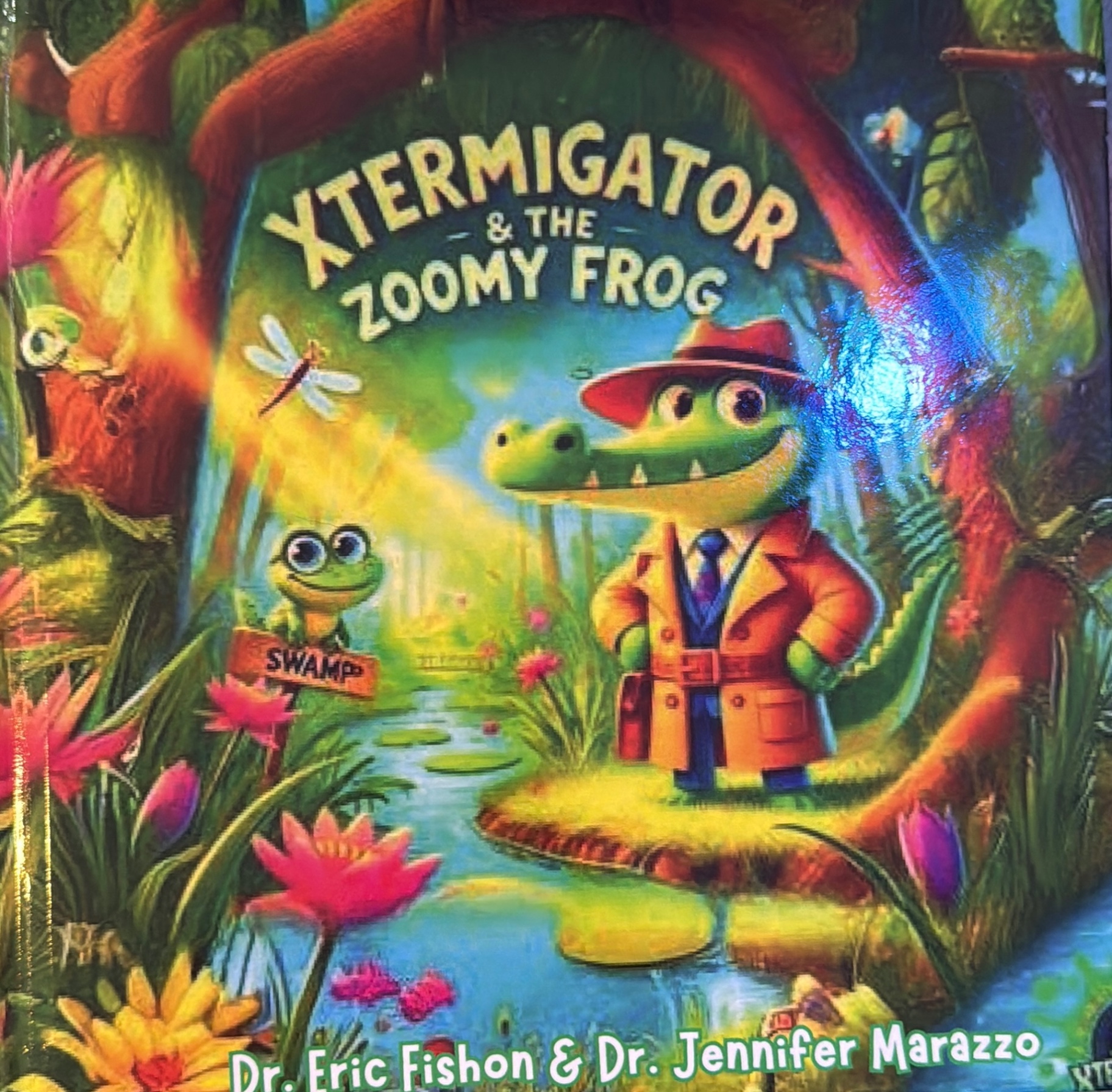
Stories that celebrate differences help children see themselves as capable and worthy: exactly as they are.
6. What Works for One Child Won't Work for Every Child
Accommodations need to be tailored to your child's specific needs. There's no one-size-fits-all solution for invisible disabilities.
A child with ADHD might need movement breaks and fidget tools. A child with anxiety might need advance notice of schedule changes. A child with dyslexia might need audiobooks and speech-to-text technology. A child with autism might need noise-canceling headphones and a quiet space to decompress.
Work with your child's school, therapists, and healthcare providers to create a customized support plan. And don't be afraid to adjust it as your child grows and their needs evolve.
7. Professional Evaluation Isn't a Failure: It's a Gift
If your child has behavior problems, academic difficulties, or seems unable to concentrate or process information the way other kids do, request a formal evaluation.
This isn't about labeling your child. It's about understanding them.
A proper assessment can identify exactly what's happening and point you toward evidence-based interventions. It can also provide documentation that ensures your child receives the support they're entitled to at school.
Think of evaluation not as admitting something is wrong, but as discovering what your child needs to thrive.
8. Look Beyond the Obvious: Every Child Presents Differently
Here's something that trips up a lot of parents (and professionals): invisible disabilities don't always look the way you'd expect.
A child can appear fully capable externally while struggling enormously on the inside. They might excel in some areas while completely falling apart in others. They might hold it together at school and melt down the moment they walk through your front door.
These inconsistencies don't mean your child is faking or manipulating. They mean your child is working incredibly hard to cope: and that effort has a cost.
9. Your Awareness and Advocacy Are Essential
Because invisible disabilities lack obvious markers, parents become their children's most important advocates.
You'll need to educate teachers, family members, coaches, and sometimes even medical professionals about your child's condition. You'll need to speak up when accommodations aren't being followed. You'll need to help others understand that real challenges exist beneath the surface.
This can be exhausting. But it's also essential.
Your voice might be the only one ensuring your child gets what they need.

Different is beautiful. Together, we are unstoppable.
10. Your Child Is So Much More Than Their Diagnosis
Finally: and this might be the most important thing on this list: remember that a diagnosis describes one aspect of who your child is. It doesn't define their potential, their worth, or their future.
Kids with invisible disabilities grow up to be artists, engineers, teachers, entrepreneurs, parents, and leaders. They contribute to their communities in ways both big and small. They form meaningful relationships and live fulfilling lives.
Your child has unique gifts that the world needs. Your job isn't to "fix" them: it's to help them understand themselves, develop coping strategies, and recognize that their brain works differently, not defectively.
Moving Forward With Hope
Parenting a child with an invisible disability isn't easy. Some days you'll feel like you're fighting battles no one else can see, advocating for a child whose struggles remain hidden from the world.
But you're not alone in this journey.
The more we talk openly about invisible disabilities, the more we reduce stigma and build understanding. The more we share resources and support each other, the easier this path becomes for the families walking it behind us.
At XTERMIGATOR KIDS, we're committed to creating stories and resources that help every child: and every family: feel seen, understood, and empowered. Because every kid deserves to know that being different isn't something to hide.
It's something to celebrate.