
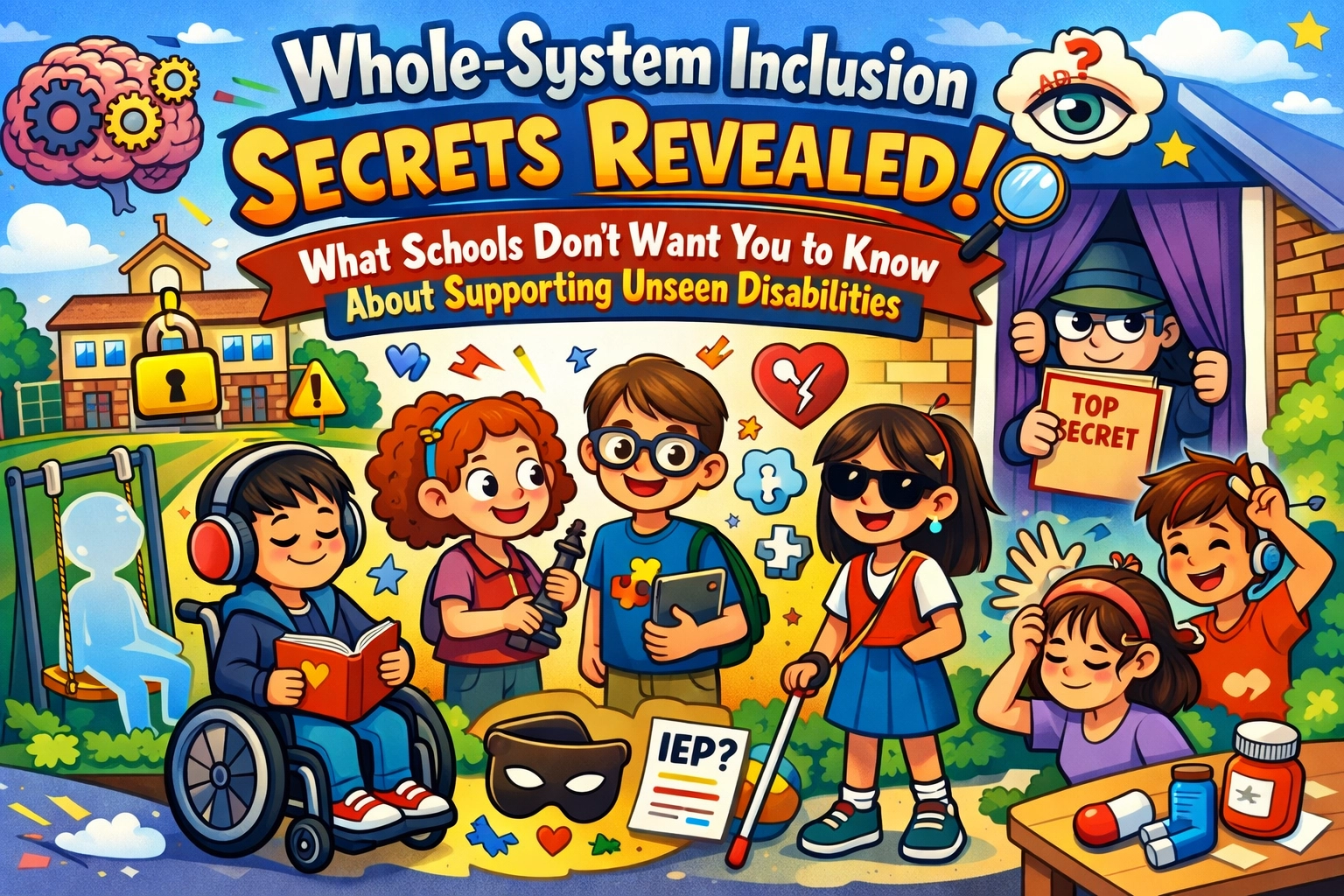
Your child comes home from school exhausted: again. Not from running around at recess, but from masking their ADHD all day. Or maybe they're struggling with anxiety that no one else can see. The teacher says they're "fine" because they're not disruptive, but you know the truth: invisible disabilities are incredibly real, and most schools aren't equipped to support them properly.
Here's what's frustrating: the framework for supporting all learners: including those with unseen disabilities: already exists. It's called whole-system inclusion, and it's not some locked-away secret. The real issue? Most schools only implement fragments of it, leaving kids with invisible disabilities in a gray zone where they're neither fully supported nor fully understood.
Let's change that. Here's what whole-system inclusion actually requires, why it matters for unseen disabilities, and how you can advocate for your child (or students) to get what they truly need.
The Framework Schools Should Be Using (But Often Aren't)
Whole-system inclusion isn't about placing a child with disabilities in a mainstream classroom and hoping for the best. It's a structural overhaul that requires changes at every level: policy, curriculum design, teacher training, and daily classroom practice.
Dr. Maria Gonzalez, an inclusion specialist who's worked with over 40 school districts, puts it this way: "When schools say they 'do inclusion,' they often mean they have a resource room and an IEP process. But true whole-system inclusion means the general education environment itself becomes flexible enough to meet diverse needs: not just accommodate them as an afterthought."
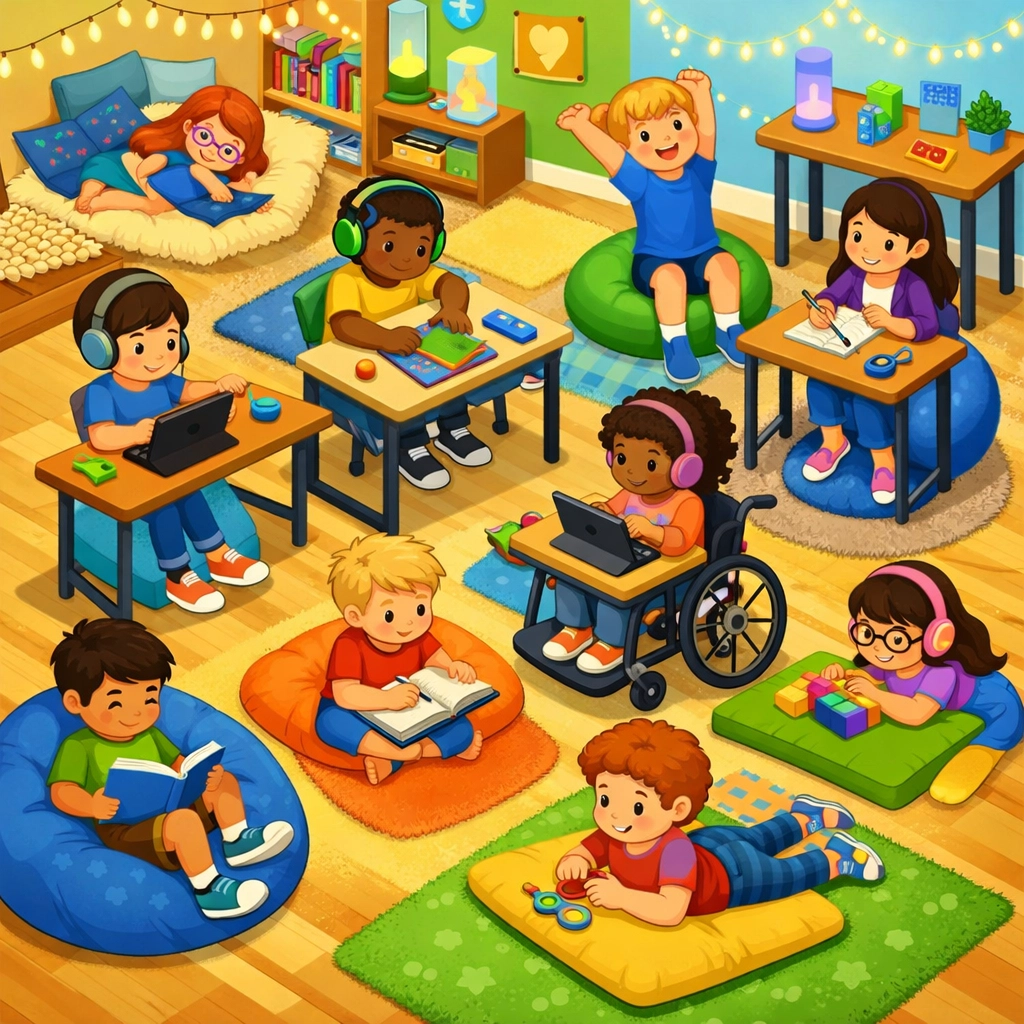
This matters enormously for kids with unseen disabilities (think ADHD, dyslexia, anxiety disorders, sensory processing differences, autism without obvious support needs). These students often don't qualify for intensive services, yet they struggle daily. A whole-system approach means the entire classroom structure shifts to support executive function, sensory needs, and flexible learning pathways: benefiting all students in the process.
The Twin-Track Strategy: Building Inclusion From Two Directions
Educational researchers describe effective inclusion as using a twin-track strategy. Here's what that actually means in practice:
Track One: Universal Changes
Make the general education system more inclusive for everyone through legislation updates, flexible curricula, varied assessment methods, and accessible teaching practices. This includes things like offering movement breaks (which help kids with ADHD), providing written and verbal instructions (supporting processing differences), and using multi-sensory teaching approaches.
Track Two: Targeted Individual Support
Simultaneously provide specific accommodations for students with identified needs: modified assignments, assistive technology, additional time, or one-on-one support when necessary.
When schools only focus on Track Two, they create a system where students need to "prove" their disability to receive basic support. But when both tracks work together, the baseline environment already supports diverse learning styles, and individualized accommodations become natural extensions rather than special exceptions.
Ashley Martinez, a fourth-grade teacher who redesigned her classroom using inclusion principles, shared this transformation: "I used to think flexible seating and brain breaks were 'accommodations.' Now they're just how I teach. My student with anxiety doesn't feel singled out for needing a quiet corner anymore: because three other kids are using stability balls, two are at standing desks, and everyone gets movement breaks. The whole system changed."
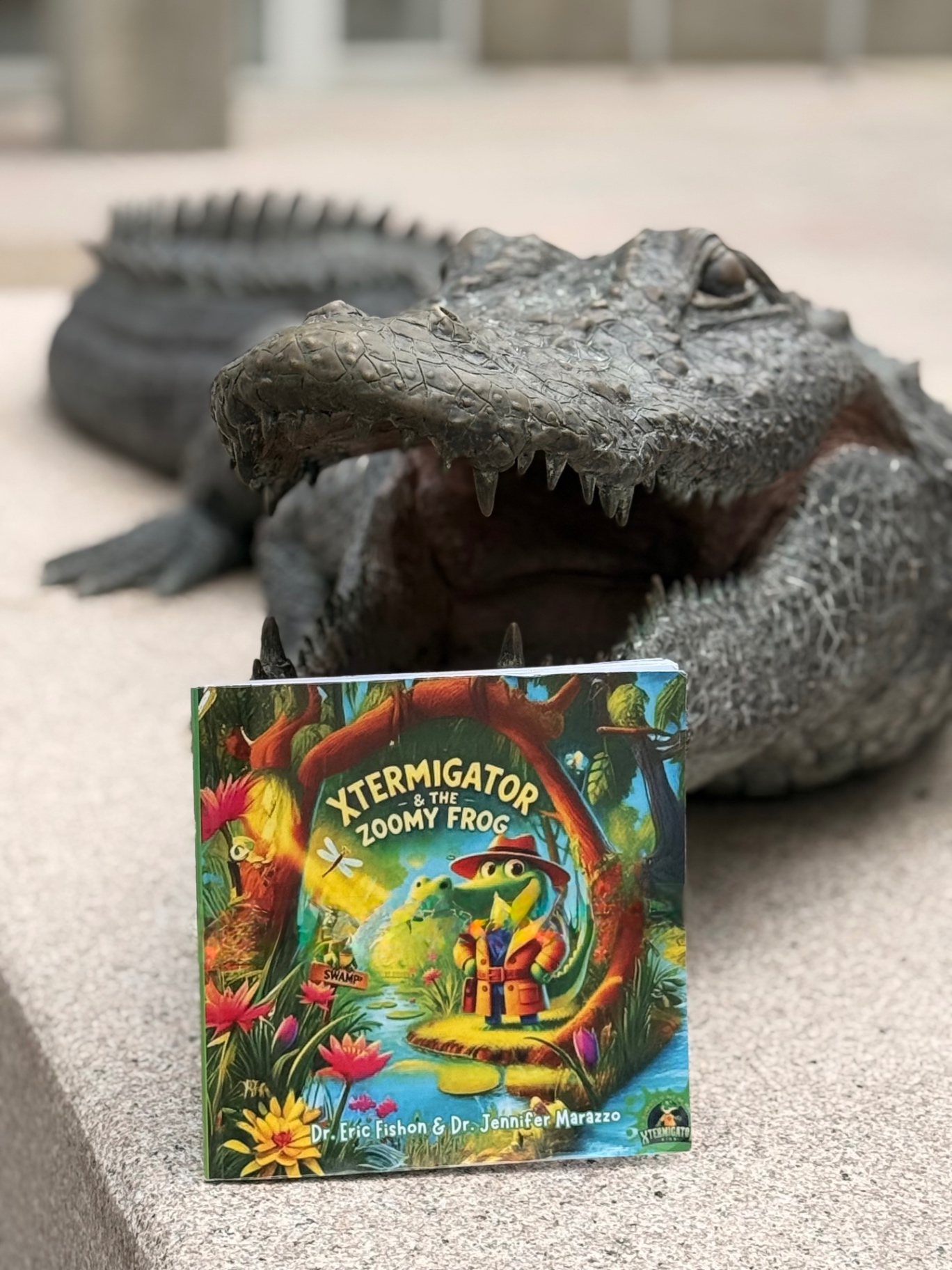
Characters like Zachariah the Zoomy Frog help children understand that different learning styles and energy levels are natural variations, not problems to fix.
Universal Design That Actually Includes Invisible Disabilities
Here's where most schools miss the mark: they think about physical accessibility (ramps, elevators) but forget about cognitive and emotional accessibility. Universal Design for Learning (UDL) is supposed to address this: offering multiple means of engagement, representation, and expression: but implementation often stops at surface level.
For unseen disabilities, universal design means:
Flexible pacing and deadlines (recognizing that executive function challenges are neurological, not motivational)
Choice in how to demonstrate learning (allowing verbal presentations for kids with dysgraphia, written responses for those with social anxiety)
Predictable routines with built-in flexibility (giving advance notice of changes for students who struggle with transitions)
Sensory-friendly environments (dimmer lighting options, noise-canceling headphones available to anyone, reduced visual clutter)
Emotional regulation supports (calm-down corners, breathing exercise posters, check-in systems that don't require verbal explanation)
Jennifer Park, mother of a child with sensory processing disorder, describes the difference this makes: "In my son's old classroom, he was constantly overstimulated but couldn't explain why. He'd end up in the principal's office for 'behavior issues.' His new school has sensory bins in every classroom, flexible lighting, and teaches all students about sensory preferences. Now teachers understand when he puts on headphones: he's self-regulating, not being defiant."
Breaking Down Barriers You Didn't Know Were There
The research is clear: true inclusion requires identifying and removing obstacles to participation. But for invisible disabilities, those barriers are often unrecognized.
Common hidden barriers include:
The "attention means interest" assumption (punishing fidgeting or daydreaming when these might be ADHD symptoms or anxiety responses)
Rigid timeframes (timed tests that measure processing speed rather than content knowledge)
Verbal-only instruction (disadvantaging students with auditory processing differences)
Social expectations without explicit teaching (expecting all students to naturally understand social cues, group work dynamics, or unwritten rules)
The myth of "equal treatment" (giving everyone the same support instead of equitable support based on individual needs)

The Friendly Ferns Swamp characters demonstrate that "different is beautiful" and "together, we are unstoppable": core messages for building inclusive communities.
Marcus Thompson, a middle school principal who transformed his school's approach to invisible disabilities, observed: "We had to train teachers to see accommodations as removing barriers rather than giving advantages. When a student with ADHD gets extra time, they're not getting an easier test: they're getting the time their brain needs to process the same information. That reframing changed everything."
What This Looks Like in Practice (And How You Can Advocate For It)
If you're a parent or educator, here's what to look for: and ask for: in a truly inclusive system:
Collaborative assessment processes where teachers, specialists, and families identify individual needs together (not just through formal testing)
Ongoing teacher training in recognizing diverse learning needs, including those that aren't immediately visible
Classroom-level accommodations available without extensive documentation requirements
Peer education about different learning styles and abilities, so students understand and support each other (this is where resources like XTERMIGATOR KIDS become valuable: using stories and characters to normalize differences)
Regular progress monitoring that focuses on growth rather than comparing all students to the same fixed standard
The Friendly Ferns Swamp characters teach kids that disabilities: visible or invisible: are natural variations in how brains and bodies work. When children grow up with this understanding, they enter school already equipped with empathy and awareness that many adults are still learning.
The Path Forward: From Theory to Reality
Whole-system inclusion isn't a secret: but its effective implementation remains frustratingly rare, especially for students with unseen disabilities. The framework exists. The research supports it. What's missing is the systemic commitment to actually do the work.
If you're advocating for your child or transforming your classroom, remember this: inclusion isn't about fitting different kids into an existing system. It's about redesigning the system so it works for everyone from the start.
Start with one change. Add flexible seating. Build in movement breaks. Teach all students about different learning styles. Use books and resources that normalize disability. Create sensory-friendly spaces. Train teachers to recognize invisible struggles.
Small systemic changes create ripple effects. And somewhere in those ripples, a child who's been exhausting themselves trying to appear "normal" finally gets to just learn.
Interested in teaching resources that help children understand and celebrate invisible disabilities? Explore our character-based learning materials at XTERMIGATOR KIDS, where the Friendly Ferns Swamp crew shows kids that different is beautiful: and together, we're unstoppable.