
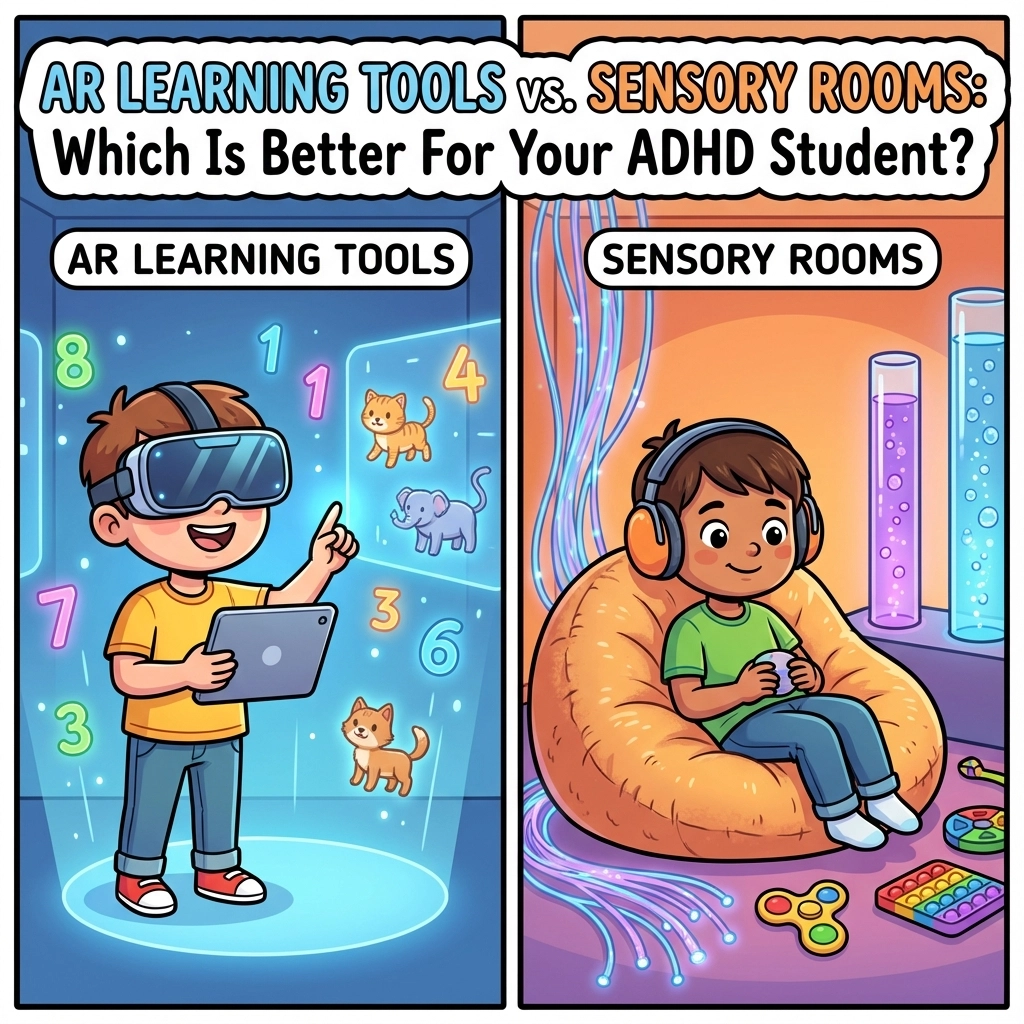
You're standing in the middle of an educational supply expo, watching two demonstrations unfold simultaneously. On your left, a child with ADHD is completely absorbed in an augmented reality math lesson, manipulating 3D geometric shapes floating in mid-air. On your right, another student is finding calm and focus in a sensory room filled with soft lighting, weighted blankets, and gentle music. Both kids are thriving, but in completely different ways.
This scene captures the dilemma facing parents, teachers, and therapists today: when budget and space are limited, how do you choose between cutting-edge AR learning tools and traditional sensory rooms for supporting ADHD students?
Understanding the Two Worlds: Digital Innovation vs Physical Sanctuary
The choice between AR learning tools and sensory rooms isn't just about technology versus tradition: it's about understanding fundamentally different approaches to supporting neurodivergent learners.
AR learning tools create immersive digital environments where students can manipulate virtual objects, explore historical settings, or practice social skills in simulated scenarios. These tools promise personalized learning experiences that adapt to each child's pace and sensory preferences.
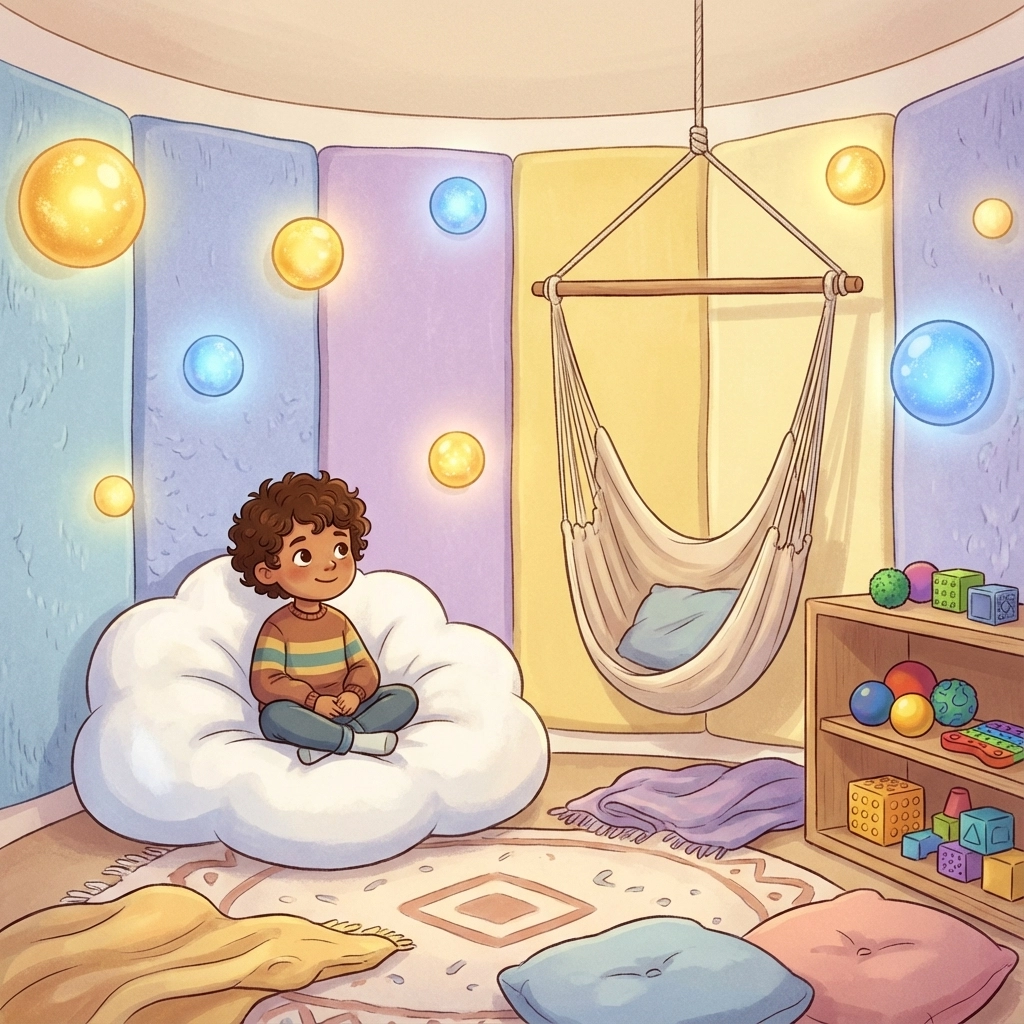
Sensory rooms, meanwhile, offer carefully designed physical spaces where students can regulate their sensory input through tactile materials, controlled lighting, and calming sounds. They've been a cornerstone of special education for decades, providing a retreat when overwhelm strikes.
The AR Advantage: Customizable Digital Worlds That Follow Your Child's Lead
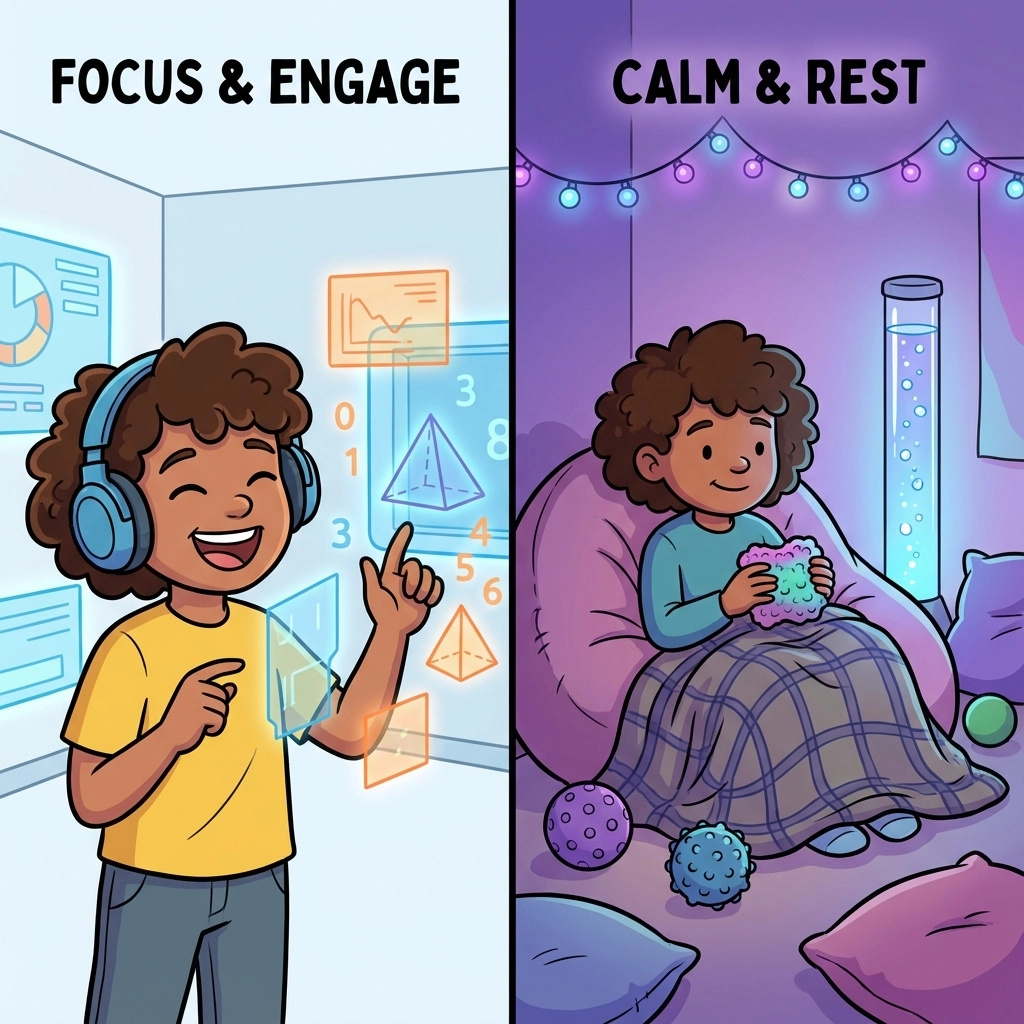
Minimizing Distractions Through Environmental Control
Sarah Chen, an occupational therapist specializing in ADHD interventions, explains the appeal of AR tools: "What I love about quality AR learning platforms is that students can adjust the volume, lighting, or other environmental factors to suit their specific sensory needs. We're not fighting the environment: we're creating one that works."
This level of customization addresses one of ADHD's core challenges: sensory sensitivity. Traditional classrooms bombard students with competing stimuli: fluorescent lights, air conditioning hums, rustling papers, and dozens of conversations. AR environments can strip away these distractions entirely or gradually introduce them as students build tolerance.
Transforming Abstract Concepts Into Tangible Learning
Nine-year-old Marcus struggled with fractions until his teacher introduced AR math tools. "I couldn't understand why one-half plus one-fourth equaled three-fourths," Marcus recalls. "But when I could pick up the pieces and put them together in my hands, it just clicked."
This concrete visualization particularly benefits ADHD students who often struggle with abstract thinking. Instead of imagining how the solar system works, they can stand in the middle of it. Rather than memorizing historical dates, they can walk through ancient Rome and witness events unfold.
Building Social Skills in Safe, Repeatable Scenarios
AR simulations provide endless opportunities to practice social interactions without real-world consequences. Students can rehearse job interviews, navigate cafeteria conversations, or practice conflict resolution repeatedly until these skills become natural.
"My son could practice asking someone to play at recess fifty times if he needed to," says parent Jennifer Walsh. "In real life, he only gets one chance, and the fear of messing up would paralyze him."
The Sensory Room Advantage: Immediate Regulation in Physical Space
Instant Accessibility When Overwhelm Strikes
While AR tools require setup time and technical knowledge, sensory rooms offer immediate refuge. When ten-year-old Alex feels his anxiety spiking during a math test, he doesn't need to wait for a tablet to boot up or worry about Wi-Fi connectivity. He can signal his teacher and retreat to the sensory room within seconds.
Multi-Sensory Integration That Technology Can't Replicate
Dr. Rebecca Martinez, a pediatric neurologist, emphasizes the irreplaceable value of physical sensory input: "There's something about the proprioceptive feedback from a weighted blanket or the vestibular input from a swing that we simply cannot replicate digitally. These tools speak directly to the nervous system in ways that visual and auditory stimulation alone cannot achieve."

Sensory rooms engage the whole body through deep pressure, movement, and texture: addressing sensory needs that extend far beyond what screens can provide.
Creating Community and Shared Regulation
Unlike individualized AR experiences, sensory rooms often serve multiple students simultaneously, fostering peer connection and shared coping strategies. Students learn regulation techniques from each other and develop empathy by witnessing different sensory needs.
"My daughter learned breathing exercises from watching another kid use them in the sensory room," reports parent David Kim. "She wouldn't have picked that up from a computer program."
The Hidden Challenges: What Each Approach Can't Address
AR Learning Tools: The Digital Divide and Technical Barriers
Despite their promise, AR tools face significant implementation hurdles. Cost remains prohibitive for many schools and families: quality AR educational platforms can range from hundreds to thousands of dollars per student. Technical support requirements mean that one software glitch can derail an entire lesson.
More concerning is the potential for increased screen time in an era when many ADHD students already struggle with technology boundaries. "We're trying to help kids focus, but sometimes we're just adding another screen to compete for their attention," observes special education teacher Maria Gonzalez.
Sensory Rooms: Space Limitations and Inconsistent Access
Sensory rooms require dedicated space that many schools simply don't have. When schools do invest in these rooms, they're often shared among hundreds of students, creating access challenges during peak demand periods.
Additionally, sensory rooms require trained staff to maximize their effectiveness. Without proper guidance, students may use these spaces for avoidance rather than regulation, missing opportunities for skill development.
Making the Right Choice: It's Not Really About Better or Worse
The most successful educational environments increasingly recognize that this isn't an either-or decision. Consider Roosevelt Elementary's innovative approach: they've created "hybrid learning zones" where students can access both AR tools and sensory elements within the same space.
Matching Tools to Individual Learning Profiles
Some ADHD students are visual learners who thrive with digital manipulation, while others need physical movement and tactile input to focus effectively. The key lies in assessment and individualization rather than one-size-fits-all solutions.
"We use a simple observation protocol," explains school psychologist Dr. Patricia Lee. "Does this child seek out or avoid digital stimulation? Do they calm down with movement or stillness? Do they learn better through visual or kinesthetic input? These observations guide our recommendations."
Considering Implementation Realities
Budget constraints, space limitations, and staff training requirements all influence practical decisions. Sometimes the "better" choice is simply the one that can be implemented consistently and sustained long-term.
Building Bridge Solutions
Forward-thinking educators are creating hybrid approaches that combine the best of both worlds. Sensory-informed AR experiences that include movement breaks, or sensory rooms equipped with tablets for calm-down apps, represent emerging solutions that honor both technological innovation and sensory science.
Looking Forward: The Future of ADHD Support Isn't Either-Or
As we advance, the question shouldn't be whether AR learning tools or sensory rooms are better for ADHD students. Instead, we should focus on how to make both approaches more accessible, effective, and individually responsive.
Emerging research suggests that the most significant gains come from choice and flexibility: giving students multiple tools and teaching them to recognize which strategies work best in different situations.
"I want my students to have a whole toolkit," says inclusion specialist Janet Thompson. "Sometimes they need the structured practice that AR provides. Sometimes they need the physical regulation of a sensory space. And sometimes they need something else entirely that we haven't thought of yet."
The future belongs to educational environments that prioritize individual needs over categorical solutions, where ADHD students can access the right support at the right moment, whether that's through groundbreaking technology or time-tested sensory strategies.