
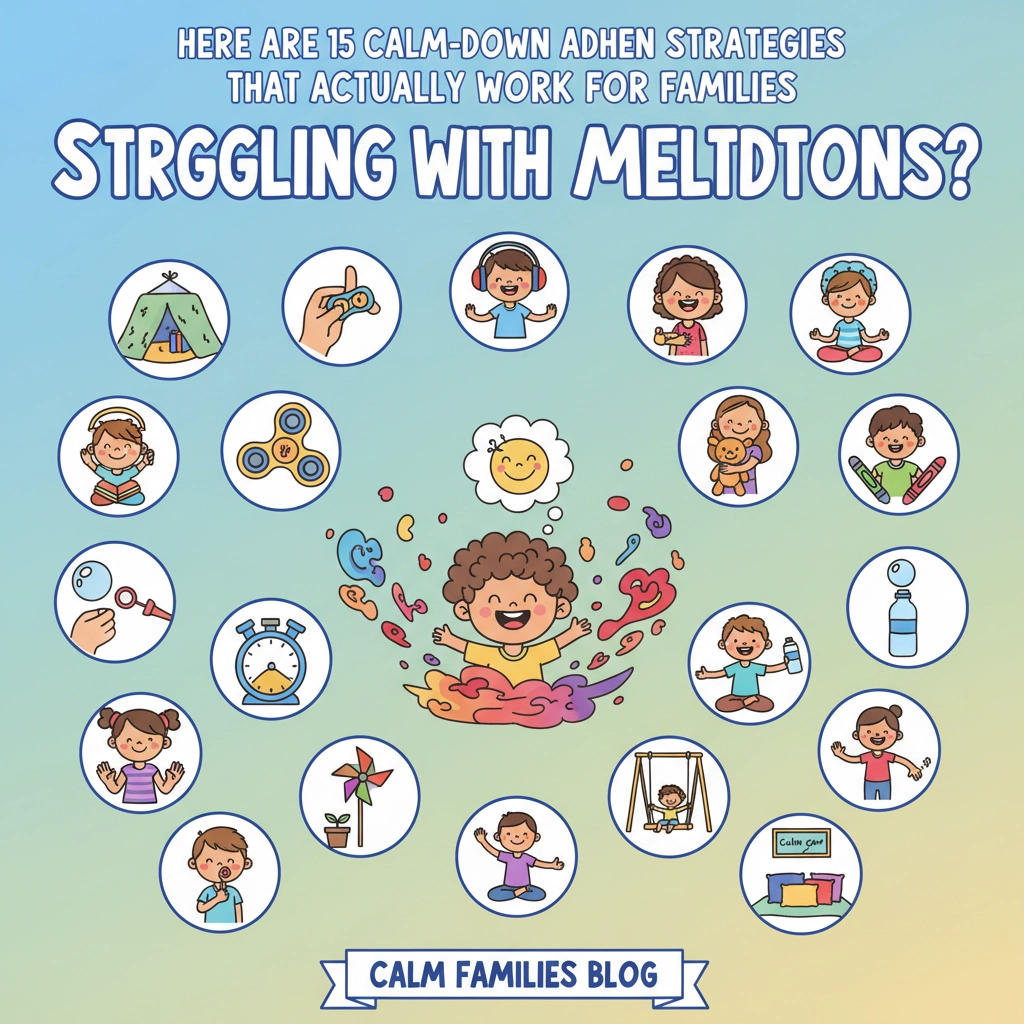
The grocery store checkout line. Homework time. Getting ready for school. If you're parenting a child with ADHD, you know these everyday moments can transform into emotional hurricanes without warning. One minute your child is fine, the next they're melting down completely: and you're left wondering what went wrong and how to help them find their way back to calm.
"I used to think my daughter was just being difficult," shares Maria Santos, mother of 8-year-old Isabella. "Then I learned that her brain literally works differently during these intense moments. Once I understood that meltdowns aren't manipulation: they're overwhelm: everything changed about how I responded."
ADHD meltdowns aren't temper tantrums or defiance. They're the brain's way of saying "I can't handle this right now" (neurological overload that affects emotional regulation, executive function, and impulse control). Understanding this distinction is the first step toward developing effective strategies that actually work for your family.
Prevention Strategies: Building Your Foundation for Success
1. Create Predictable Daily Rhythms That Reduce Anxiety
Children with ADHD thrive when they know what's coming next. Dr. Sarah Chen, pediatric neuropsychologist, explains: "The ADHD brain expends enormous energy trying to navigate unpredictability. When we create consistent routines, we're actually giving their nervous system permission to relax."
Visual schedules work particularly well: try using pictures or symbols to show the day's activities. This isn't about rigid scheduling; it's about creating anchoring points that help your child feel secure.
2. Become a Detective: Track and Identify Meltdown Triggers
Keep a simple log for one week noting what happened right before each meltdown
Common triggers include hunger, fatigue, sensory overload, transitions, and overwhelming tasks. "Once I started tracking patterns, I realized my son always melted down around 4 PM," notes parent Jennifer Walsh. "He needed a snack and quiet time after school, not immediately jumping into homework."
3. Co-Create Emergency Plans During Calm Moments
Before entering potentially challenging situations, ask your child: "If you start feeling overwhelmed at the store today, what would help you feel better?" When children participate in creating their own coping strategies, they're more likely to use them.
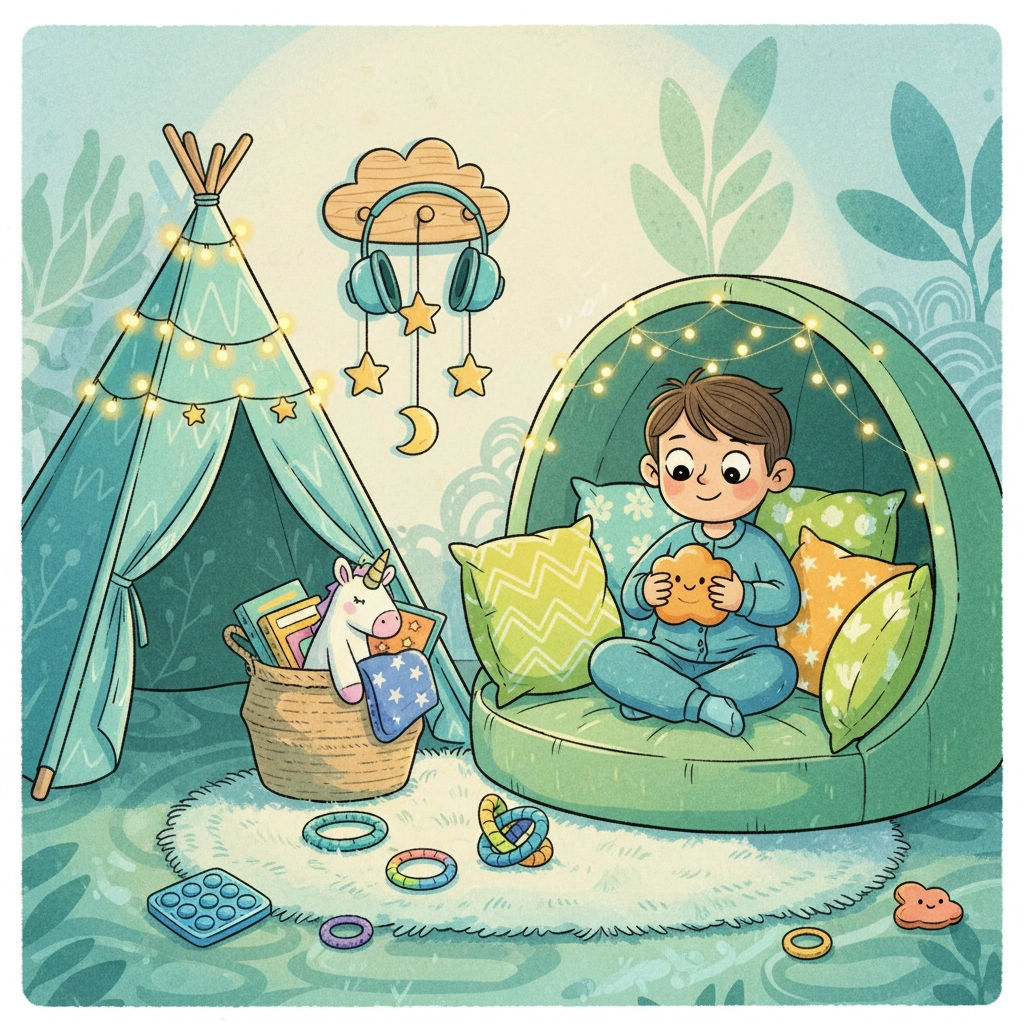
4. Design a Dedicated Calm-Down Space
This isn't a punishment area: it's a sanctuary. Include soft textures, dim lighting, noise-canceling headphones, fidget toys, and comfort items. "Our calm-down corner has become my son's favorite place in the house," shares parent David Kim. "He goes there even when he's not upset, just to recharge."
In-the-Moment Strategies: Your Toolkit for Emotional Storms
5. Master the Art of Staying Calm Yourself
Your emotional state directly impacts your child's ability to regulate. When you remain calm during their storm, you're essentially lending them your nervous system stability. This concept (called co-regulation) is backed by extensive neuroscience research.
"I had to learn that my child wasn't giving me a hard time: they were having a hard time," reflects parent Michael Torres. "Once I stopped taking it personally, I could actually help them."
6. Practice Strategic Silence
During peak meltdown moments, resist the urge to explain, reason, or lecture. Your child's brain literally cannot process complex information during emotional overwhelm. Instead, stay present and quiet, communicating through your calm presence rather than words.
7. Validate Feelings Without Validating Actions
Try phrases like: "I can see you're feeling really frustrated right now. That feeling makes sense, and I'm here with you." This acknowledges their emotional experience while maintaining boundaries around behavior.
8. Get Down to Their Physical Level
Sitting on the floor with your child creates connection rather than intimidation. This simple shift often helps children feel less defensive and more open to receiving support.
9. Offer Specific Self-Regulation Tools
Teach and practice these during calm times:
- Deep breathing exercises (try "smell the flower, blow out the candle")
- Counting to ten slowly
- Squeezing a stress ball
- Progressive muscle relaxation
"We practice these skills like fire drills," explains parent Lisa Chen. "When the real emergency happens, my daughter knows exactly what to do."
10. Provide Physical Release Options
Sometimes emotions need to move through the body. Safe options include:
- Punching pillows or cushions
- Jumping on a trampoline
- Tearing up old newspapers
- Squeezing play dough

11. Use Creative Distraction and Redirection
Early in the escalation process, engaging activities can shift focus: drawing, playing with sensory bins, watching a favorite video, or engaging in imaginative play. The key is timing: this works best before emotions peak.
12. Try the "Remote Control" Technique
Help your child imagine they're holding a remote control that can "turn down" their big emotions. This playful approach gives them a sense of agency and control during overwhelming moments.
13. Practice Synchronized Breathing
Hold your child's hands and breathe together slowly and deeply. This physical connection combined with rhythmic breathing helps their nervous system sync with your calmer state.
Recovery Strategies: Rebuilding Connection and Learning
14. Implement Family Timeout Periods
When everyone is escalated, call a family timeout. This isn't punishment: it's recognizing that sometimes everyone needs space to reset. "We all go to our rooms for 10 minutes to cool down," shares parent Amanda Rodriguez. "It prevents things from getting worse and gives us all time to regulate."
15. Celebrate Successful Regulation with Specific Praise
After your child uses a coping skill or recovers from a meltdown, acknowledge their effort specifically: "I noticed you took deep breaths when you felt frustrated. That took real courage and skill." This recognition builds their confidence and reinforces positive coping patterns.
Remember: Progress isn't linear, and every child responds differently to various strategies
The Transformation That's Possible
"Six months ago, our house felt like a war zone," admits parent Carlos Gutierrez. "Now my son tells me when he needs a break, uses his breathing techniques, and even helps his little sister when she's upset. The strategies didn't just change his behavior: they changed our whole family dynamic."
The goal isn't to eliminate all meltdowns (they're a normal part of childhood, especially for neurodivergent children). Instead, we're building your child's capacity to navigate big emotions and your family's ability to support each other through difficult moments.
These strategies work best when implemented consistently over time, with patience and understanding that building emotional regulation skills is a process. Some days will be harder than others, and that's completely normal.
As you begin implementing these approaches, remember that you're not just managing today's meltdown: you're teaching lifelong skills that will serve your child as they grow. Every calm response, every validated feeling, and every successful regulation moment is building their confidence and emotional intelligence for the future.
The journey of parenting a child with ADHD isn't always easy, but with the right tools and understanding, it can be incredibly rewarding. Your child's intense emotions, when properly supported, can become their greatest strengths: empathy, creativity, passion, and resilience.