
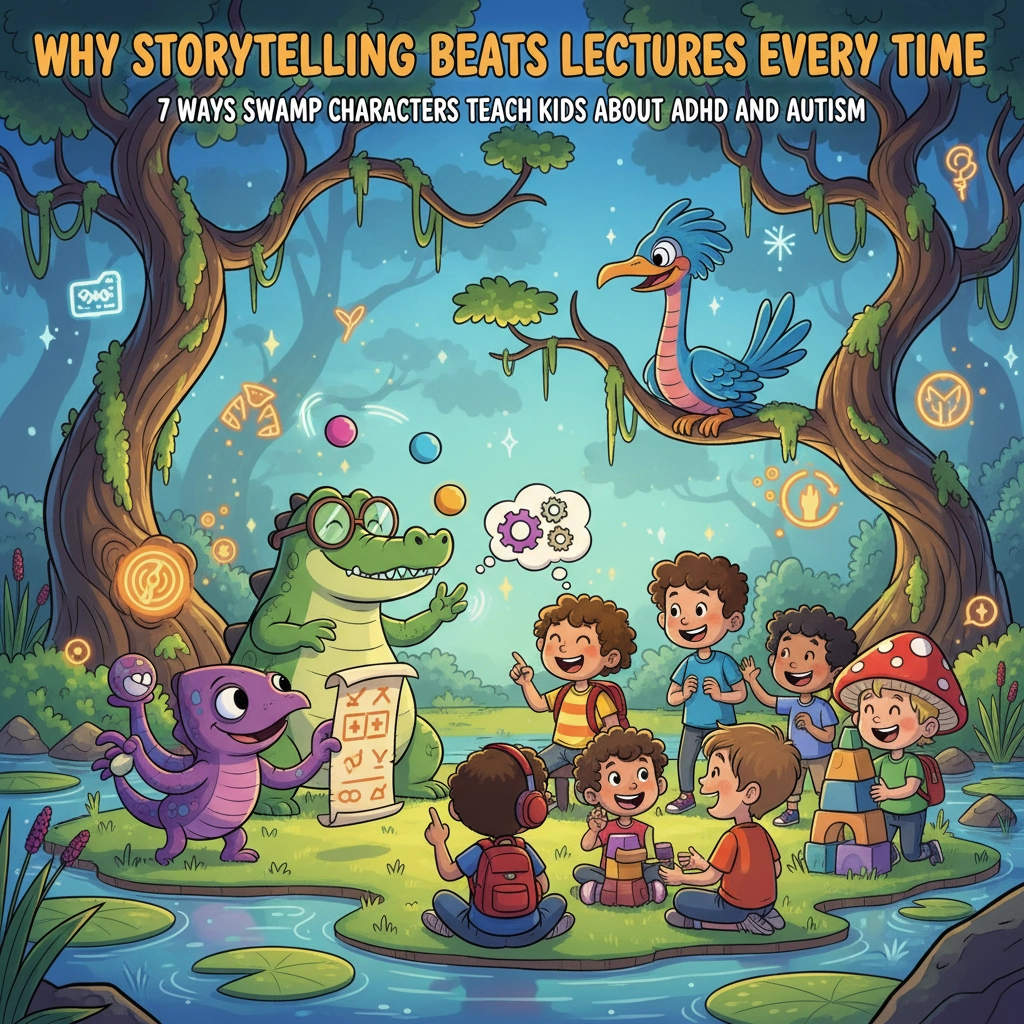
Picture this: You're trying to explain ADHD to your 7-year-old, and you start with the clinical definition. "ADHD stands for Attention Deficit Hyperactivity Disorder, and it affects executive functioning…" Five minutes later, your child is staring out the window, completely lost. Sound familiar?
Now imagine instead you say, "Let me tell you about Zoomy Frog, who bounces from lily pad to lily pad so fast that sometimes he forgets where he was going…" Suddenly, you have their complete attention.
This isn't just anecdotal evidence: it's neuroscience in action. Research consistently shows that facts presented in stories are 20 times more likely to be remembered than facts presented in isolation. For children navigating ADHD, autism, and other neurodivergent experiences, this difference isn't just helpful: it's transformative.
The Science Behind Story-Powered Learning
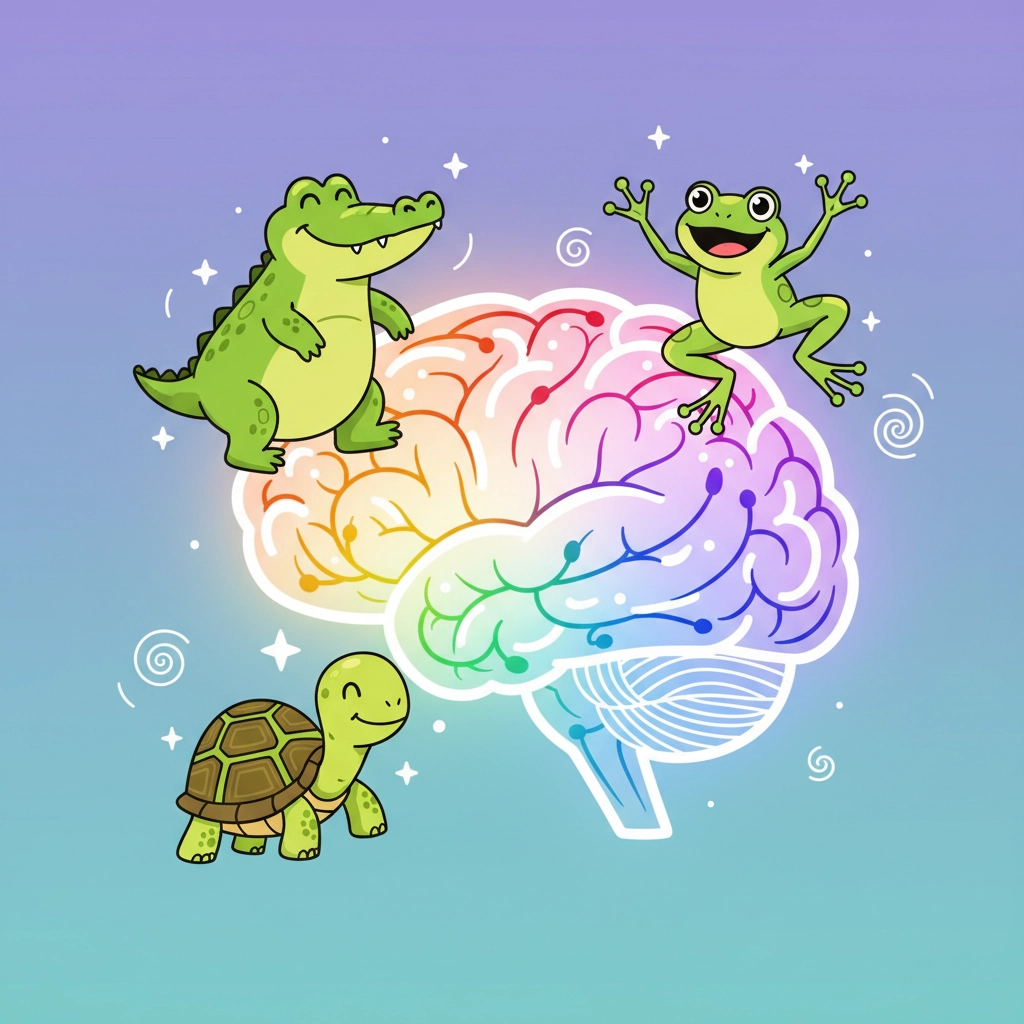
Traditional lectures activate only two areas of the brain: Broca's area (language processing) and Wernicke's area (language comprehension). Stories, however, light up the entire brain like a Christmas tree. When we hear about Xtermigator splashing through the Friendly Ferns Swamp, our sensory cortex activates. When we follow his emotional journey, our limbic system engages. When we picture the vibrant swamp ecosystem, our visual cortex springs to life.
Dr. Jennifer Aaker from Stanford's Graduate School of Business explains: "Stories forge connections among people and between people and ideas, building familiarity and trust that allow listeners to enter where they are and become more open to learning."
For neurodivergent children, this multi-sensory engagement is particularly crucial. Roughly 40% of learners are visual, 40% auditory, and 20% kinesthetic: and storytelling accommodates all three simultaneously. Visual learners create mental pictures of the swamp setting, auditory learners focus on character voices and dialogue, and kinesthetic learners connect with the emotional experiences of beloved characters.
Why Swamp Characters Create the Perfect Learning Environment
The Friendly Ferns Swamp isn't just a whimsical setting: it's a carefully designed metaphor for neurodiversity. Like real ecosystems, the swamp thrives because of its differences, not in spite of them. Each character brings unique strengths that contribute to the community's success, modeling inclusion in action.
"My daughter Emma has autism, and traditional social skills training felt like torture for both of us," shares parent educator Maria Rodriguez. "But when she started following Xtermigator's adventures, she began asking questions about feelings, friendships, and social situations naturally. The swamp became her safe space to explore these concepts."
The 7 Ways Swamp Characters Teach About ADHD and Autism
1. Making Abstract Concepts Concrete Through Character Experiences
ADHD executive functioning challenges become tangible when children watch Zoomy Frog struggle to remember his daily routine. Instead of lecturing about "working memory deficits," children see Zoomy create visual reminder systems using lily pad arrangements. The abstract becomes concrete, the clinical becomes relatable.
Autism's sensory processing differences come alive when Sensitive Turtle retreats into his shell during overwhelming moments. Children don't need to memorize diagnostic criteria: they understand through empathy and recognition.
2. Providing Safe Emotional Distance for Processing Difficult Topics
"It's easier to talk about Xtermigator's feelings than my own feelings," explains 9-year-old Marcus, who has both ADHD and anxiety. This emotional distance creates what psychologists call "bibliotherapy": healing through story identification.
When swamp characters experience rejection, overstimulation, or social confusion, children can process these feelings without the immediate vulnerability of personal disclosure. They're not admitting their own struggles; they're simply caring about a friend.
3. Demonstrating Adaptive Strategies in Context
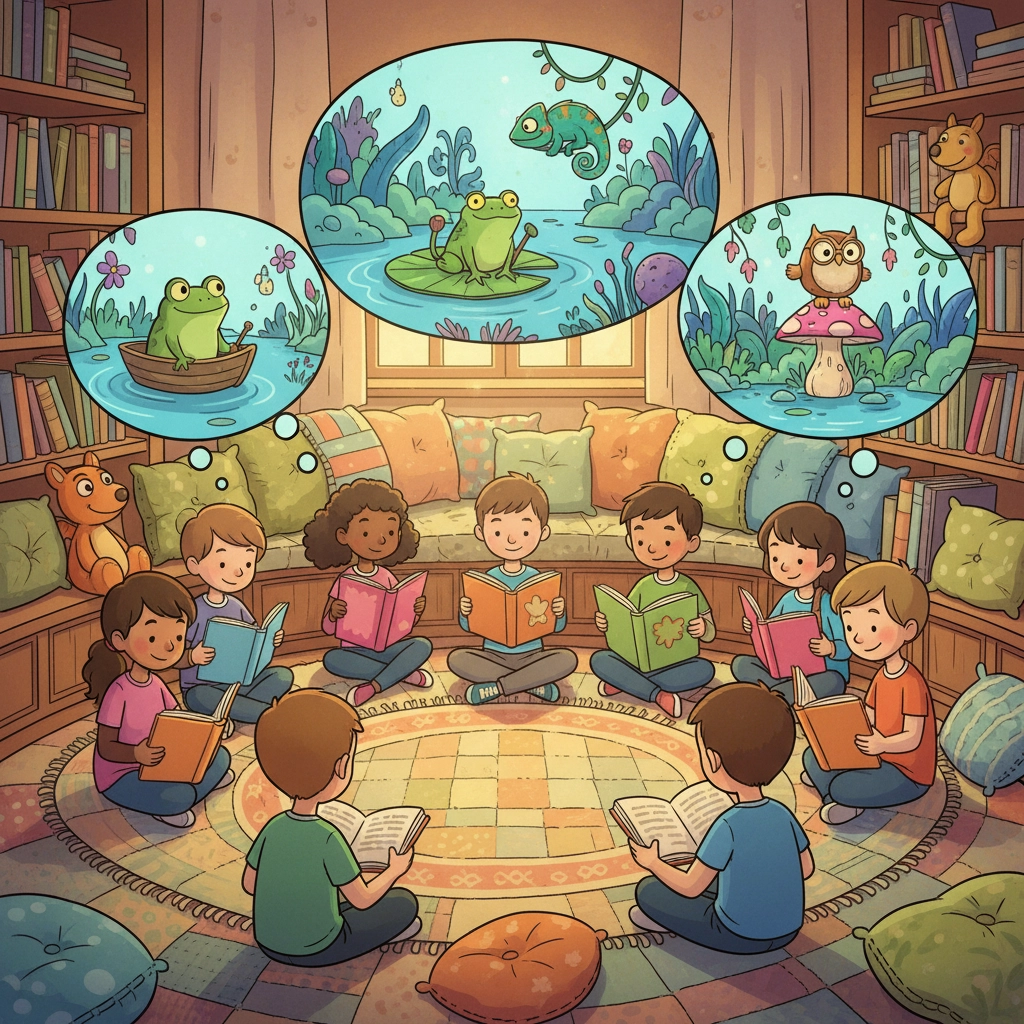
Research shows that children with ADHD have particular difficulty understanding causal relationships and retaining details. Swamp stories address this by making character motivations and problem-solving strategies explicit.
When Anxious Otter feels overwhelmed at the Swamp Social Gathering, the story doesn't just show his distress: it walks through his coping strategy step-by-step: "First, Otter took three deep breaths like bubbles floating to the surface. Then he found his quiet corner near the cattails. Finally, he used his self-advocacy words to ask for a break."
4. Normalizing Neurodivergent Experiences as Natural Variations
In the Friendly Ferns Swamp, neurodivergent traits aren't problems to be fixed: they're natural variations that contribute to ecosystem diversity. Zoomy Frog's hyperactivity makes him the swamp's best messenger. Sensitive Turtle's heightened awareness helps detect environmental changes that keep everyone safe.
"My son used to say he was 'broken' because of his autism," recalls parent advocate James Chen. "After reading about the swamp characters, he started saying he was 'turtle-like' instead. Same traits, completely different self-perception."
5. Building Social Skills Through Repetitive, Predictable Interactions
Children with autism particularly benefit from repetitive story elements that allow them to focus on subtle social cues during subsequent readings. Each Xtermigator adventure follows a consistent structure: character introduction, challenge identification, community support, problem-solving, and celebration.
This predictability creates safety for deeper learning. On first reading, children follow the plot. On second reading, they notice facial expressions. By the third reading, they're picking up on tone of voice, body language, and social nuances that might be overwhelming in real-time interactions.
6. Offering Multiple Entry Points for Different Learning Needs
Visual learners connect with the vivid swamp illustrations and character expressions. Auditory learners focus on dialogue, sound words ("splash!", "ribbit!", "whoosh!"), and rhythm. Kinesthetic learners engage with action sequences and emotional moments that create physical responses.
"My daughter has ADHD and dyslexia, so traditional books were frustrating," explains teacher Lisa Park. "But the Xtermigator stories have so many visual cues and contextual supports that she can access the content successfully. She's finally experiencing herself as a successful reader."
7. Creating Shared Language for Family Communication
Perhaps most importantly, swamp characters provide families with shared vocabulary for discussing challenging topics. Instead of saying "You're being too loud and impulsive," parents can reference "Zoomy Frog energy." Rather than "You're having a meltdown," families talk about "turtle moments" when someone needs to retreat.
This shared language reduces shame and builds understanding. "We use swamp language constantly now," laughs parent coordinator Sandra Williams. "When my son needs sensory input, he asks for 'alligator time' to roll and wrestle. When my daughter needs quiet, she requests 'turtle space.' It's revolutionized our family communication."
The Neuroscience of Story-Based Connection
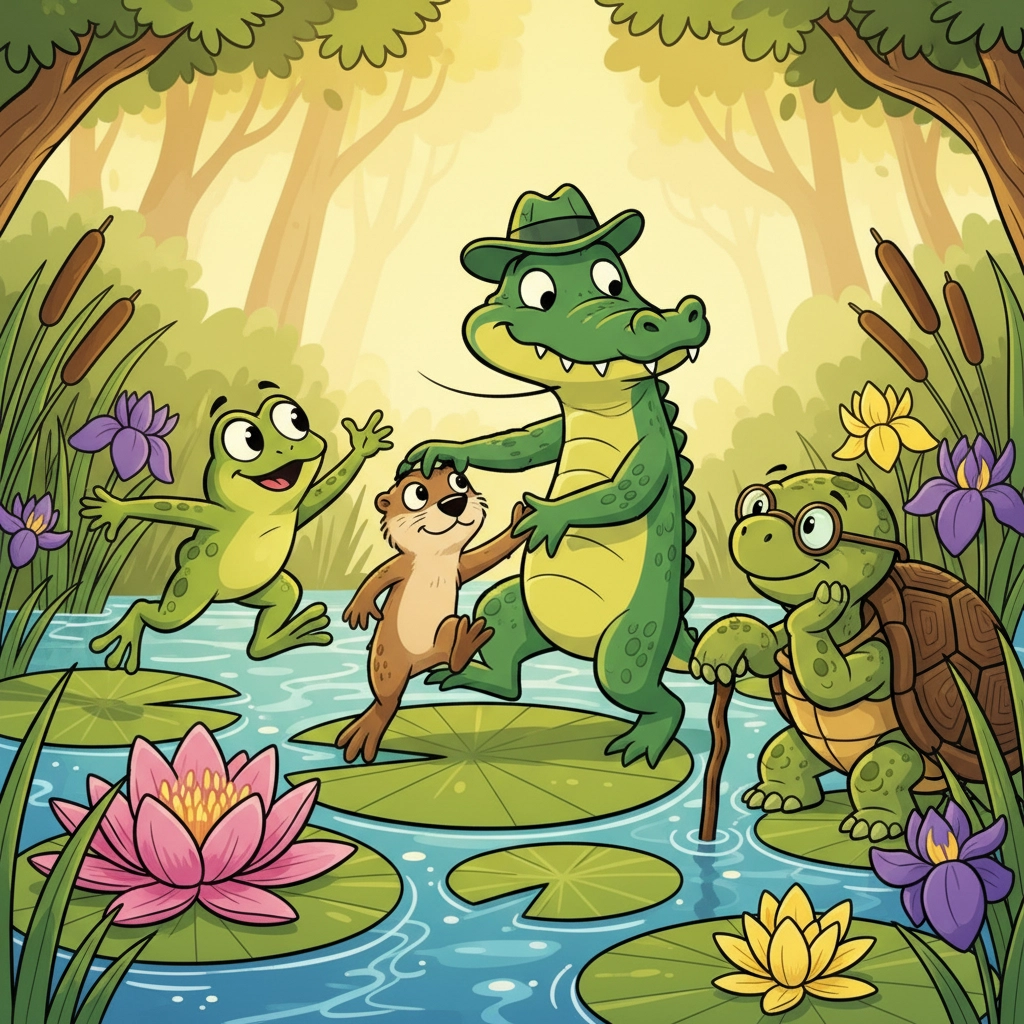
Recent brain imaging studies reveal why character-based learning creates such powerful neural pathways. When children identify with story characters, their brains activate mirror neurons: the same cells that fire when they perform actions themselves. Essentially, their brains "practice" social skills, emotional regulation, and problem-solving through character experiences.
For children with autism, who may struggle with theory of mind (understanding others' perspectives), character identification provides scaffolded practice. They're not trying to guess what a real person is thinking: they're guided through character thoughts and motivations explicitly.
For children with ADHD, whose executive functioning challenges make it difficult to connect cause and effect, stories provide clear sequences with emotional stakes that enhance memory formation. The amygdala (emotion center) tags story information as "important," making it more likely to transfer to long-term memory.
Real-World Implementation: From Swamp to School
Teachers across the country are discovering that swamp-based social skills instruction creates more inclusive classrooms. "We started using Xtermigator stories during morning meetings," explains elementary teacher Rachel Torres. "Now when conflicts arise, students naturally reference character strategies. They're not just memorizing social rules: they're internalizing them through emotional connection."
Implementation tip: Introduce one character trait per week, allowing time for deep exploration and personal connection before moving to new concepts.
The ripple effects extend beyond academics. "My students with autism started initiating friendships for the first time," notes special education coordinator David Kim. "They're using swamp character names as conversation starters and finding common ground through shared story experiences."
Building Bridges Between Different and Typical
Perhaps most significantly, swamp stories create natural bridges between neurodivergent and neurotypical children. Rather than focusing on deficits or differences, they emphasize universal themes: friendship, problem-solving, community support, and personal growth.
"All children see themselves somewhere in the swamp ecosystem," observes school psychologist Dr. Amanda Foster. "Neurotypical children develop empathy and understanding naturally, while neurodivergent children find representation and validation. It's inclusion through storytelling."
Looking Forward: The Future of Character-Based Learning
As our understanding of neurodiversity continues to evolve, character-based learning offers exciting possibilities for personalized education. Imagine interactive swamp adventures that adapt to individual learning profiles, or virtual reality experiences where children can literally walk alongside their favorite characters while practicing real-world skills.
The potential extends beyond individual growth to community transformation. When entire classrooms, families, and communities share character-based language and understanding, we create more inclusive environments naturally.
"The swamp isn't just teaching my daughter about her autism," reflects parent advocate Teresa Lopez. "It's teaching all of us about acceptance, celebrating differences, and building community where everyone belongs."
As we continue developing innovative approaches to neurodiversity education, one truth remains constant: stories don't just teach concepts: they transform hearts, minds, and communities, one character adventure at a time.
Discover more about creating inclusive learning environments through character-based storytelling at https://xtermigatorkids.com, where every child's unique gifts contribute to our diverse learning ecosystem.