
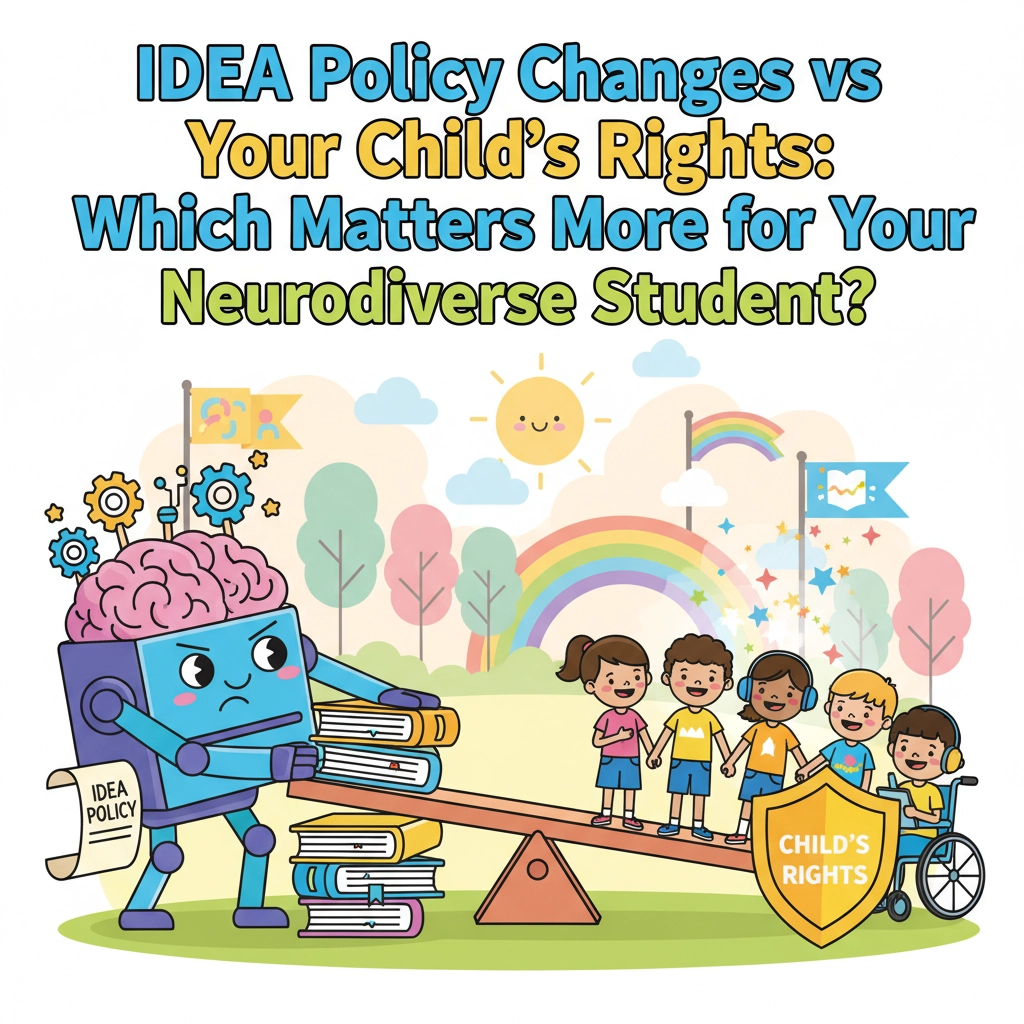
When Sarah received the email about her son's upcoming IEP meeting, she felt that familiar knot in her stomach. "Another policy change," she thought, scanning through references to new documentation requirements and updated transition planning timelines. "Does this help my child or just create more bureaucracy?" For parents of neurodiverse students, navigating the intersection of evolving IDEA policies and their child's fundamental rights can feel overwhelming: especially when you're not sure which deserves your immediate attention.
The truth is both matter, but they operate at different levels of your child's educational experience. Your child's rights under IDEA serve as the legal foundation that remains constant regardless of political winds, while policy changes determine how effectively those rights translate into real classroom support and services.
Understanding Your Child's Unshakeable IDEA Rights
Every neurodiverse student has legally protected rights that transcend policy fluctuations. Under IDEA, your child is entitled to a Free Appropriate Public Education (FAPE) specifically designed to meet their unique needs and prepare them for further education, employment, and independent living. This isn't a privilege: it's a legal guarantee that courts have consistently upheld, even strengthening through landmark cases like Endrew F. v. Douglas County School District.
"The law doesn't say your child deserves an adequate education or a basic education," explains special education attorney Maria Rodriguez, who has represented families for over fifteen years. "It says appropriate: meaning genuinely suitable for your individual child's circumstances, challenges, and potential."

Your role as a parent holds equal weight in all educational decisions. IDEA establishes you as a mandatory participant, not just an observer, in your child's educational planning. You have the right to review all educational records, receive advance notice of any proposed changes to your child's evaluation or placement, and request an Independent Educational Evaluation if you disagree with the school's assessment. When disagreements arise, you can request mediation, due process hearings, and ultimately federal court appeals.
The law also requires schools to conduct appropriate evaluations using trained professionals and assessment materials administered without cultural or linguistic discrimination. Your child cannot be subjected to unnecessary testing, and all evaluations must directly inform future instructional planning rather than simply checking compliance boxes.
How 2025 Policy Changes Strengthen Rights Implementation
Recent California legislation demonstrates how thoughtful policy changes can enhance the implementation of your child's fundamental rights. AB 438, effective July 1, 2025, moves transition planning earlier in your child's educational journey. Instead of waiting until age 16, IEP teams must now consider measurable post-secondary goals and transition services as early as your child's first high school IEP.
"This change recognizes what we've known for years: that successful transitions require more time and intentional planning," notes Dr. Jennifer Kim, a transition specialist who works with neurodiverse students. "Starting these conversations in ninth grade gives families four full years to explore options, build skills, and make connections that support meaningful post-secondary outcomes."
AB 2173, effective January 1, 2025, allows schools to use "emotional disability" instead of "emotional disturbance" in eligibility categories: a seemingly small change that carries significant psychological impact for families. The outdated "disturbance" language often created additional stigma for students already navigating social and emotional challenges.

Teaching children that kindness is a superpower includes using respectful language about disabilities and differences
SB 939 requires schools to post neurodiversity resources and incorporate neurodiversity support strategies into anti-bullying training starting in the 2025-26 school year. This policy acknowledges that creating inclusive environments requires proactive education, not just reactive responses to problems.
The Documentation Revolution: New Requirements That Protect Your Child
Updated IDEA regulations emphasize significantly tighter documentation requirements that actually strengthen your child's rights protection. Schools must now provide detailed explanations for why your child cannot receive appropriate education in general education settings, moving beyond generic justifications to specific, individualized reasoning.
"The new documentation standards force schools to really examine their practices," explains Melissa Chen, an inclusion specialist with twenty years of classroom experience. "They can't just say 'this child needs a separate setting': they have to demonstrate what specific supports they've tried in general education and document why those approaches weren't sufficient."
These changes prioritize co-teaching models and in-class support over separate placements, requiring mandatory review of less restrictive alternatives before recommending specialized environments. For neurodiverse students who often benefit from remaining with neurotypical peers while receiving targeted support, these requirements can significantly improve their educational experiences.
Federal Funding Concerns: When Policy Changes Threaten Rights
However, proposed federal changes under Project 2025 illustrate how policy shifts can potentially undermine your child's rights implementation. These proposals would convert IDEA funding into "no-strings" grants distributed directly to districts, bypassing state education agencies that currently monitor compliance and provide technical assistance.
While increased flexibility sounds appealing, education policy researcher Dr. Amanda Torres warns: "When federal oversight decreases, enforcement of individual rights often suffers. State agencies play a crucial role in investigating complaints, providing training, and ensuring districts follow IDEA requirements."
The proposals also suggest creating market-driven models where parents receive direct funding to choose services independently of district IEPs. "This approach could leave students without the procedural safeguards that IDEA provides," notes special education law expert Professor David Martinez. "Private providers aren't bound by the same accountability standards that protect your child's right to FAPE."
Your Strategic Response: Protecting Rights Through Policy Awareness
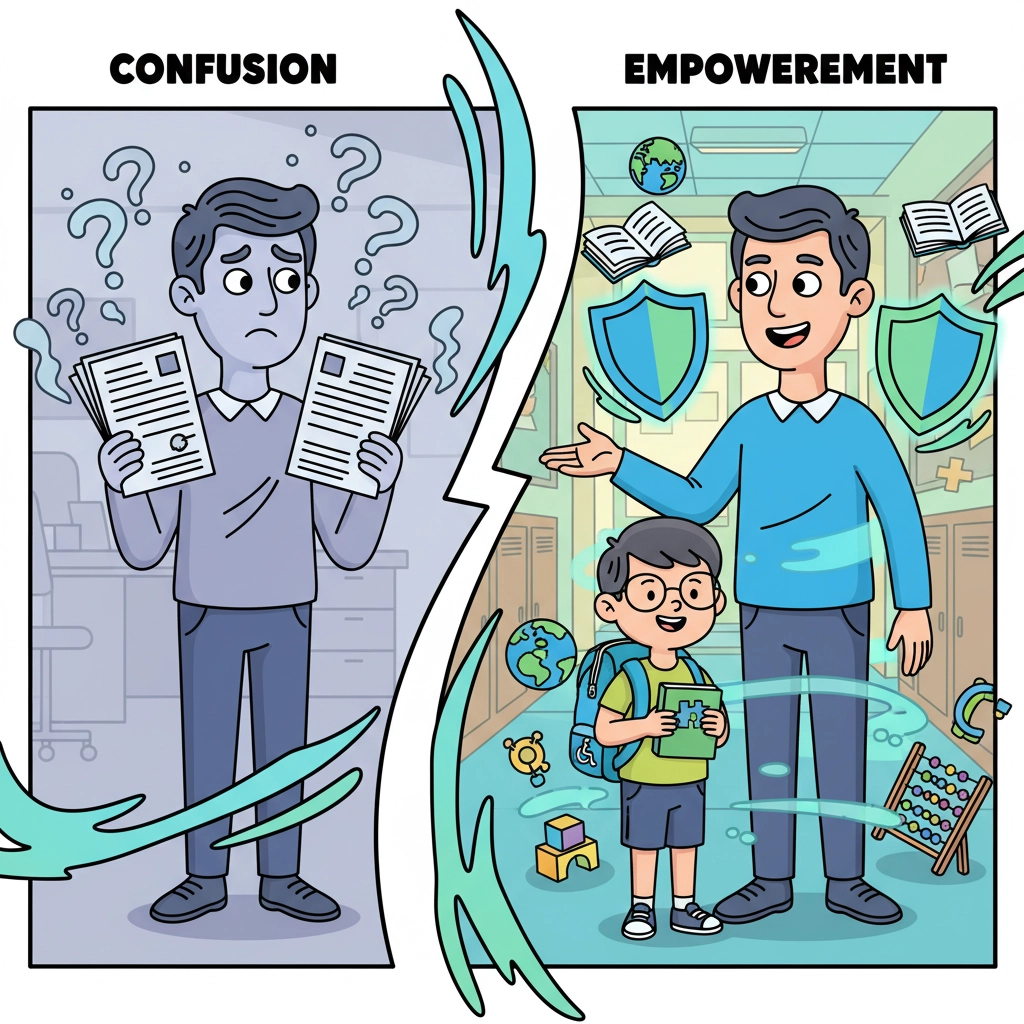
Rather than choosing between rights and policy awareness, successful advocacy requires understanding how they interconnect. Your child's fundamental rights provide the legal framework, while staying informed about policy changes helps you advocate more effectively for their implementation.
Monitor how your school implements new requirements like earlier transition planning (requesting specific language in your high school student's IEP), neurodiversity resource accessibility (asking how these materials are being incorporated into your child's school environment), and documentation standards (requesting detailed explanations for any placement recommendations).
"I learned to ask for everything in writing after the 2025 changes took effect," shares parent advocate Lisa Thompson, whose daughter has autism and ADHD. "When the school said they'd tried 'various supports' in general education, I asked for documentation of exactly what was tried, for how long, with what results. The detailed response helped us develop much more targeted strategies."
Exercise your fundamental rights by participating actively in all IEP meetings as an equal partner, not a passive recipient of school decisions. Document all communications and decisions, request clarification when recommendations seem generic rather than individualized, and don't hesitate to seek independent evaluations if school assessments don't align with your observations of your child.
The Future Landscape: Staying Vigilant and Hopeful
As policy landscapes continue evolving, your child's rights remain the constant that protects their educational access. Recent positive changes in states like California demonstrate that thoughtful policy development can strengthen rights implementation, while proposed federal changes remind us that vigilance is required to maintain hard-won protections.
The goal isn't to choose between rights and policies: it's to understand how strong policies enhance your child's rights while weak policies can undermine them. Your advocacy efforts should focus on ensuring both your child's individual needs are met and the systemic supports exist to maintain those protections for all neurodiverse students.

Supporting inclusive education means understanding both individual rights and the policies that help implement them effectively
By combining knowledge of your child's fundamental IDEA rights with awareness of current policy trends, you're better positioned to advocate effectively regardless of political or administrative changes. Your child's right to an appropriate education remains constant: your job is ensuring the policies and practices around that right continue supporting meaningful access and genuine inclusion.
The answer to "which matters more" isn't about choosing sides: it's about recognizing that your child's rights and the policies that implement them work together to create educational opportunities that honor both their potential and their dignity.