
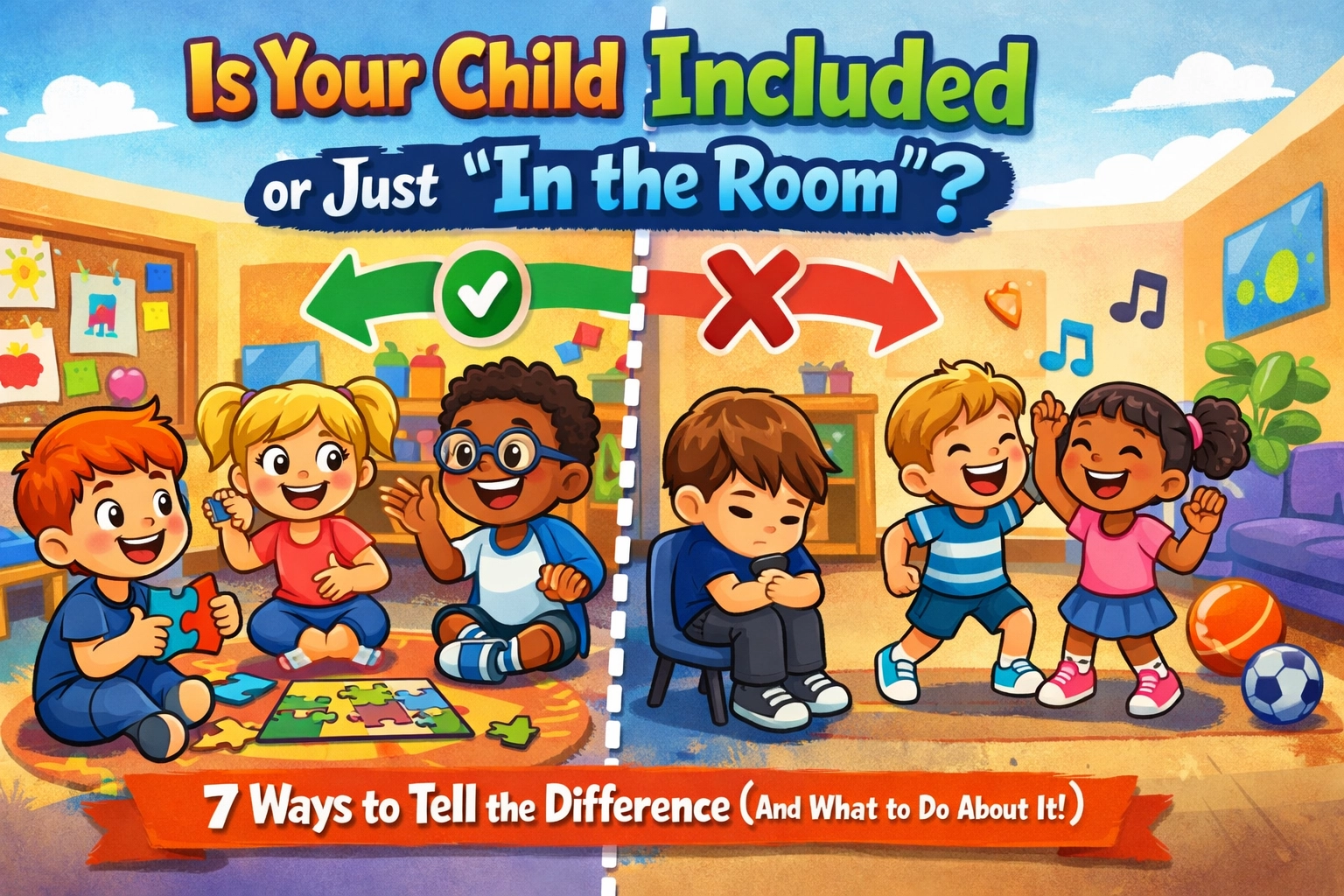
You walk into your child’s classroom during an open house or a scheduled observation, and at first glance, everything looks perfect. Your child is sitting at a desk, surrounded by their peers, and the teacher is leading a lesson on long division or the water cycle. But as you watch, you notice a subtle gap. While the other kids are whispering about the assignment or raising their hands, your child is looking at a different packet, or perhaps a paraprofessional (an educational assistant who provides 1-on-1 support) is doing the bulk of the work for them.
The physical presence is there. But the inclusion? That’s another story.
For parents of children with unseen disabilities: like ADHD, high-functioning autism, or sensory processing disorders: the distinction between "integration" and "inclusion" is often the difference between a child who thrives and a child who merely survives the school day. "I spent three years thinking my daughter was 'included' because she was in a General Education classroom," says Maria G., a mother of a seven-year-old with Dyspraxia. "It took me seeing her sit alone at a 'calm down' table during the entire class holiday party to realize she was just a guest in that room, not a member of it."
The "Guest" vs. The "Member" Mental Shift
True inclusion means more than a child being physically present in a general education classroom. It requires meaningful participation in the same curriculum and social interactions as their peers. When we talk about "The Friendly Ferns Swamp" characters, like our friend Zoomy Frog, we see this in action. Zoomy doesn't just sit on the edge of the lily pad watching the others play; he has a role that fits his unique pace.
If you’re wondering where your child stands, here are seven ways to tell if they are truly included or just taking up floor space: and the actionable steps you can take to bridge the gap.
1. Your Child Learns the "Same Magic," Not a Different Trick
In a truly inclusive setting, your child has access to the core curriculum (the standard set of subjects and lessons taught to all students). If the class is learning about the solar system, your child should be learning about the solar system too: not doing a coloring sheet of a cat in the back corner.
"True inclusion is about how we teach, not what we teach," explains Dr. Aris Thorne, an inclusive education consultant. "If a child can't access the material through reading, we provide an audiobook or a tactile model. We don't just give them a lower-level task that has nothing to do with the lesson."
Does your child’s homework match what the other kids are bringing home? If not, is the modification (a change in what the student is expected to learn) actually helping them reach the same goal, or is it just 'busy work'?
2. Social Interactions are Two-Way Streets
Physical proximity does not equal social connection. If your child’s only "friend" in the classroom is their assigned aide, they aren't included. Genuine inclusion involves peer-mediated supports (systems where classmates are trained and encouraged to interact and help one another).
Think of Xtermigator in our stories; he doesn't just solve problems for the other swamp creatures; he solves them with them.
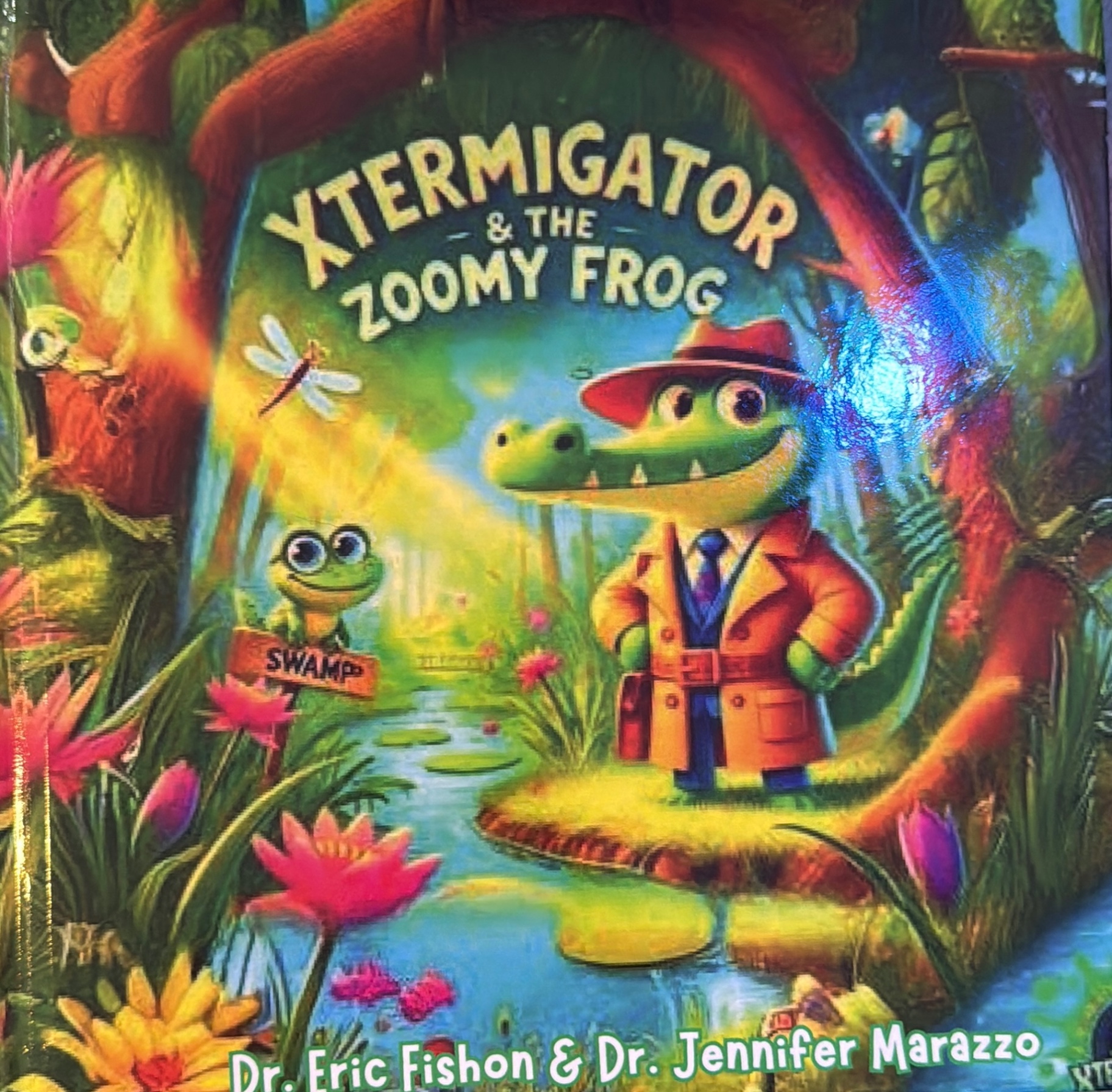
Storytelling through characters like Xtermigator helps children understand that everyone has a role to play in the community, regardless of their "zoominess" or "snappiness."
The Sign: During group work, is your child part of a group of three or four kids, or are they working 1-on-1 with an adult while the rest of the class chats and collaborates?
3. The Teacher Speaks "Our" Language
Listen to how the General Education teacher talks about the class. Does the teacher refer to the students as "my students" or "my students and your student" (referring to the special education teacher’s responsibility)?
When a teacher takes full ownership of every child in the room, inclusion is happening. When a teacher waits for the "specialist" to arrive before they even attempt to engage with your child, your child is just a visitor. This is often an issue of "teacher perception," where the educator may feel under-equipped to handle unseen disabilities without realizing that A disability is not an inability.
4. The Classroom Design is Proactive, Not Reactive
In a truly inclusive classroom, the environment is built for everyone from the start. This is often called Universal Design for Learning (UDL).
Look for these signs:
- Visual schedules (timelines using pictures) that the whole class uses.
- Flexible seating options (wobble stools, standing desks) available to anyone who needs to move.
- Quiet corners that aren't labeled as "the place for [Child's Name]."
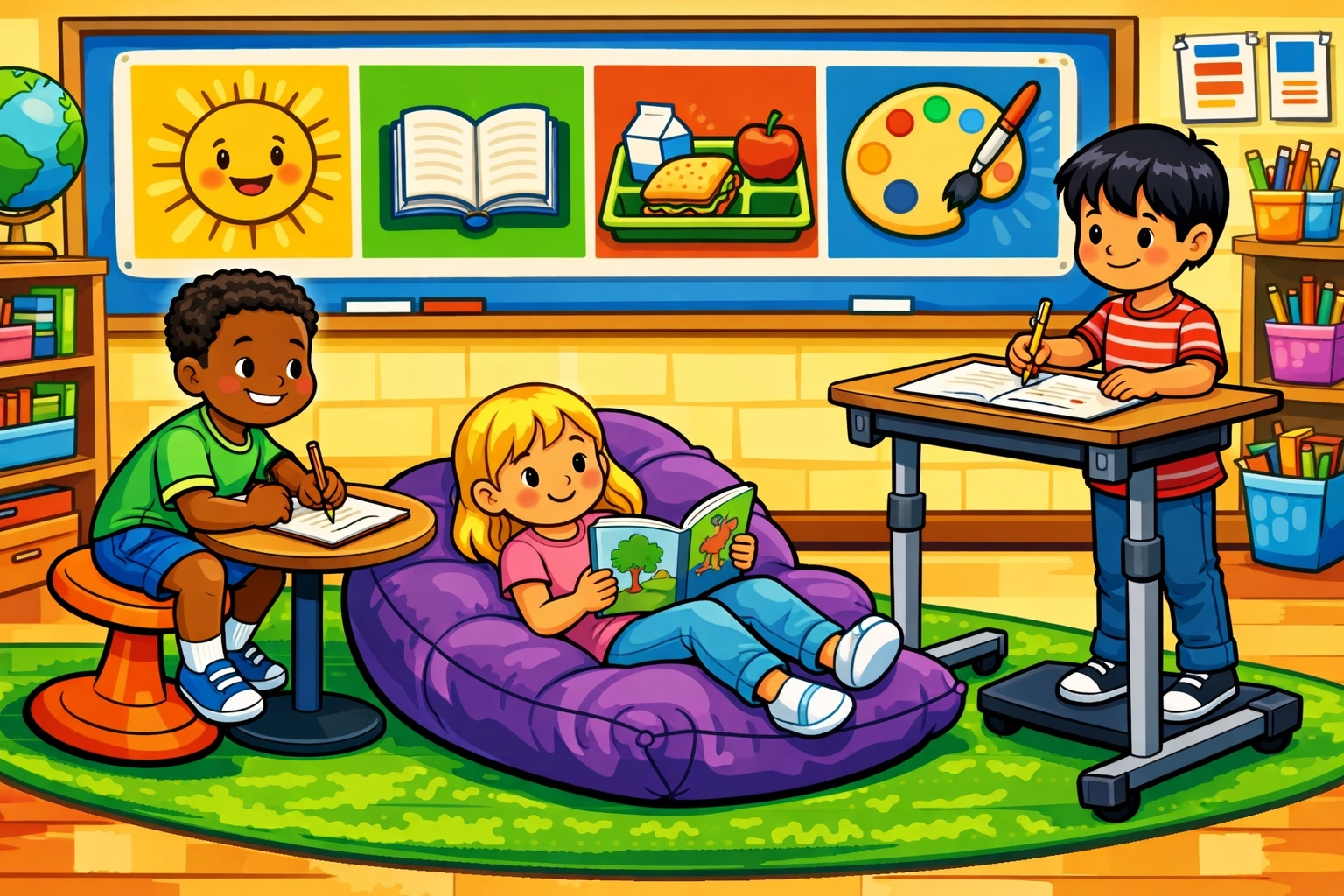
A classroom designed with UDL in mind feels cohesive; supports are woven into the fabric of the room so that no child stands out as 'different' for needing a tool.
5. Meaningful Participation in Transitions
Transitions: moving from math to lunch, or from the classroom to the gym: are where inclusion often falls apart. Is your child leaving five minutes early to "avoid the hallway rush"? While this might seem helpful for sensory issues, it systematically excludes them from the social "chatter" that happens between classes.
"The best moments of my childhood were the walks to the cafeteria," says David, an advocate with ADHD. "If I had been pulled out early every day, I would have missed every inside joke and every budding friendship."
6. The Presence of Natural Supports
Natural supports are the people and things already in the environment that help a child succeed, rather than artificial ones like a constant 1-on-1 adult presence.
If your child is "just in the room," they are likely tethered to an adult. If they are "included," they are using a checklist on their desk, a peer buddy to remind them to get their notebook, or a sensory tool they managed themselves. The goal is independence, and "The Friendly Ferns" emphasize that every creature in the swamp has their own way of getting through the day.
7. Extracurricular and "Soft" Inclusion
Does your child get invited to birthday parties? Do they participate in the school play or the morning announcements? Inclusion doesn't stop when the bell rings for recess.
If your child is in the classroom for academics but "pulled out" for every fun activity or school assembly because "it's too loud" or "they won't get it," they are not truly included. Accommodations (changes in how a student accesses information) should be made to help them attend the assembly, not to keep them from it.
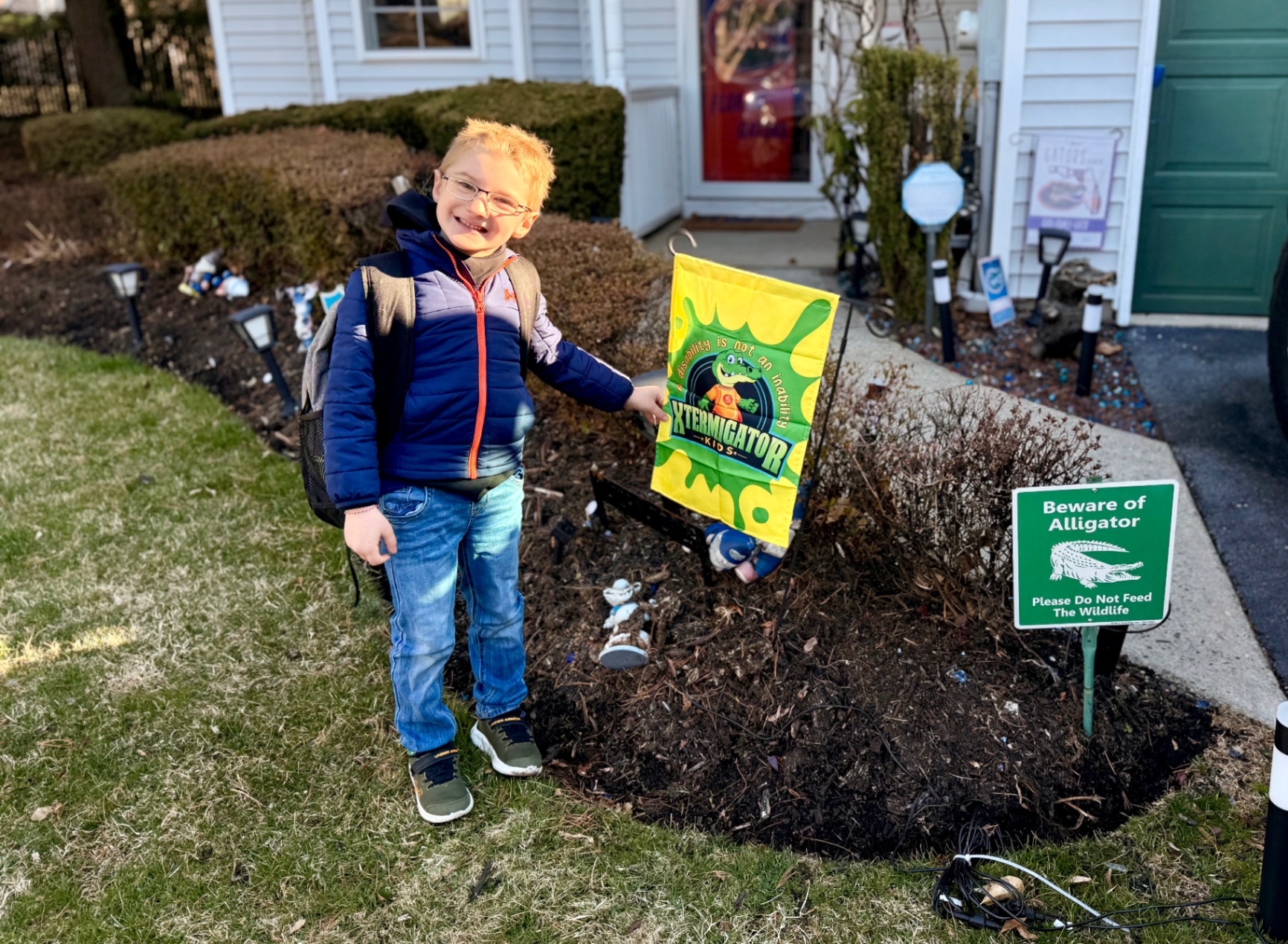
Inclusion means carrying the flag of belonging both inside and outside the school gates.
What to Do If Your Child is "Just in the Room"
If you've realized your child is more of a spectator than a participant, don't panic. This is a moment for an emotional transformation: the shift from being a worried observer to an empowered advocate.
Step 1: Document Your Observations
Keep a "Swamp Log" (just like Xtermigator would!). Note specific instances where your child was excluded from a group activity or given different work without a clear pedagogical reason.
Step 2: Request an IEP Meeting
You don't have to wait for the annual review. You can call an Individualized Education Program (IEP) meeting anytime. Use the term "Least Restrictive Environment" (LRE), which is a legal requirement under IDEA (the Individuals with Disabilities Education Act).
Step 3: Propose Specific Inclusion Strategies
Instead of just saying "I want more inclusion," try these technical suggestions:
- "I would like to see more Peer-Mediated Instruction and Intervention (PMII) in the classroom."
- "Can we integrate Specially Designed Instruction (SDI) within the General Ed block rather than pulling him out?"
- "Let's look at the Universal Design for Learning (UDL) checklist for the next science unit."
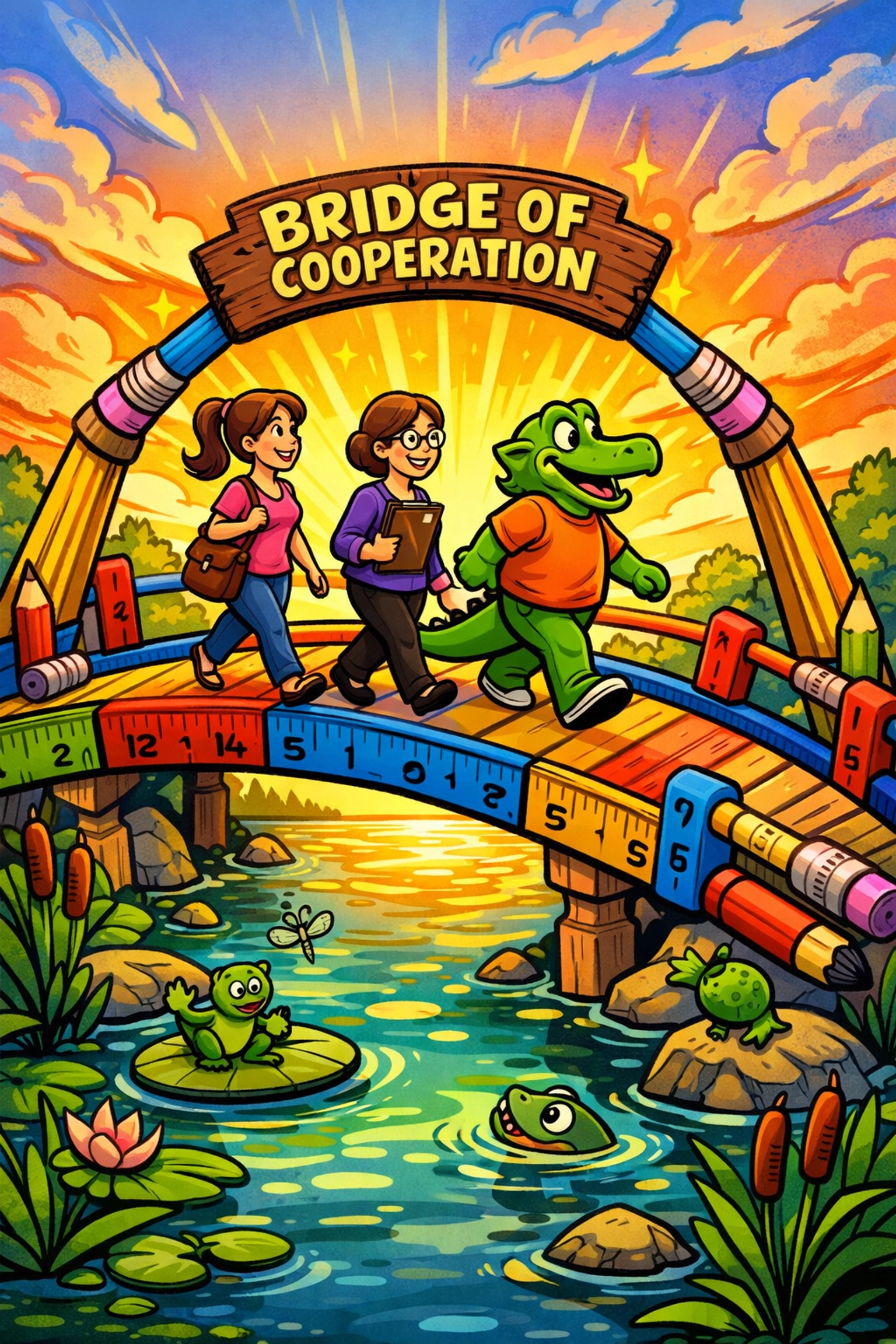
A successful IEP meeting is a bridge, not a battlefield. It’s where the school and the family align their vision for the child’s future.
A Future of True Belonging
As we look toward the future of education, the goal is a classroom where the "special" in special education doesn't mean "separate." We envision a world where every child, regardless of how their brain is wired, feels the same sense of belonging that our characters feel in the Community Connection of the Friendly Ferns Swamp.
"When my son finally got a teacher who understood inclusion, his entire personality changed," Maria G. recalls. "He went from a kid who hated school to a kid who felt like he had a job to do. He wasn't just 'there' anymore. He was himself."
Real inclusion is hard work. It requires teachers to be flexible, administrators to be supportive, and parents to be persistent. But the result: a child who knows they belong: is worth every single meeting and every single "Swamp Log" entry.
If you’re looking for ways to explain these concepts to your child or their classmates, our books offer a fantastic entry point into the world of unseen disabilities through the eyes of characters who value kindness and courage above all else.

Because at the end of the day, we are all just creatures in the same swamp, learning to navigate the waters together.
Ready to dive deeper? Check out our FAQ for more tips on navigating school systems, or join our community of parents who are moving from "in the room" to "in the heart" of the classroom. Together, we are unstoppable.