
You’re sitting in a waiting room that smells faintly of old crayons and industrial-grade lavender. You’ve been on a waitlist for fourteen months. Your child is currently trying to see if their head fits between the bars of the waiting room chairs, and you’re sweating through your shirt because you know, you just know, that things aren't "typical."
But the "official" word? It’s still months away.
The common misconception in the world of education and parenting is that a diagnosis is a golden key. We’re told that once we have the label (the ICD-10 or DSM-5 code that classifies a neurological difference), the doors to support will magically swing open. But here’s the cold, hard truth: your child’s needs don't clock in only after a doctor signs a piece of paper. Their struggles are happening now.
At XTERMIGATOR KIDS, we believe that waiting for a diagnosis to start supporting a child is like waiting for a weather report to tell you it’s raining when you’re already standing in a puddle. It’s time to talk about Needs-Led Learning.
The Diagnosis Trap: Why "Wait and See" is Failing Our Kids
For many parents, the period between noticing a struggle and receiving a formal diagnosis is a specialized kind of purgatory. It’s often called the "diagnostic delay." During this time, parents are frequently told to "wait and see" or "not to label them too early."
"We spent two years in the 'wait and see' camp," says Marcus, a father of a 7-year-old with sensory processing differences. "By the time we got the formal ASD (Autism Spectrum Disorder) diagnosis, my son had already checked out of school mentally. He felt like a failure. We realized too late that we didn't need a doctor to tell us he needed noise-canceling headphones; we just needed to look at him."
Marcus is right. When we lead with the diagnosis, we are focusing on the category. When we lead with the need, we are focusing on the child.
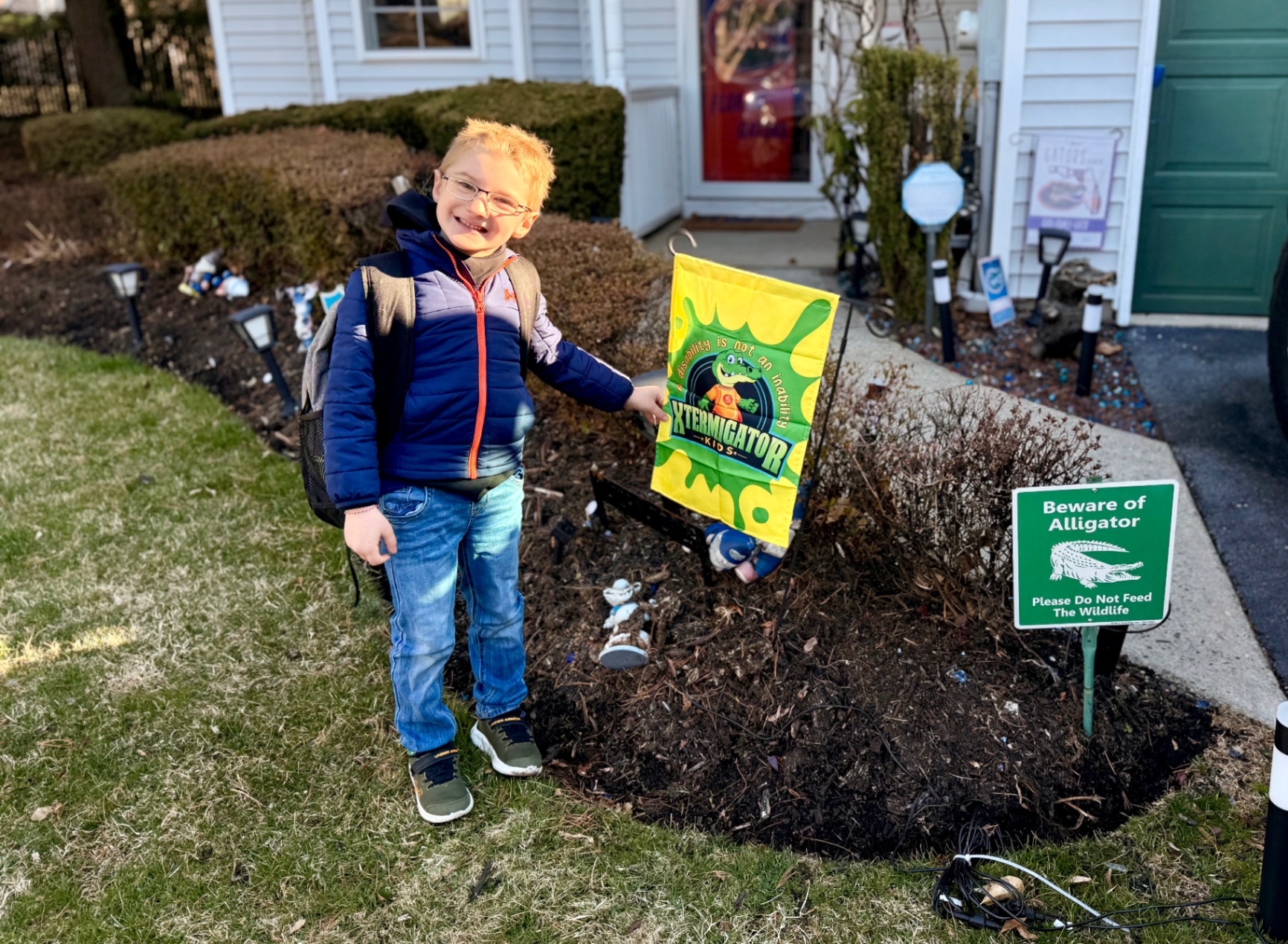
A disability is not an inability, it's a different way of navigating the world, and support can start today.
What is Needs-Led Learning? (And Why It’s Your New Best Friend)
Needs-Led Learning is a framework that prioritizes the immediate functional requirements of a student over their clinical label. It’s about looking at the barrier, not just the brain-type.
Think of it this way: If a child can't see the whiteboard, you don't wait for a six-month ophthalmology appointment to move them to the front row. You move the chair. That is needs-led support.
In the Friendly Ferns Swamp, our characters don’t wait for clinical trials to help each other out. If Zoomy Frog is having a "high-energy morning" (Executive Functioning challenges, the brain’s air traffic control system for managing tasks and impulses), Xtermigator doesn't say, "Wait, I need to see your ADHD paperwork before I give you a movement break." No! He hands Zoomy a lily pad to jump on so they can get back to the mystery at hand.
Key Pillars of the Needs-Led Approach:
- Observation over Evaluation: What is the behavior telling you? (Behavior is communication).
- Environment Modification: Can we change the room to fit the kid, rather than forcing the kid to fit the room?
- Low-Stakes Intervention: Implementing tools like visual schedules or choice boards that hurt no one and help everyone.
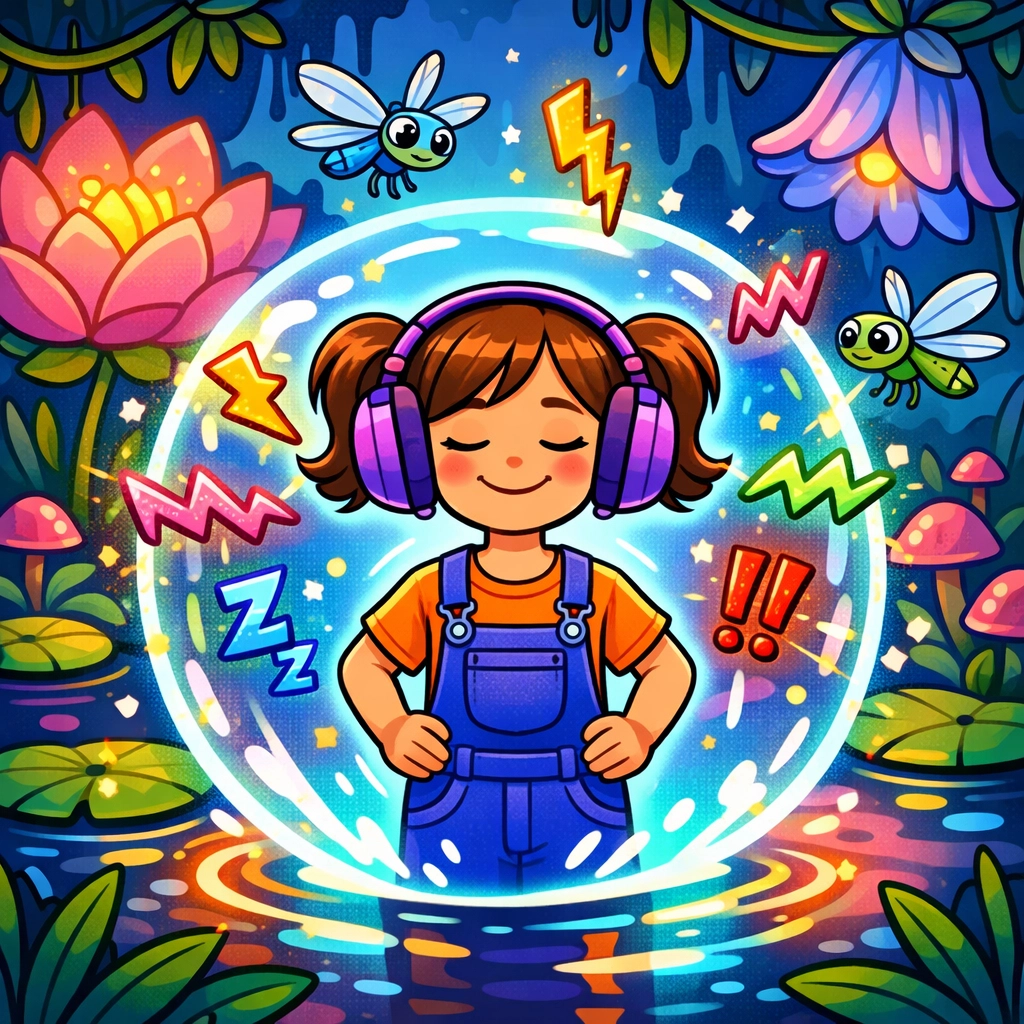
Visual representation of Needs-Led Learning: Identifying the barrier (e.g., loud noises) and providing the tool (noise-canceling headphones) regardless of diagnosis.
Disability is Not an Inability: The Superpower Mindset
At XTERMIGATOR KIDS, our motto is "A disability is not an inability." We treat these "unseen disabilities" as unique character traits that require specific "swamp gear" to navigate.
When we move away from the medical model (which focuses on what is 'broken') and toward the social model (which focuses on how the environment can be more inclusive), we unlock a child's superpower.
"The moment I stopped trying to 'fix' my daughter's dyslexia and started providing her with audiobooks and speech-to-text tools, her confidence exploded," notes Elena, a special education advocate. "She went from the 'struggling kid' to the 'expert storyteller.' The lack of a formal IEP (Individualized Education Program) at the time didn't stop us from using the tools she needed."
If you’re looking for ways to explain this to your little ones, our book series is a great place to start. Check out xtermigatorkids.com/books to see how Xtermigator and his friends handle challenges in the swamp.
Practical "Start Now" Strategies (No Paperwork Required)
You don't need a permission slip to be inclusive. Here are five things you can do today if your child is struggling with focus, anxiety, or sensory input:
- The Power of the Visual Schedule: Many neurodivergent kids struggle with Transitions (moving from one activity to another). A simple drawing of what comes next reduces cortisol levels and anxiety.
- Sensory "Safe Zones": Create a spot with a heavy blanket, low lights, and zero demands. If they’re overwhelmed, they go there. No questions asked.
- Choice Boards: Give two options for a task. "Do you want to do your math in lead pencil or a purple marker?" It gives a sense of Autonomy (the right to self-govern) in a world that often feels out of control.
- The "Movement Menu": If your kid is a "Zoomy Frog," they need to move to learn. Try "heavy work" like carrying a basket of books or doing wall pushes before sitting down for homework.
- The Podcast Approach: Sometimes, reading is hard. Listening is easier. We’ve actually just added a new feed to our rotation on Amazon Music and Audible! You can check out the Xtermigator Kids – Invisible Disabilities: Invisible No More podcast right here. It’s perfect for car rides when you want to dive deeper into these topics.
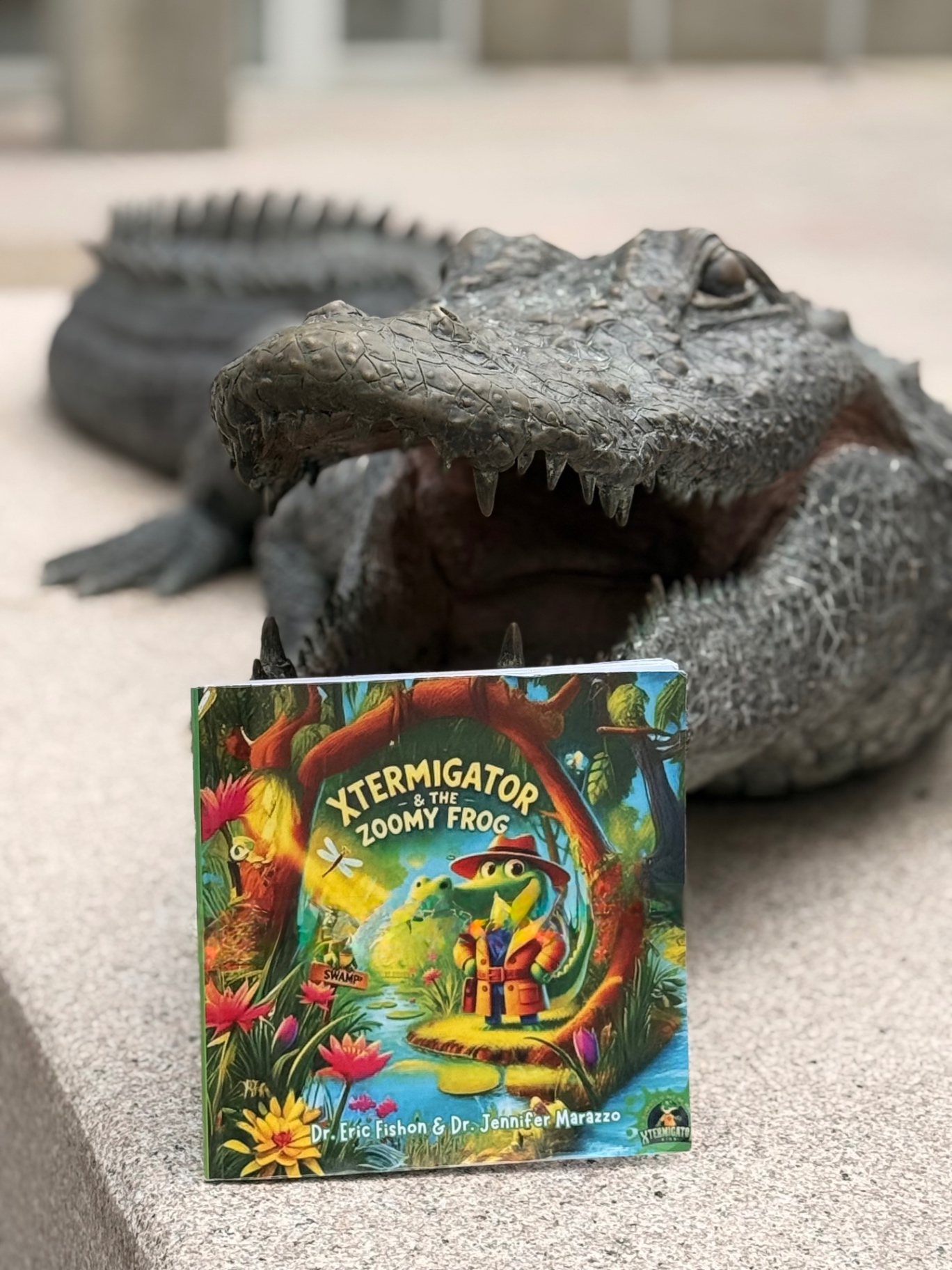
In 'Xtermigator & the Zoomy Frog,' we explore how different 'engines' run at different speeds and how to find the right fuel for each one.
Why Schools Often Resist (And How to Push Back)
Let’s be real: Schools often do require a diagnosis for funding or specific legal accommodations (like a 504 plan or an IEP). This is the reality of the system. However, a teacher can always implement "Universal Design for Learning" (UDL) strategies.
UDL is a fancy way of saying "make the lesson accessible to everyone from the start." If a teacher uses a visual timer for the whole class, the kid with undiagnosed ADHD doesn't stand out: they just get the support they need.
If you’re running into walls, point them toward our FAQ page or our community resources. Sometimes, schools just need the right language to justify helping a child before the clinical results come back.
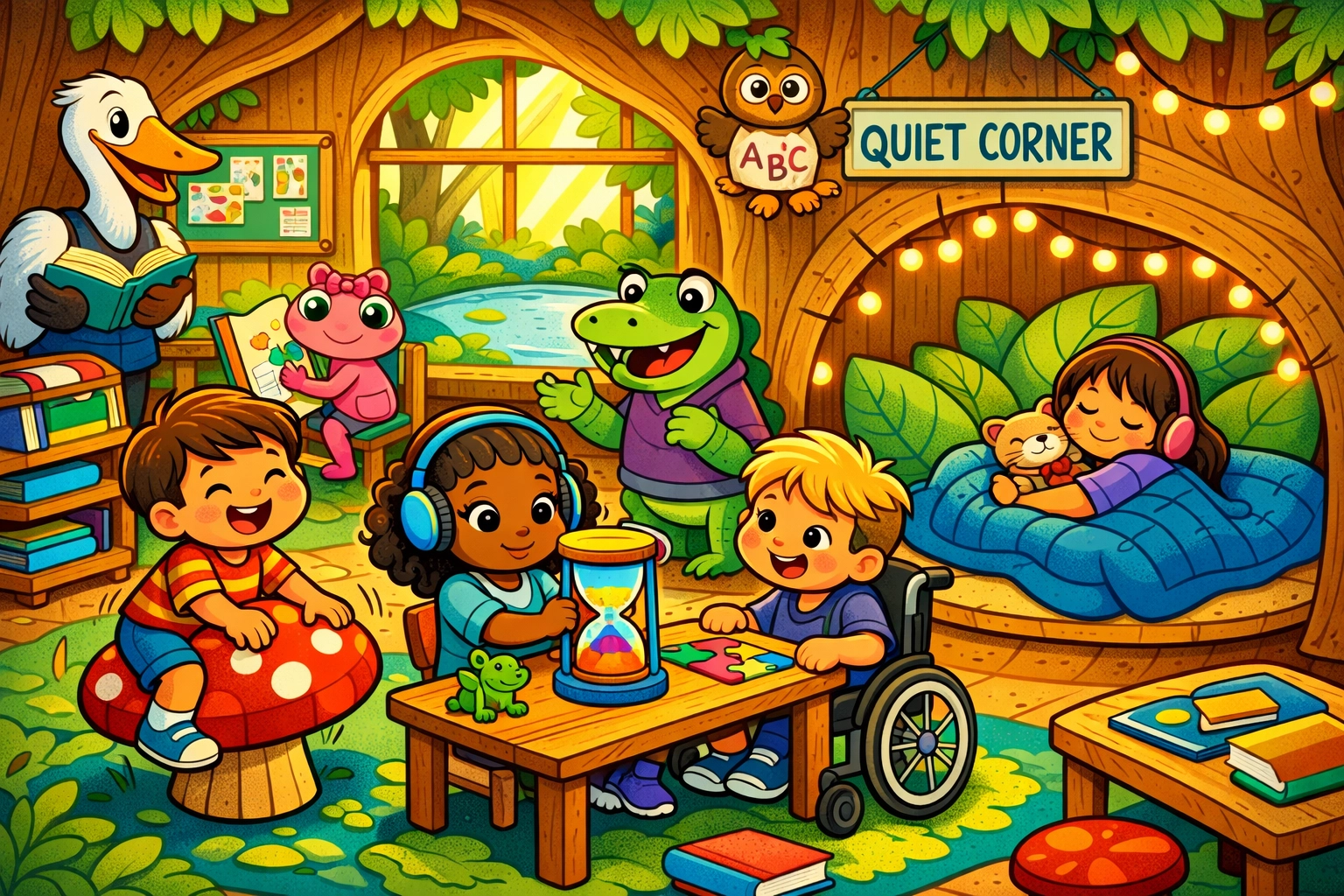
A classroom set up for success: Fidgets on desks, a quiet corner, and clear visual instructions: benefiting all learners, diagnosed or not.
The Friendly Ferns Philosophy: Together, We Are Unstoppable
The swamp is a diverse place. Romeo the Otter might need a little more social-emotional coaching, while Shelly the Turtle needs extra time to process a question (Processing Speed: the time it takes for the brain to take in, make sense of, and respond to information).
When we stop focusing on the "disorder" and start focusing on the "difference," the shame disappears. We aren't trying to "Xtermigate" the disability; we're "Xtermigating" the barriers that keep kids from being their awesome selves.

Different is beautiful. When we support each other's needs, we become an unstoppable community.
Final Thoughts: Take the Leap
If you’re waiting for that assessment, take a deep breath. You are doing a great job. But don't let the calendar dictate your compassion. If your child is struggling to stay in their seat, give them a wobble cushion today. If they are melting down over the texture of their shirt, cut the tags out now.
You are the expert on your child. A diagnosis is just a map: but you’re already in the terrain. Start walking.
Ready to join a community that gets it? Head over to our Community Connection to meet other parents who are leading with needs, not just labels. And don't forget to grab some gear in our Shop to show off that "Disability is not an Inability" pride!
The future of education is needs-led. It’s inclusive. It’s a little bit swampy. And it starts with you. 🐊✨
Curious about how to start your own needs-led journey? Check out our latest book arrivals at xtermigatorkids.com/books and discover how the Friendly Ferns characters navigate their own unique "superpowers."