
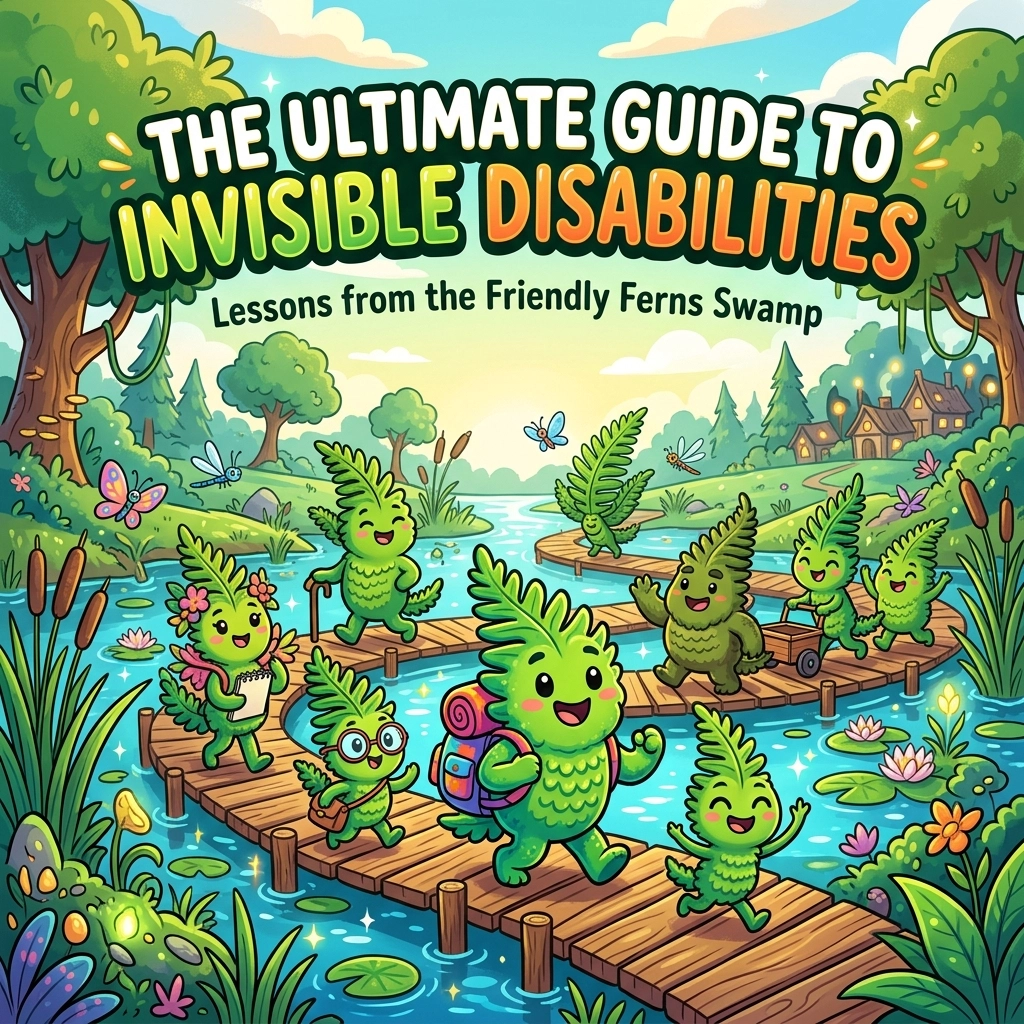
You’ve probably seen it before: the judgmental glance in the grocery store when a child has a meltdown, or the sigh of a teacher when a student can’t seem to sit still. Because there’s no wheelchair, no cane, and no visible "sign" of a struggle, the world often assumes that a child is just being "difficult" or "unruly." This is the primary pain point for millions of families: the exhausting weight of having to explain a disability that no one can see. When the world doesn’t see the challenge, they often don’t see the child’s incredible potential either.
At XTERMIGATOR KIDS, we believe that understanding is the first step toward inclusion. In the Friendly Ferns Swamp, we don't just see the "behavior"; we see the hero behind it. As we often say, a disability is not an inability: it’s actually your greatest superpower.
Why the "Invisible" Label Matters for Our Kids
"The hardest part isn't the ADHD itself," says Maria, a long-time member of our community forum. "It's the constant feeling that we have to prove my daughter is struggling. People look at her and see a 'normal' kid, so they expect her to act 'normal.' When her brain starts zooming and she can't focus, they think she's just not trying. It’s heartbreaking."
Maria’s experience is far from unique. Research suggests that roughly 10% of Americans live with a condition that could be considered an invisible disability (a physical, mental, or neurological condition that limits a person’s movements, senses, or activities but isn't immediately apparent to others). In fact, some estimates suggest that up to 90% of all disabilities are invisible. This includes everything from Autism Spectrum Disorder (ASD) and ADHD to chronic fatigue, anxiety, and dyslexia.
The XTERMIGATOR KIDS mission is simple: teaching the world that different is beautiful and every child has a superpower.
Meeting the Crew: Lessons in Empathy from the Friendly Ferns Swamp
To help children and adults navigate these complex topics, we’ve created the world of the Friendly Ferns Swamp. Here, every character represents a different way of experiencing the world. By using these whimsical characters, we take the "scary" or "clinical" feel out of a diagnosis and turn it into a story of adventure and discovery.
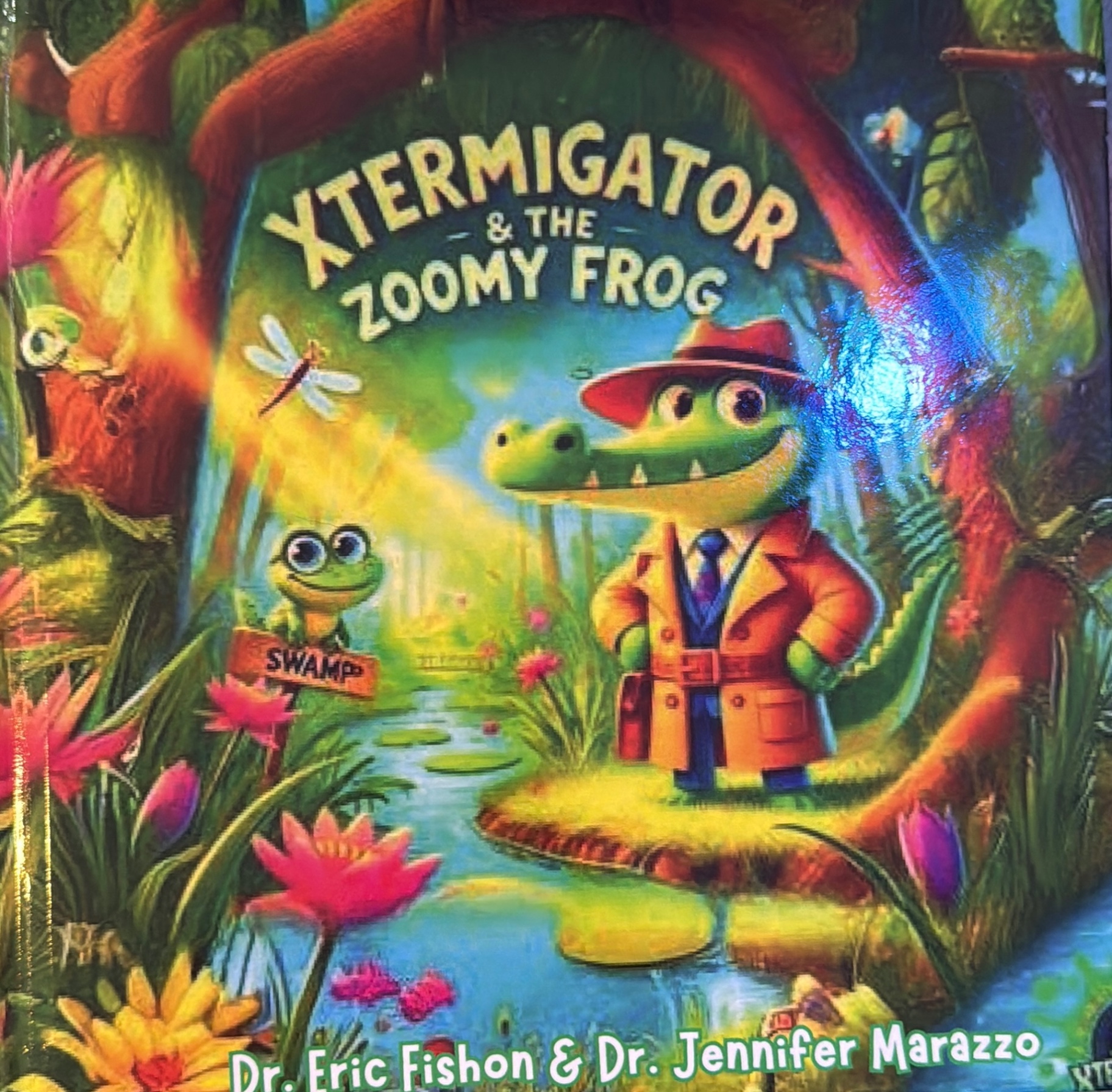
Take the Zoomy Frog, for example. If you’ve ever felt like your brain has twenty different tabs open at once and they’re all playing different music, you might relate to him. He’s got energy for days, but sometimes that energy makes it hard to land on the right lily pad. In our book Xtermigator & the Zoomy Frog, we explore how that high energy: often associated with ADHD (Attention-Deficit/Hyperactivity Disorder): can be harnessed to solve problems that others might miss.
Then there’s Xtermigator himself. Wearing his detective gear, he’s always looking for clues to help his friends. He represents the investigative spirit we need when approaching neurodiversity. Instead of asking "What's wrong with this child?", Xtermigator asks, "How does this child’s brain work, and what amazing things can they do because of it?"
Understanding the "Superpowers" of Neurodiversity
When we talk about invisible disabilities, we often focus on the deficits. But in the swamp, we focus on the "Swamp Strengths." Let’s look at some common invisible disabilities through this empowering lens:
- ADHD (The Zoomy Brain): While it might cause struggles with executive function (the mental processes that enable us to plan, focus, and multitask), it also brings incredible creativity, hyper-focus on passion projects, and a unique ability to think outside the box.
- Autism (The Deep Diver): Many children on the spectrum have an incredible capacity for detail and a deep, encyclopedic knowledge of subjects they love. Their sensory processing (how the brain receives and responds to information that comes through the senses) might be different, but it allows them to experience the world with a vividness that others might miss.
- Anxiety (The Guardian): Anxiety can be overwhelming, but it often stems from a high level of empathy and an acute awareness of one’s surroundings. When managed, this "guardianship" makes for a very thoughtful and considerate friend.
- Learning Differences (The Pathfinders): Dyslexia or dyscalculia might make traditional schooling tough, but these "Pathfinders" often develop incredible problem-solving skills and visual-spatial reasoning to navigate the world.
It’s important to remember that every child’s "superpower" looks different. What might be a challenge one day is the very thing that helps them succeed the next.
Transforming the Narrative: From "Fixing" to "Flourishing"
One of the most profound emotional transformation moments we see at XTERMIGATOR KIDS is when a child realizes they aren't "broken."
"My son used to cry before school every day because he felt 'stupid' for not being able to read like his peers," shares David, a father who frequents our Swamp Talk forum. "We started reading the Xtermigator flipbooks together. Seeing characters who struggled but were still heroes changed his entire posture. He stopped saying 'I can't' and started saying 'I just do it differently.' That shift was life-changing for our whole family."
This transformation is why we do what we do. We want to move the conversation from "fixing" a disability to providing the right environment for a child to flourish. This involves creating "inclusive lily pads": spaces where children feel safe to be exactly who they are.
Characters like Xtermigator and the Zoomy Frog help children see their own challenges as part of a heroic journey.
Navigating the Swamp: Tips for Parents and Educators
If you are a caregiver or teacher supporting a child with an invisible disability, the journey can sometimes feel like trekking through thick mud. Here are a few "swamp-tested" strategies to help:
- Practice "Patience over Perception": When a child is struggling, remember that what looks like defiance is often a lack of skills or sensory overload. Take a breath and look for the root cause.
- Use Visual Tools: Many neurodivergent children thrive on visual cues. Our Scavenger Hunt flipbook is a great way to engage kids in a structured, visual activity that builds confidence.
- Celebrate the "Small" Wins: In the swamp, a successful hop to a new lily pad is a big deal. Celebrate the moments of emotional regulation, the times they asked for help, and the creative solutions they found.
- Join the Community: Don't do this alone. Our topics page is full of discussions where you can learn from others who are walking the same path.
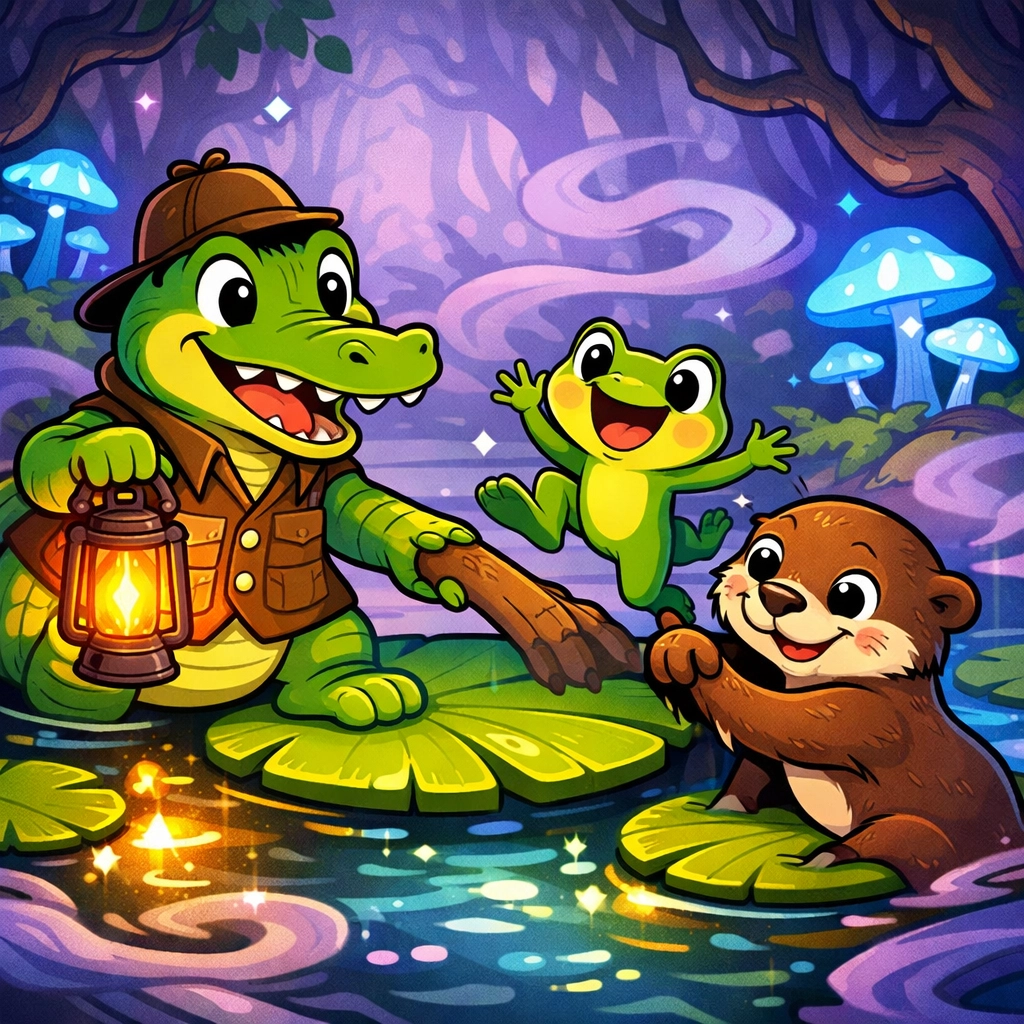
A whimsical illustration of various swamp animals supporting each other as they navigate a misty but beautiful environment.
Kindness as a Superpower
At the heart of the Friendly Ferns Swamp is a core value: Kindness. In our "Big Heart Series," we teach children that being kind isn't just a nice thing to do: it's a superpower that can change someone’s entire world. For a child with an invisible disability, a little bit of understanding and kindness from a peer can be the difference between a day of isolation and a day of belonging.
Kindness is the bridge that connects us all, regardless of how our brains are wired.
Looking Forward: A World Where Every Child Shines
As we look toward the future, our hope at XTERMIGATOR KIDS is to see a world where "invisible" disabilities are no longer misunderstood. We envision classrooms where "different" is celebrated as a necessary part of a vibrant ecosystem, much like the diverse life within the Friendly Ferns Swamp.
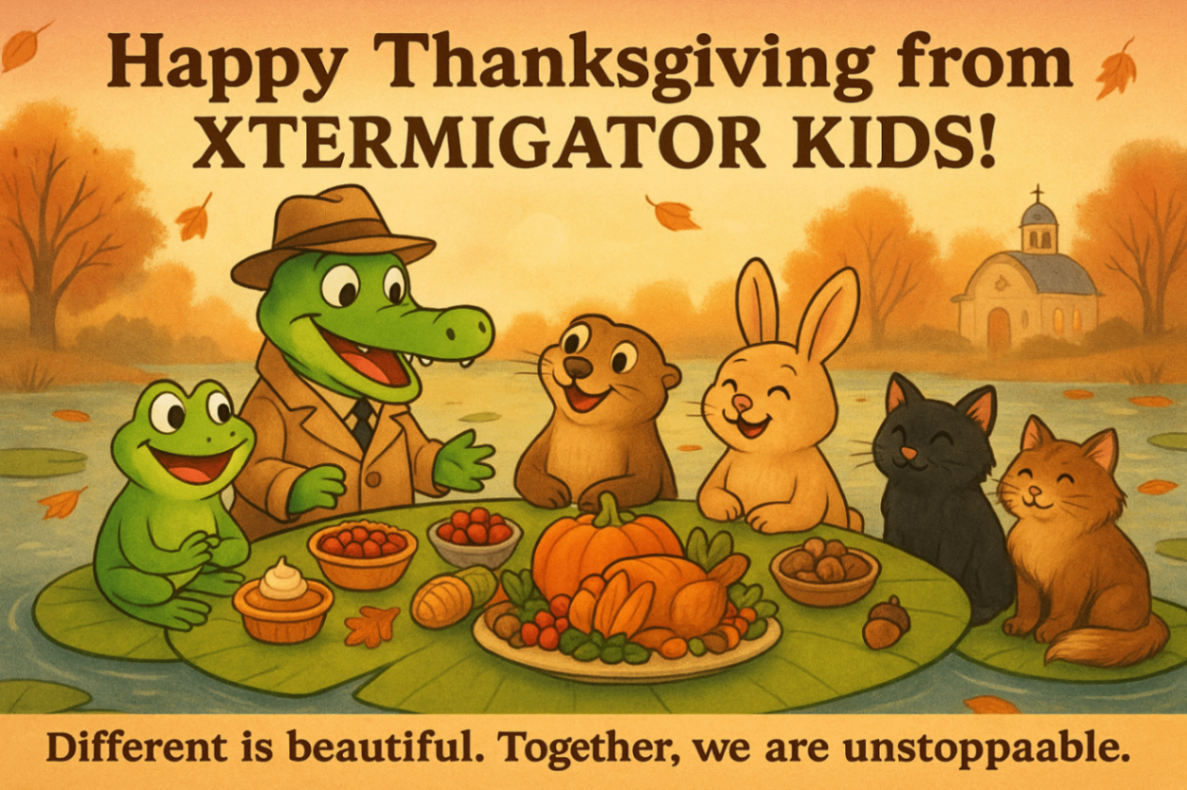
When we come together, our different abilities make us an unstoppable team.
We are constantly expanding our library of resources, from new word games that build cognitive skills to interactive stories that tackle the nuances of social anxiety and sensory processing. Our goal is to provide a roadmap for families so they never feel lost in the fog of a new diagnosis.
If you’re looking for a place to start, we highly recommend checking out our Unseen Disabilities flipbook. It’s a wonderful resource for introducing these concepts to young children in a way that feels safe, magical, and: most importantly: true to their experience.
Remember, the swamp is a big place, but there’s a lily pad with your name on it. Your child’s unique way of seeing the world isn't a hurdle to get over; it’s a gift to be unwrapped. Let’s keep exploring, keep learning, and keep celebrating the incredible superpowers hidden in plain sight.
Join us in the Big Heart Series and help spread the message that every child is a hero in their own story.