
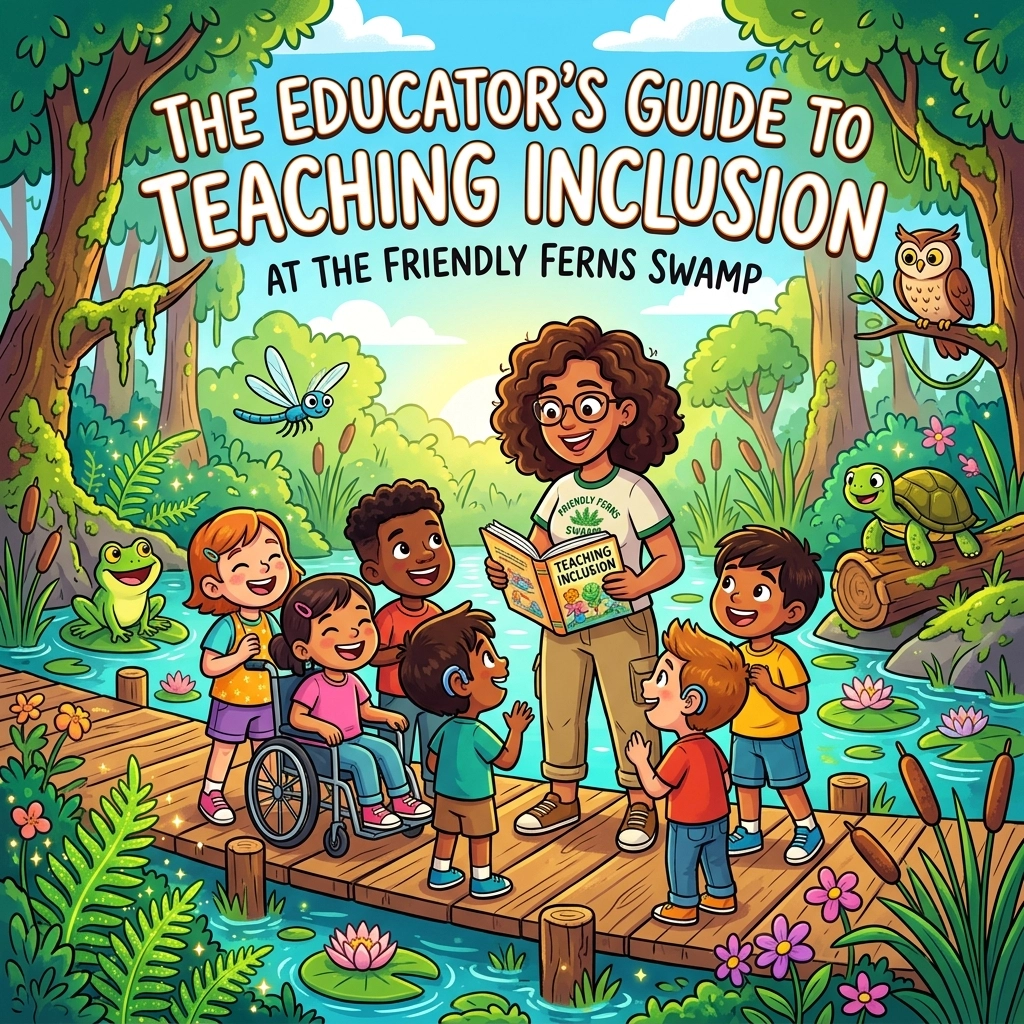
You’ve seen it in the back of the classroom: the tapping foot, the glazed-over eyes, the sudden burst of energy that disrupts a quiet reading hour. As an educator, you’re often caught in the middle of a systemic struggle: trying to follow a curriculum designed for the "average" brain while supporting students whose minds are wired to explore the stars or dive deep into the smallest details. The problem isn't the child, and it isn't your teaching; it’s the lack of a shared language that celebrates neurodiversity (the concept that neurological differences are natural human variations) rather than treating it as a hurdle to be jumped.
Teaching inclusion for invisible disabilities: like ADHD, autism, anxiety, and various learning differences: can feel like navigating a literal swamp without a map. How do you explain to a seven-year-old why their friend can’t sit still, or why another classmate wears noise-canceling headphones? Without the right tools, these differences can lead to isolation, bullying, and a sense of inadequacy in the very children we are trying to empower.
Turning Classroom Chaos into Community Connection
"The biggest challenge we face in modern education isn't a lack of resources, but a lack of relatability," says Eric Fishon, Owner of XTERMIGATOR KIDS. "When we label a child as 'distracted' or 'difficult,' we miss the incredible unique processing power they bring to the table. Our mission at XTERMIGATOR KIDS is to flip that script. We believe a disability is not an inability: it’s your greatest superpower."
This philosophy is at the heart of everything we do at the Friendly Ferns Swamp. By using whimsical characters that embody specific neurodivergent traits, we give teachers and parents a bridge to connect with children on their level. Instead of clinical terms, we talk about "The Zoomy Frog" or "Romeo the Otter." This shift in vocabulary allows for an emotional transformation where a child moves from feeling "broken" to feeling "superpowered."
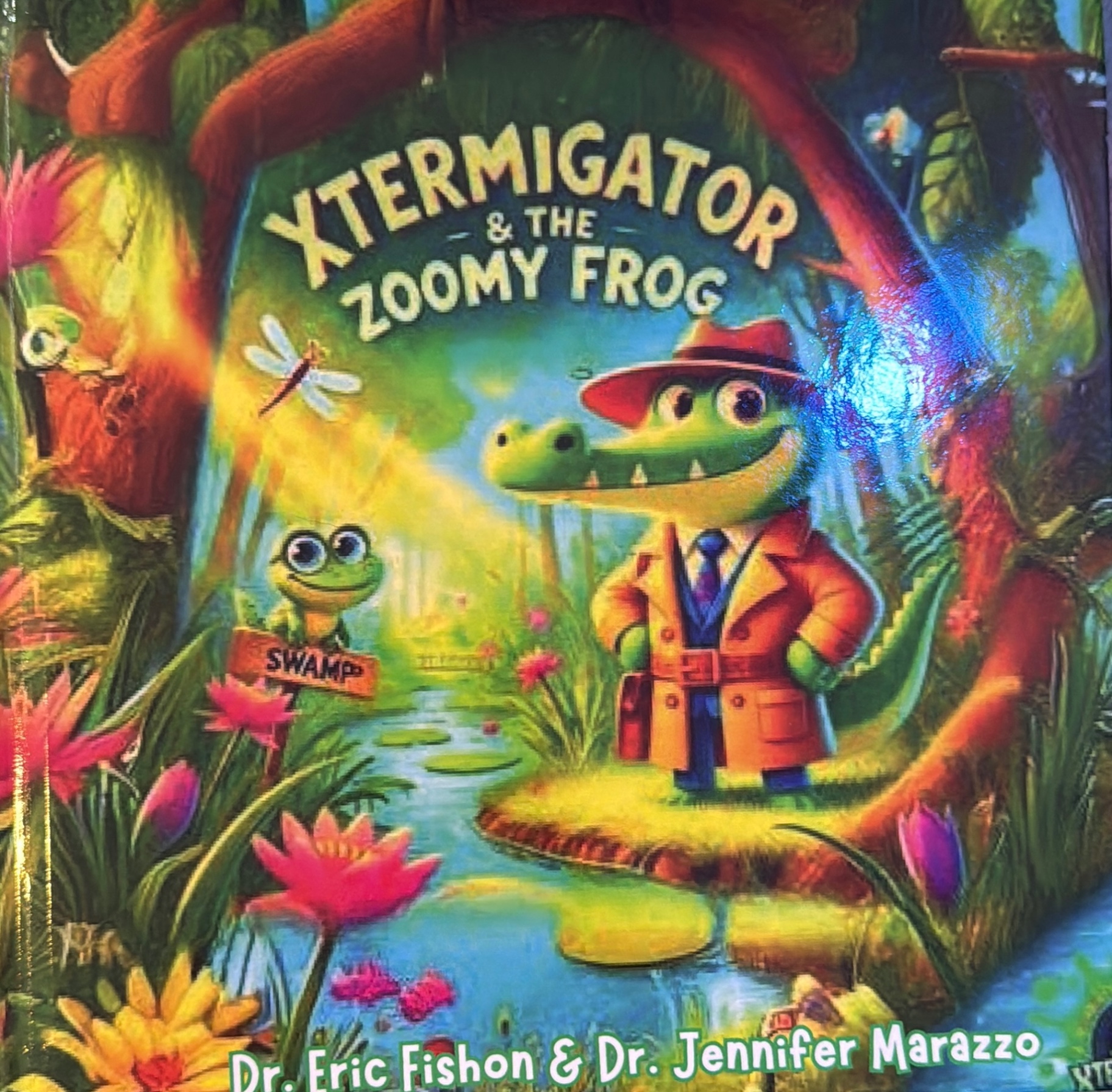
The story of "Xtermigator & The Zoomy Frog" serves as a foundational tool for educators to introduce the concept of ADHD through a lens of courage and kindness.
Swapping Stigma for Swamp-Themed Superpowers
To teach inclusion effectively, we must first redefine what "normal" looks like. In the Friendly Ferns Swamp, every creature has a role that is specifically suited to their unique way of interacting with the world.
Consider the "Zoomy Frog," a character often used to represent ADHD (Attention-Deficit/Hyperactivity Disorder, which impacts executive functioning, the cognitive processes that help us plan and focus). In a traditional classroom, the "Zoomy" behavior might be seen as a disruption. But in the swamp, the Zoomy Frog’s high energy makes him the perfect scout. He sees things others miss because his brain is constantly scanning the horizon.
"I remember a student who simply could not stop moving during circle time," shares Sarah M., a second-grade teacher and frequent contributor to our Community Forum. "After reading the XTERMIGATOR KIDS books, we started calling his energy 'Scout Mode.' Instead of a reprimand, I’d ask him what he 'scouted' during our lesson. His self-esteem skyrocketed because his disability was suddenly seen as a vital contribution to our 'swamp' community."
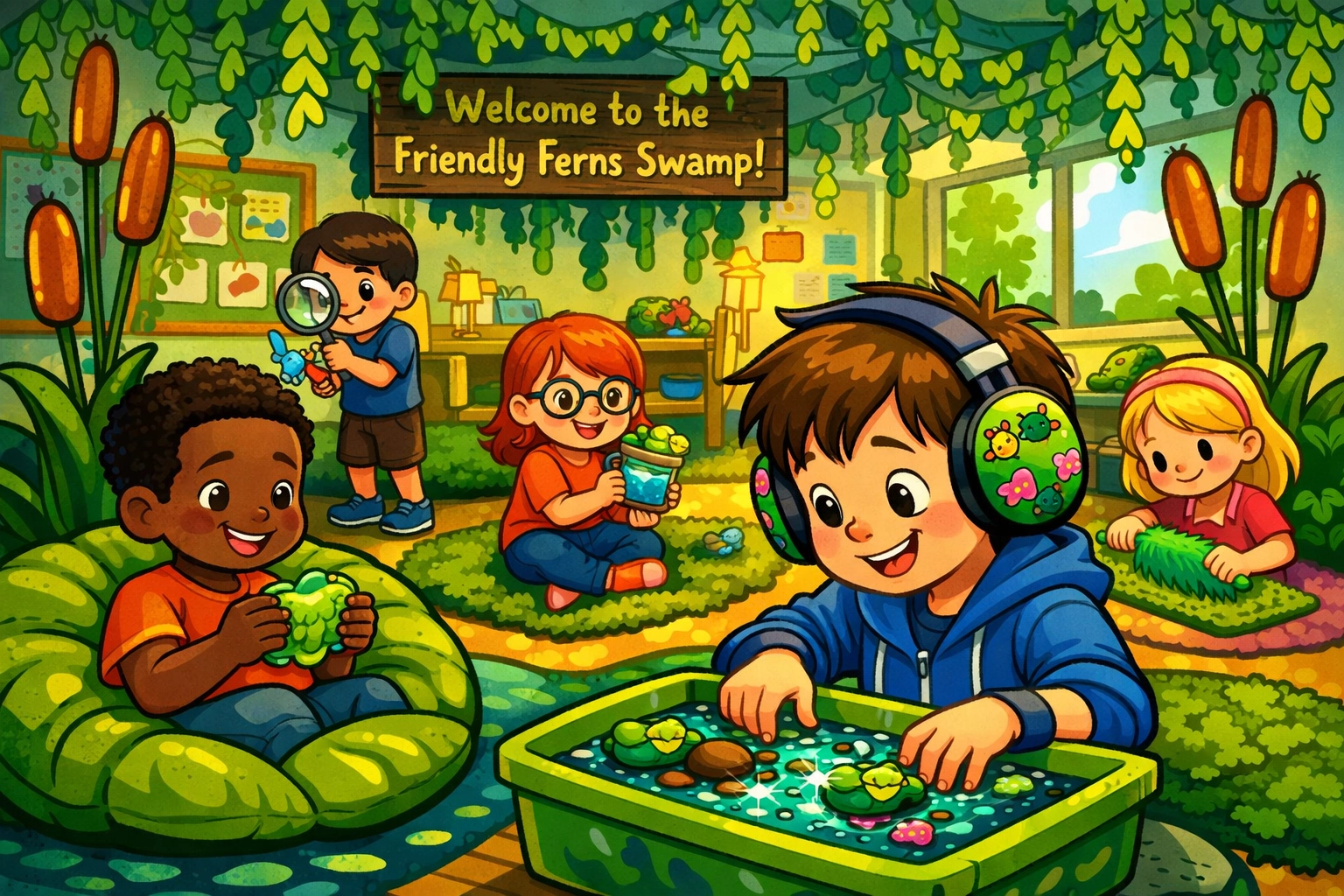
An inclusive classroom environment where children engage with swamp-themed sensory stations and educational materials.
The Educator’s Toolkit: Navigating Executive Functioning Challenges
Executive functioning involves the mental skills we use every day to learn, work, and manage daily life. For many children at XTERMIGATOR KIDS, these skills (like working memory, flexible thinking, and self-control) don't come as naturally. As an educator, your guide to teaching inclusion must include practical, swamp-inspired strategies:
- Sensory "Lily Pads": Create designated areas in the classroom where students can go when they feel sensory overload. Much like the quiet corners of the Friendly Ferns Swamp, these areas should offer low lighting and tactile tools.
- Visual Storytelling: Use the XTERMIGATOR KIDS books to model social scenarios. When a character like Shelly the Turtle feels overwhelmed, how does she handle it? This provides a blueprint for children to follow.
- Superpower Affirmations: Start each morning by identifying a "superpower" for the day. Is it deep focus? Creative problem-solving? High-energy scouting?
"We often focus so much on the 'deficit' part of ADHD or the 'disorder' part of Autism that we forget to look at the hyper-focus and the unique perspectives these children offer," Eric Fishon explains. "By integrating these themes into the daily curriculum, educators aren't just teaching a lesson; they’re building a culture of empathy."
Building Bridges with "Swamp Talk" and Shared Experiences
Inclusion doesn't stop when the school bell rings. It requires a village: or in our case, a whole swamp. One of the most effective ways to teach inclusion is to involve the parents and the broader community in the conversation. This ensures that the message of "disability as a superpower" is reinforced at home and in social circles.
The Swamp Talk forum is a fantastic resource for this. Educators can direct parents here to discuss specific challenges, such as how to handle "the zoomies" at the dinner table or how to support a child through social anxiety. When parents and teachers use the same whimsical language and character references, the child experiences a consistent, supportive environment.
Kindness is presented as a central superpower in the Friendly Ferns Swamp, teaching children that understanding others is the greatest skill of all.
"The moment of breakthrough usually happens when a child realizes they aren't alone," says David L., a school counselor. "I’ve seen kids who were previously non-verbal or highly anxious start to open up because they identified with Romeo the Otter. It gives them a safe mask to wear while they explore their own feelings."
Emotional Transformations: From "Different" to "Unstoppable"
The most profound impact of teaching inclusion through the lens of the Friendly Ferns Swamp is the emotional transformation of the students. When a child who has been told they are "too loud" or "too slow" is suddenly celebrated for their "vibrant energy" or "thoughtful observation," their entire posture changes.
We’ve heard countless stories of children who once dreaded school now waking up excited to see what their "swamp friends" are doing. This shift is vital for long-term success. (Research consistently shows that children with high self-esteem and a sense of belonging are more likely to overcome the academic challenges associated with learning differences.)

In the swamp, being 'different' is what makes the community strong. Togetherness is celebrated as a way to become truly unstoppable.
A Forward-Looking Aspiration for Every Classroom
As we look toward the future of education, our hope is that the term "inclusive classroom" eventually becomes redundant. We dream of a world where every classroom is naturally designed to accommodate the full spectrum of human neurodiversity. We envision a future where the "Zoomy Frogs" and "Shelly Turtles" of the world don't have to fight for a seat at the table: because the table was built with them in mind.
Teaching inclusion is a journey, not a destination. It requires patience, a bit of whimsicallity, and a deep-seated belief that every child is a masterpiece in progress. By bringing the Friendly Ferns Swamp into your school, you are doing more than just teaching; you are protecting the magic of childhood for those who see the world a little differently.
If you're ready to start this journey in your own classroom or home, we invite you to explore our full range of educational books and join our growing Community Connection. Together, we can ensure that every child knows their disability is not an inability: it truly is their greatest superpower.
The XTERMIGATOR KIDS mission is simple: to promote positive disability awareness and ensure every child feels like a hero in their own story.