
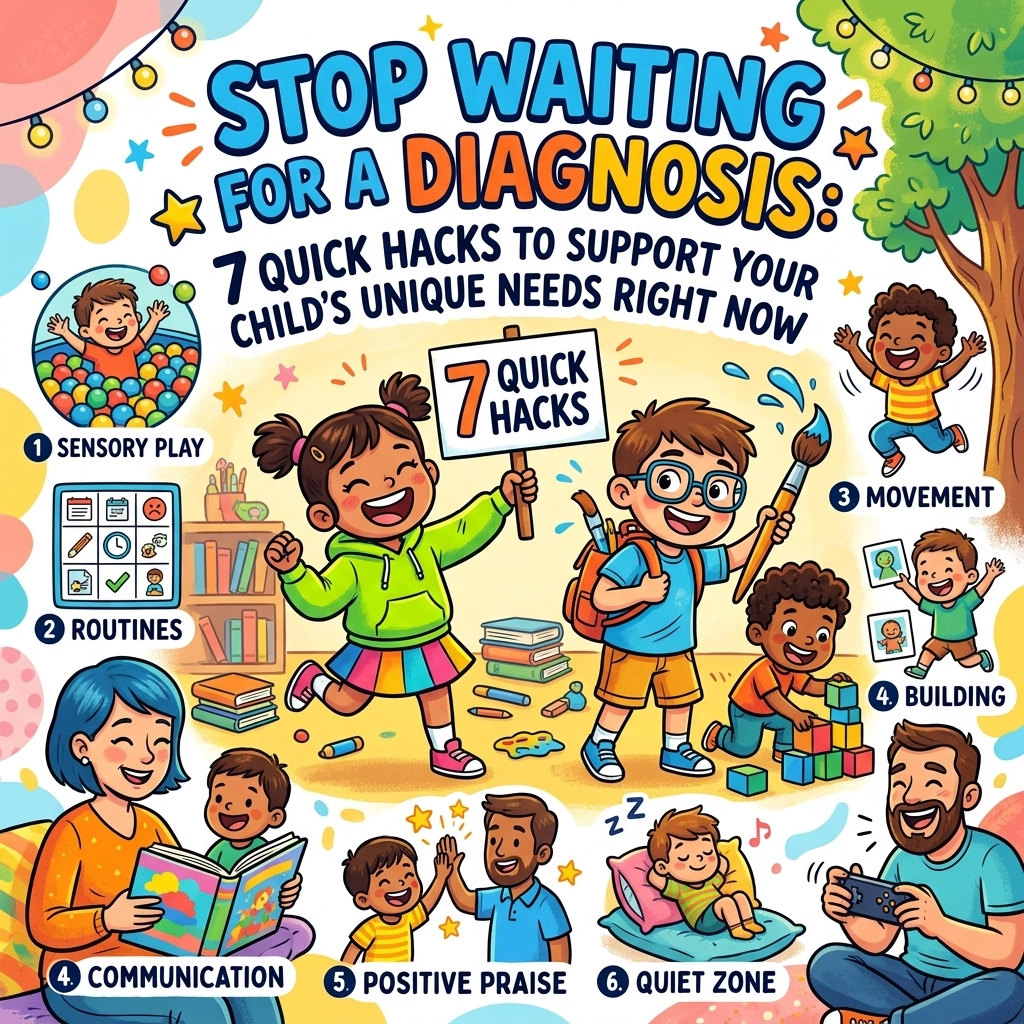
The pit in your stomach usually starts in the pediatrician’s office or right after a stressful parent-teacher conference. You’ve noticed your child struggles with transitions, or perhaps they’re "bouncing off the walls" more than their peers, or maybe they just seem to be living in a world of their own. You ask for help, only to be met with the dreaded words: "The waitlist for an evaluation is eighteen months."
Eighteen months. In the life of a developing child, eighteen months is an eternity. It’s the difference between a successful kindergarten transition and a year of traumatic meltdowns. It’s the difference between building self-esteem and internalizing the idea that they are "bad" or "difficult."
"I felt like I was stuck in a swamp without a paddle," says Maria, a mother from our community forum. "I knew my daughter needed help, but because we didn't have that official diagnosis (the formal clinical recognition of a condition), I felt like my hands were tied. I thought I had to wait for the label before I could start the support."
Here is the truth: A label is for the system, but support is for the child. You do not need a piece of paper to validate what you see every day. At XTERMIGATOR KIDS, we believe that a disability is not an inability, and waiting for a diagnosis shouldn't mean waiting to help your child thrive.
The Shift from Diagnosis-Led to Needs-Led Support
We often get caught in the trap of thinking we need to know the why (the diagnosis) before we can address the what (the behavior or struggle). However, neuro-affirming support (care that respects neurological differences rather than trying to 'fix' them) is fundamentally needs-led. If your child is struggling to stay seated, they need movement, regardless of whether they have an ADHD diagnosis. If they are overwhelmed by noise, they need sensory protection, regardless of an Autism diagnosis.
Dr. Eric Fishon, owner of XTERMIGATOR KIDS, often emphasizes that the environment usually needs to change before the child can. "We spend so much time waiting for a clinical name for the struggle that we miss the opportunity to adjust the environment right now," he notes.

The story of Xtermigator & the Zoomy Frog reminds us that every character in the swamp has a different way of moving through the world.
1. Transform the "Unknown" with Visual Schedules
Transitions (moving from one activity to another) are one of the biggest hurdles for neurodivergent children. Without a clear roadmap of the day, a child’s brain may remain in a state of high alert, wondering when the "fun" ends or when the "scary" starts.
You don't need a therapist to build a visual schedule. Use simple drawings or photos of your child performing daily tasks.
- The Hack: Create a "Swamp Map" of the day. Use printable products or even just sticky notes on the fridge.
- Why it works: It offloads the cognitive demand (the mental effort required) of remembering what comes next, reducing anxiety and "Zoomy Frog" energy.
2. Create a "Sensory Safe Haven"
When the world gets too loud, too bright, or too fast, children often experience dysregulation (the inability to manage emotional responses). Instead of waiting for an Occupational Therapist to suggest a sensory room, build a "Calm Corner" today.
"We called it Freddie’s Lily Pad," says one parent. "It’s just a pop-up tent with some soft pillows and noise-canceling headphones. It wasn't about a diagnosis; it was about noticing he was overwhelmed."
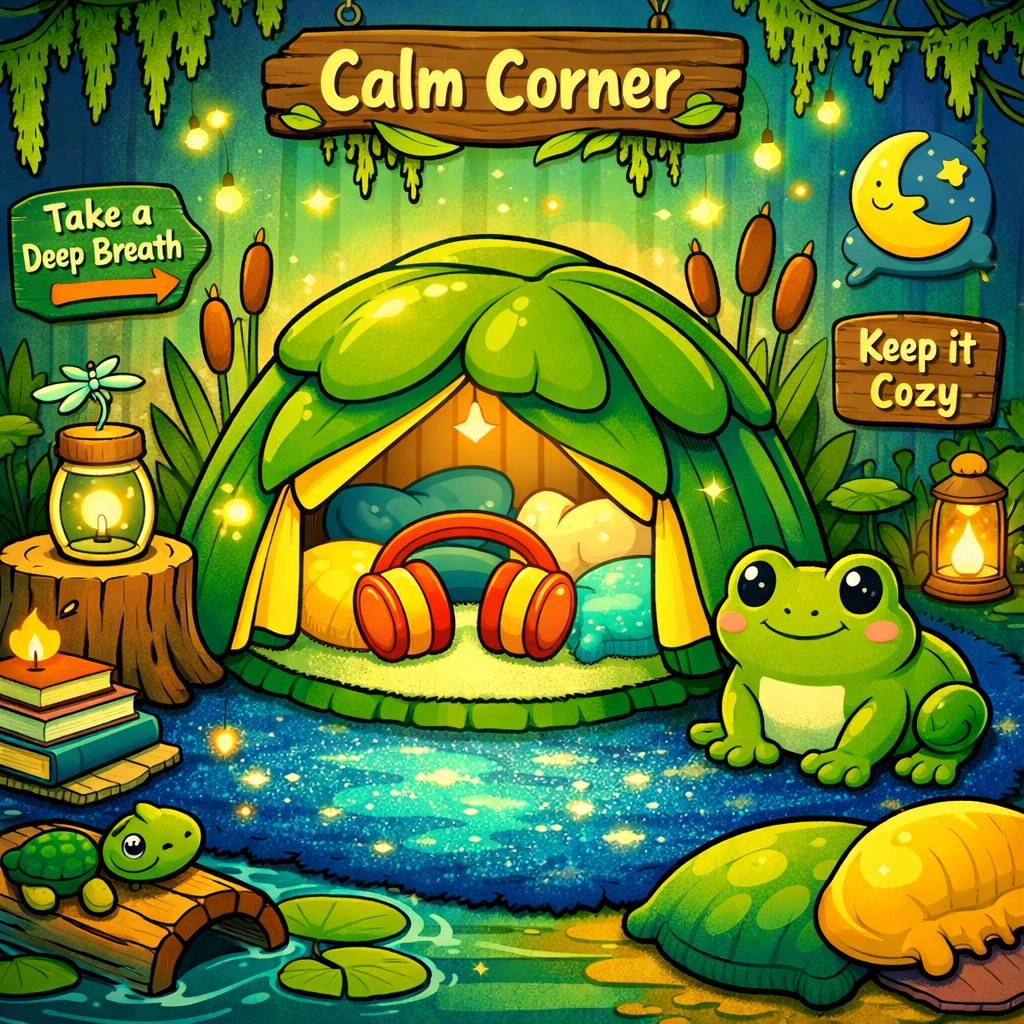
A cozy, sensory-friendly corner can serve as a sanctuary for a child feeling overwhelmed by environmental stimuli.
3. Embrace the "Zoomy Frog" Breaks
If your child has high physical energy, they likely need proprioceptive input (sensory information from muscles and joints that helps with body awareness). Instead of telling them to "sit still," which can be physically painful for some kids, lean into the movement.
- The Hack: Use "Heavy Work." Have your child "help" move a laundry basket, do "wall pushes," or hop like a frog to the dinner table.
- The Xtermigator Way: Incorporate characters like Freddie to make it a game. Tell them they are "patrolling the swamp" to find hidden treasures. This turns a functional need into a playful moment of connection.
4. Decode the "Why" Behind the "What"
Every "behavior" is a form of communication. When a child has a meltdown, they aren't trying to be "bad"; they are expressing an unmet need.
Before the formal evaluation, start a "Swamp Journal." Note the time of day, the environment, and what happened right before a struggle occurred.
- The Discovery: You might find that every "bad" behavior happens 20 minutes before lunch (hunger) or when the vacuum is running (sensory overload).
- The Result: You become a detective, much like Xtermigator in his detective attire, looking for clues to support your child’s success.
5. Build an Emotional Vocabulary
Many children struggle because they don't have the words to describe the "storm" inside them. You can start teaching emotional literacy (the ability to identify and express feelings) immediately.
- The Hack: Use characters to mirror emotions. "Is your inner Zoomy Frog feeling extra bouncy right now?" or "Do you feel like Xtermigator when he’s trying to be brave?"
- The Resource: Check out the Xtermigator’s Big Heart Series for stories that teach kindness and self-regulation. By externalizing the feeling (putting the feeling onto a character), it becomes less scary for the child to talk about.
Teaching kindness and emotional awareness is a superpower that doesn't require a doctor's note.
6. Implement "Low-Tech" Communication Bridges
If your child is struggling with speech or expressive language, don't wait for a Speech-Language Pathologist (SLP) to start using visual aids.
- The Hack: "Point and Pick." Create a simple board with pictures of juice, water, snack, and "all done."
- The Transformation: "The first time my son pointed to the picture of the apple instead of screaming at the fridge, I cried," shares a member of our Swamp Talk community. This is a "breakthrough moment" that changes the family dynamic instantly.
7. Find Your Tribe in the Swamp
The waiting period is isolating. You might feel like you're the only one dealing with these specific challenges. But you aren't. Engaging with other parents who "get it" is one of the most powerful things you can do for your own mental health.
- The Hack: Join our forums. Whether you want to talk about IEPs (Individualized Education Programs) or just vent about a rough morning, having a community makes the waitlist feel shorter.

Community support groups offer a space for parents to share resources and emotional support during the diagnostic waiting period.
Moving Forward: The Future is Inclusive
Waiting for a diagnosis is a hurdle, but it doesn't have to be a brick wall. By focusing on your child’s immediate needs, you are actually collecting valuable data that will help the specialists when you finally do get that appointment. You are showing them what works, what doesn't, and how your child learns best.
We dream of a future where every classroom and every home is designed with inclusion in mind from the start: where we don't need a label to justify a "calm corner" or a movement break. Until then, remember that you are your child's best advocate. You are the expert on your child.

Different is beautiful. Together, we are unstoppable: regardless of the labels we may or may not have yet.
Don't let the "wait and see" approach of the medical system stop you from being the "Xtermigator" your child needs. Start small, stay curious, and remember that what Xtermigator Kids is all about is celebrating the unique path of every child in the swamp.
What is one "hack" you’ve tried this week to make things easier at home? Share your story in the replies below!