
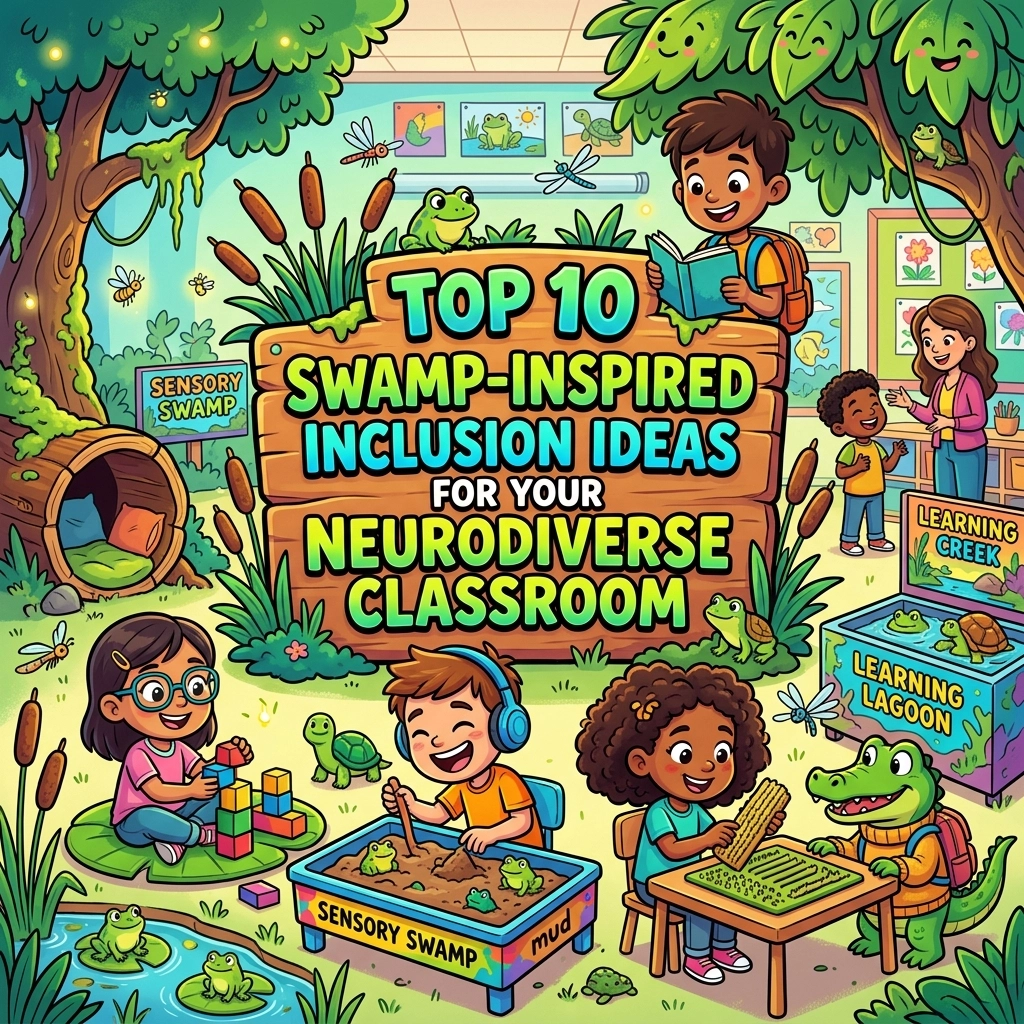
You walk into your classroom, and the energy is palpable. One student is tapping a pencil with rhythmic intensity, another is staring out the window at a passing bird, and a third is currently under a desk because the fluorescent lights feel like tiny needles on their skin. As an educator or a parent, you’ve probably felt that sinking feeling: the "log jam" of trying to reach every student when their brains are all wired on different frequencies. You want to create a space where neurodiversity isn't just "managed," but celebrated. Yet, the traditional classroom often feels like a rigid sidewalk in a world that needs the soft, adaptable soil of a swamp.
"I spent years trying to make my students fit into a specific mold," says Sarah J., a veteran special education teacher. "I thought inclusion meant making everyone act 'normal.' It wasn't until I realized that a disability is not an inability: it’s just a different way of navigating the world: that my classroom finally started to breathe."
At XTERMIGATOR KIDS, we believe the Friendly Ferns Swamp is the perfect metaphor for the neurodiverse mind. In a swamp, every creature: from the high-energy frog to the methodical alligator: has a vital role. By bringing a little "swamp magic" into your teaching environment, you can turn sensory challenges into sensory successes.
Here are the top 10 swamp-inspired inclusion ideas to help your students discover that their neurodivergence is actually their greatest superpower.
1. Create "Floating Lily Pad" Calm-Down Zones
In the Friendly Ferns Swamp, a lily pad is a place to rest, recalibrate, and watch the water go by. In a neurodiverse classroom, students with autism or anxiety often experience sensory overload (when the brain receives more information from the senses than it can process).
Create a designated "Lily Pad" corner. Use green floor cushions, soft blankets, and perhaps a small pop-up tent to dampen the visual "noise" of the room. This isn't a "time-out" spot for "bad" behavior; it’s a proactive tool for self-regulation (the ability to monitor and manage your energy states, emotions, and thoughts).
Photo: A quiet, green-themed corner of a classroom designed for sensory retreat, much like a secluded spot in the Friendly Ferns Swamp.
2. Implement "Gator-Vision" Visual Schedules
Predictability is the secret sauce for students with ADHD and learning differences. Just as the Xtermigator knows exactly where the best sunning spots are, students need to know exactly what is coming next in their day. Visual schedules reduce transitions-related anxiety by providing a clear "map" of the day.
"Visuals aren't just for kids who can't read," explains Dr. Aris, a child psychologist. "They provide a permanent reference point that spoken words don't. When a teacher says 'math time,' the words disappear. A picture of a calculator or a swamp-themed icon stays put, grounding the student in the present moment."
3. Use "Zoomy Frog" Movement Breaks
We all know someone like the Zoomy Frog: full of energy, quick to jump, and occasionally prone to "zooming" off-task. For kids with ADHD, movement isn't a distraction; it’s a biological necessity for focus.
Instead of asking a "Zoomy" student to sit still (which uses up all their cognitive energy), incorporate mossy movement breaks. Use a "Jump-Start" jar filled with swamp-themed activities: "Hop like a frog for 30 seconds," "Stretch like a tall cypress tree," or "Slow-crawl like a turtle." These activities provide proprioceptive input (sensory information from the muscles and joints), which helps ground a wandering mind.
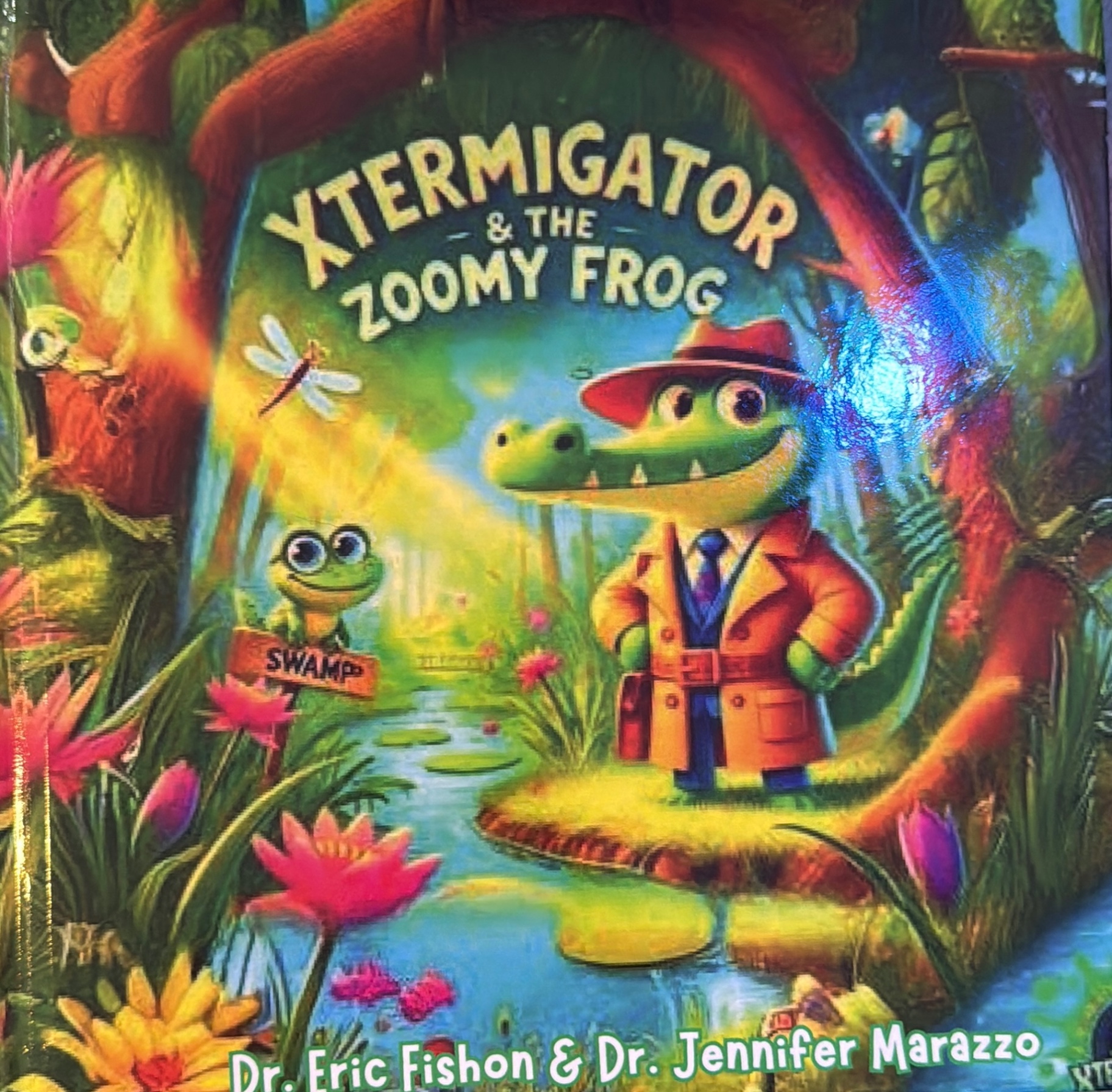
In the Friendly Ferns Swamp, Zoomy Frog teaches us that high energy is a gift when directed toward the right lily pad!
4. The "Firefly" Positive Reinforcement System
Neurodivergent children often receive significantly more negative feedback than their neurotypical peers. To counter this, use "Firefly Feedback." Every time a student uses their superpower: like a child with autism sharing a deep-dive fact about a favorite subject or a child with dyslexia persevering through a tough paragraph: add a "glow-stone" to a glass jar.
"When the jar is full, the whole 'swamp' (the class) gets a reward," says Eric Fishon, Owner of XTERMIGATOR KIDS. "It shifts the focus from individual 'compliance' to collective kindness and appreciation of different strengths." Check out our blog for more ideas on building a culture of kindness.
5. "Turtle-Shell" Deep Pressure Nooks
For some students, the world feels too big and too loud. This is common in children with sensory processing sensitivities. They might benefit from "Turtle-Shell" time: using weighted lap pads, heavy vests, or even a tight hug from a beanbag chair. This deep pressure touch helps calm the nervous system, much like a turtle feels safe inside its sturdy shell.
Context: Deep pressure stimulation can trigger the release of dopamine and serotonin, helping students move from a state of 'fight or flight' to 'rest and digest.'

A student sitting comfortably with a weighted lap pad, focusing intently on a task, embodying the calm focus of Shelly the Turtle.
6. The "Wise Heron" Scaffolding Technique
Breaking down large tasks into "bite-sized minnows" is essential for students with executive dysfunction (challenges with planning, organizing, and completing tasks). The Wise Heron doesn't try to swallow the whole pond at once; it strikes with precision.
Provide checklists with swamp-themed checkboxes. Instead of saying "Write a story," break it down:
- Choose your swamp character.
- Pick a swamp problem (The "Log Jam").
- Write three sentences.
- Draw a lily pad.
7. Swamp-Sound Auditory Buffering
A classroom can be a cacophony of scraping chairs, humming lights, and distant hallways. For many neurodiverse students, these sounds are physically painful. Provide noise-canceling headphones or "Swamp Sounds" (white noise like rain or wind) to help them focus. By creating an "auditory bubble," you allow their brains to stop filtering out the "noise" and start taking in the "knowledge."
8. "Friendly Ferns" Peer-Support Circles
Inclusion is a team sport. Use characters like Romeo the Otter to teach social-emotional skills. Otters hold hands while they sleep so they don't drift apart: your students can do the same (metaphorically!). Create peer-support circles where students learn to advocate for each other.
"I heard a student tell another, 'It’s okay that you’re wearing headphones; your ears just have super-hearing today,'" says primary teacher Mr. Miller. "That’s the Friendly Ferns spirit in action." You can see this beautiful dynamic in our Thanksgiving swamp gathering.
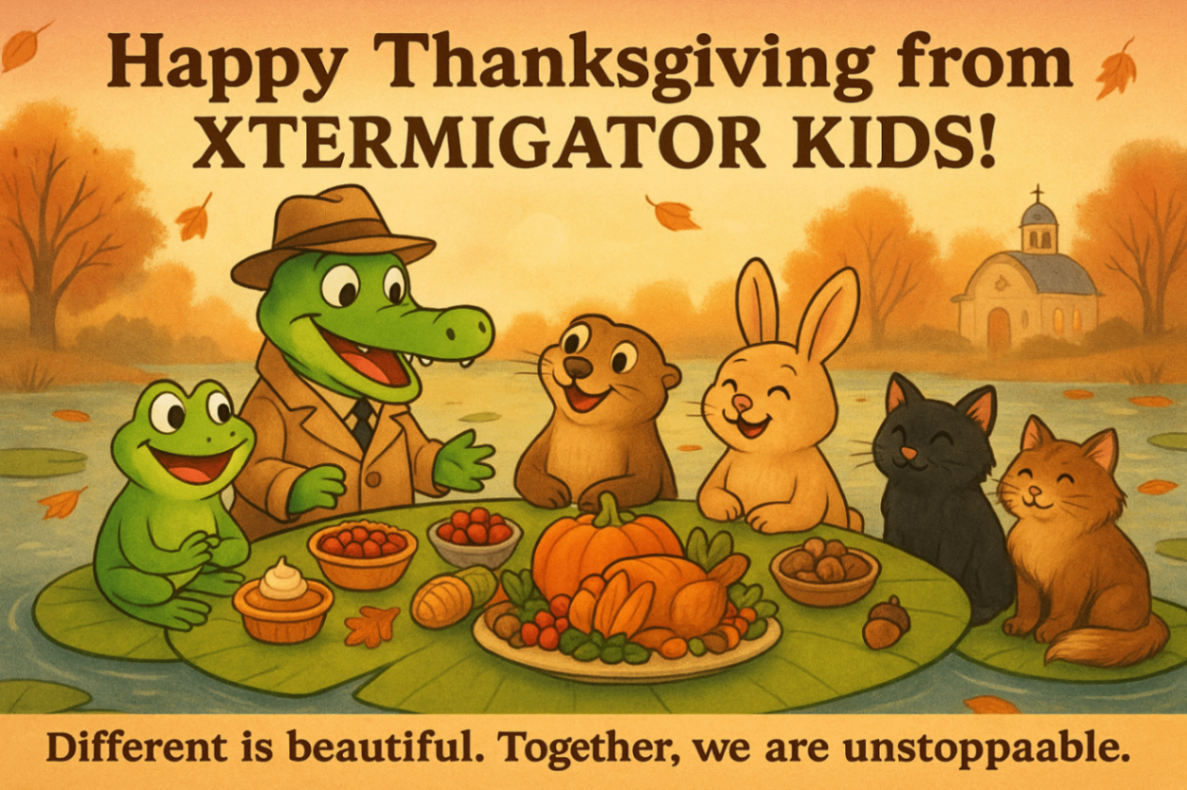
Different is beautiful. Together, we are unstoppable. Our swamp characters show that every ability has a place at the table.
9. Character-Based Emotional Check-ins
Sometimes, kids don't have the words to describe their internal "weather." Are they feeling like a "Hidden Gator" (quiet and observant), a "Zoomy Frog" (restless), or a "Stuck Turtle" (overwhelmed)? Using characters from the XTERMIGATOR KIDS world allows children to externalize their feelings, making it easier to talk about anxiety or frustration without feeling "broken."
10. The "Great Swamp" Exhibition (Alternative Assessments)
Standardized testing is often the "concrete sidewalk" that trips up neurodiverse learners. Instead, offer the "Great Swamp" Exhibition. Allow students to show what they’ve learned through a flipbook, a word game, a diorama, or a verbal presentation.
"A disability is not an inability," we always say. If a student can't write a 500-word essay about photosynthesis but can build a 3D model of a swamp ecosystem that explains the same concepts, they have met the goal! Check out our Word Game for fun ways to engage different learning styles.
Kindness is the ultimate superpower. When we adapt our environment to the child, we unlock their true potential.
Turning the Tide Toward a More Inclusive Future
Creating an inclusive, swamp-inspired classroom isn't about changing the students; it's about changing the ecosystem. When we stop trying to "fix" neurodivergent brains and start providing the right "soil" and "water" for them to grow, the results are nothing short of miraculous.
We look forward to a future where every classroom is as diverse and vibrant as the Friendly Ferns Swamp: a place where a child with ADHD is seen as a visionary, a child with autism is seen as a detail-oriented expert, and every child knows that their unique "spark" is exactly what the world needs.
Remember: In our swamp, nobody gets left behind on a lonely lily pad.
Ready to bring the swamp to your home or classroom? Explore our product catalog for stories and tools designed to empower every neurodiverse superhero. Stay tuned to our news for more tips on celebrating inclusion every single day!