
You’re standing at the edge of the Friendly Ferns Swamp, watching the dragonflies zip past, but something feels off. Your child is struggling to keep up with the other critters, yet to the untrained eye, everything looks "normal." There’s no cast, no crutches, and no outward sign of a struggle. This is the heavy, often isolating reality for families navigating invisible disabilities. It’s the confusing "muck" where parents feel judged by onlookers who see a "tantrum" instead of a sensory meltdown, or "laziness" instead of executive dysfunction (the brain's management system for planning and focusing).
The pain of feeling misunderstood: both for the parent and the child: can be overwhelming. You want to advocate for your little one, but when the disability is hidden, the path to inclusion feels like it's covered in thick swamp fog. How do we explain to the world that our children aren't "difficult," they’re just wired differently?
Decoding the Hidden Path: What Exactly Are Invisible Disabilities?
In the Friendly Ferns Swamp, we know that every creature has a unique way of moving through the water. An invisible disability is a physical, mental, or neurological condition that isn't immediately apparent to others. Think of it like the underwater roots of a lily pad; just because you can’t see the complexity beneath the surface doesn't mean it isn't vital to the flower’s growth.
Pictured below: Xtermigator and Zoomy Frog exploring the hidden depths of their home, proving that what’s underneath matters most.
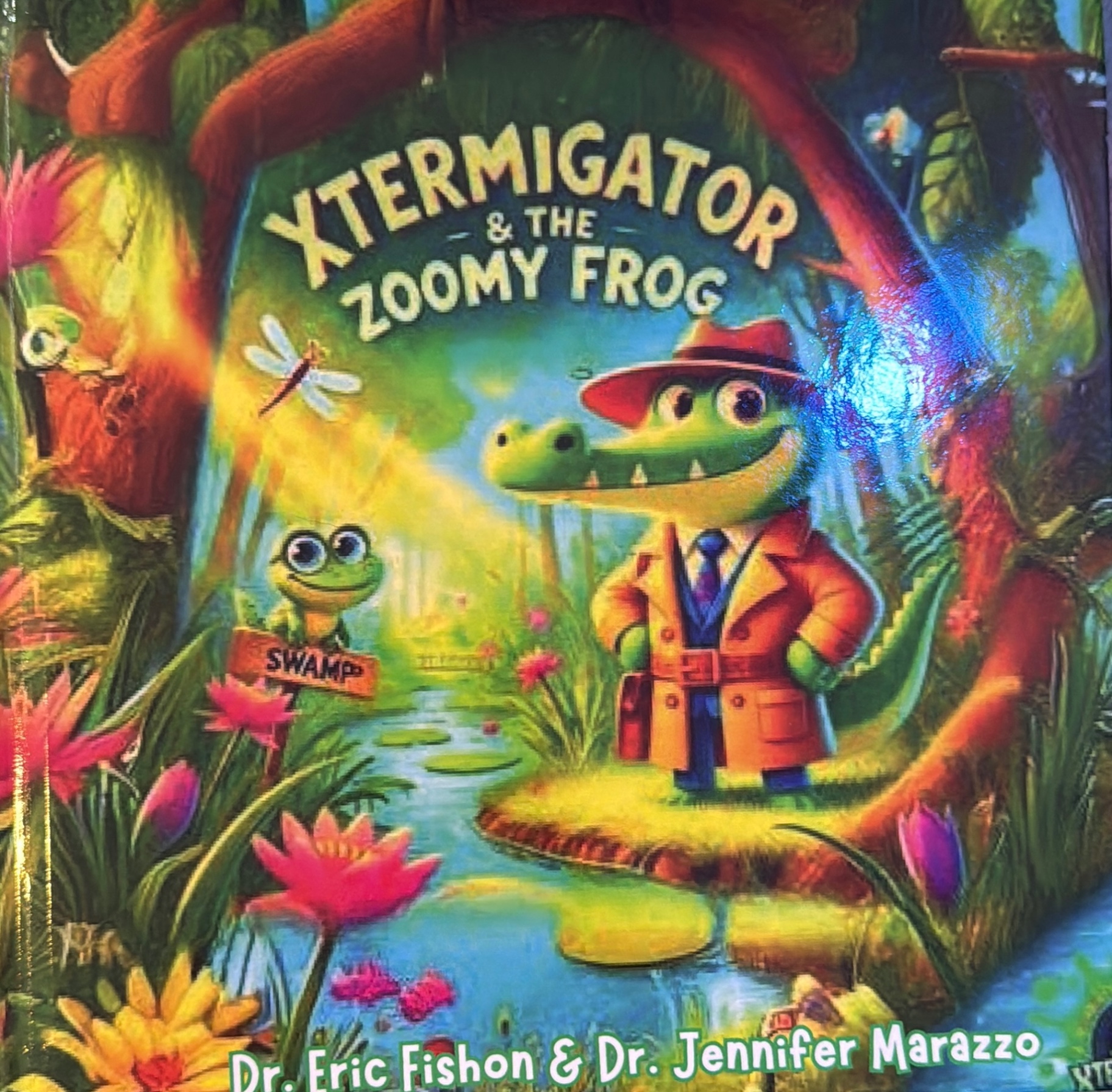
The Friendly Ferns Swamp is a place where every "hidden" trait is treated with the curiosity of a detective.
"When we talk about invisible disabilities, we're covering a massive spectrum," says Sarah Jenkins, a pediatric occupational therapist and frequent consultant for swamp-themed educational initiatives. "We’re looking at Autism Spectrum Disorder (ASD), ADHD, anxiety, dyslexia, and even chronic pain or fatigue. These children are often working twice as hard as their peers just to stay 'level' in a classroom or social setting. If we don’t recognize that hidden effort, we miss the opportunity to celebrate their resilience."
To truly master inclusion, we have to start by identifying these common "hidden" superpowers:
- ADHD (Attention-Deficit/Hyperactivity Disorder): Often seen as just "having too much energy," but it’s actually a challenge with the brain’s regulation of attention and impulses.
- Autism: A developmental difference that affects how a person communicates and relates to others (it’s a spectrum, meaning every person’s experience is as unique as the patterns on a frog’s back).
- Sensory Processing Disorder: When the brain has trouble receiving and responding to information that comes in through the senses: like a swamp being too loud or the water feeling too itchy.
From "Inability" to "Superpower": The Emotional Transformation
The most significant hurdle isn't the disability itself; it's the mindset that "different" equals "broken." At XTERMIGATOR KIDS, we believe that a disability is not an inability: it’s your greatest superpower. This isn't just a catchy slogan; it's a life-changing shift in perspective.
Take Zoomy Frog, for example. In the bustling environment of the swamp, Zoomy might seem "distracted." But when we look closer, his ADHD allows him to notice the tiny ripple of a fish or the faint hum of a distant bee that everyone else misses. His "distraction" is actually "hyper-awareness."
"I remember the day my son stopped saying 'I can't' and started saying 'I do it differently,'" shares Mike, a father of a 7-year-old with dyslexia. "He used to hide his books under the bed because the letters 'danced' too much. Once we started calling his dyslexia his 'Detective Vision': because he notices visual patterns others don't: his whole posture changed. He wasn't a kid who couldn't read; he was a detective learning a new code. That emotional shift from shame to pride changed our entire family dynamic."

A whimsical illustration of a child wearing a superhero cape made of swamp leaves, standing tall next to Xtermigator.
Mastering the Art of Inclusion: Practical Tips for Swamp Dwellers
Inclusion isn't just about "letting someone play." It’s about modifying the environment so everyone can thrive. Here is how we can make the Friendly Ferns Swamp: and our schools and communities: more accessible for everyone:
- Lead with Curiosity, Not Judgment: If you see a child struggling, don't assume they need a "time out." (A time out often increases anxiety for neurodivergent kids). Instead, ask yourself, "What is the environment telling this child right now?"
- Use Visual Schedules: Many kids with invisible disabilities thrive on predictability. Using pictures to show the "order of the day" helps reduce the anxiety of the unknown.
- Celebrate the "Small" Wins: In the swamp, a lily pad leap is just as important as a long swim. Acknowledge the effort it took for a child with anxiety to join a group, or for a child with ADHD to finish a three-step task.
- Adopt Inclusive Language: Avoid saying "What's wrong with them?" and instead use "What do they need to succeed?" This shifts the focus from the deficit to the solution.
As Eric Fishon, owner of XTERMIGATOR KIDS, often says: "Every kid is a star in our swamp. We just have to make sure the light is hitting them at the right angle so they can shine."
Our logo serves as a constant reminder that different is beautiful and strength comes in many forms.
The Science of the "Spiky Profile"
To understand inclusion, we must understand the "Spiky Profile." Most neurotypical people have a relatively flat skill profile (they are okay at most things). Neurodivergent individuals (those whose brains function differently) often have a spiky profile. They might be absolute geniuses at 3D modeling or creative storytelling (the peaks) but struggle significantly with basic organization or sensory regulation (the valleys).
"We often try to 'sand down the spikes' to make these children fit into a round hole," explains Dr. Aris Thorne, a researcher in educational psychology. "True inclusion means supporting the valleys so the peaks can reach the clouds. When we provide accommodations like noise-canceling headphones or fidget tools, we aren't giving them an 'unfair advantage.' We are leveling the swamp floor so they can stand as tall as everyone else."
It is through these accommodations that we see the true superpower of the individual emerge, unburdened by the weight of trying to 'act' neurotypical.
A Community Connected: Growing Together
Inclusion is a team sport. It requires parents, educators, and children to work together to pull the weeds of stigma out of the swamp. When we celebrate differences, we teach our children that they don't have to hide who they are to be loved.
"The best part of the XTERMIGATOR series is seeing the characters support each other," says Elena, a primary school teacher. "When Shelly the turtle needs a little extra time to get her words out, the other characters don't finish her sentences. They just wait. That's inclusion in its simplest, most beautiful form. It's patience. It's grace. It's realizing that 'different' isn't scary: it's interesting."
When we gather together, our diverse abilities make the celebration even richer. Together, we are truly unstoppable.
Looking Toward a Brighter, More Inclusive Swamp
As we look toward the future, the goal isn't just "tolerance." We are aiming for a world where invisible disabilities are greeted with the same immediate support and understanding as visible ones. We dream of classrooms that are built for all kinds of brains, and playgrounds where "superpower" is the standard term for neurodiversity.
We want every child who feels "different" to know that they have a place here. Whether you’re a Zoomy Frog with a million ideas a minute or a Shelly Turtle who takes life at a steady pace, the Friendly Ferns Swamp is your home.
If you're looking for more ways to support your child's journey, or if you want to bring the message of inclusion to your school, check out our FAQ or join our Community Connection. Let's keep exploring, keep learning, and keep proving that every single one of us has a superpower waiting to be discovered.
The fog is lifting, the sun is coming out over the swamp, and your child is ready to lead the way. Are you ready to follow?