
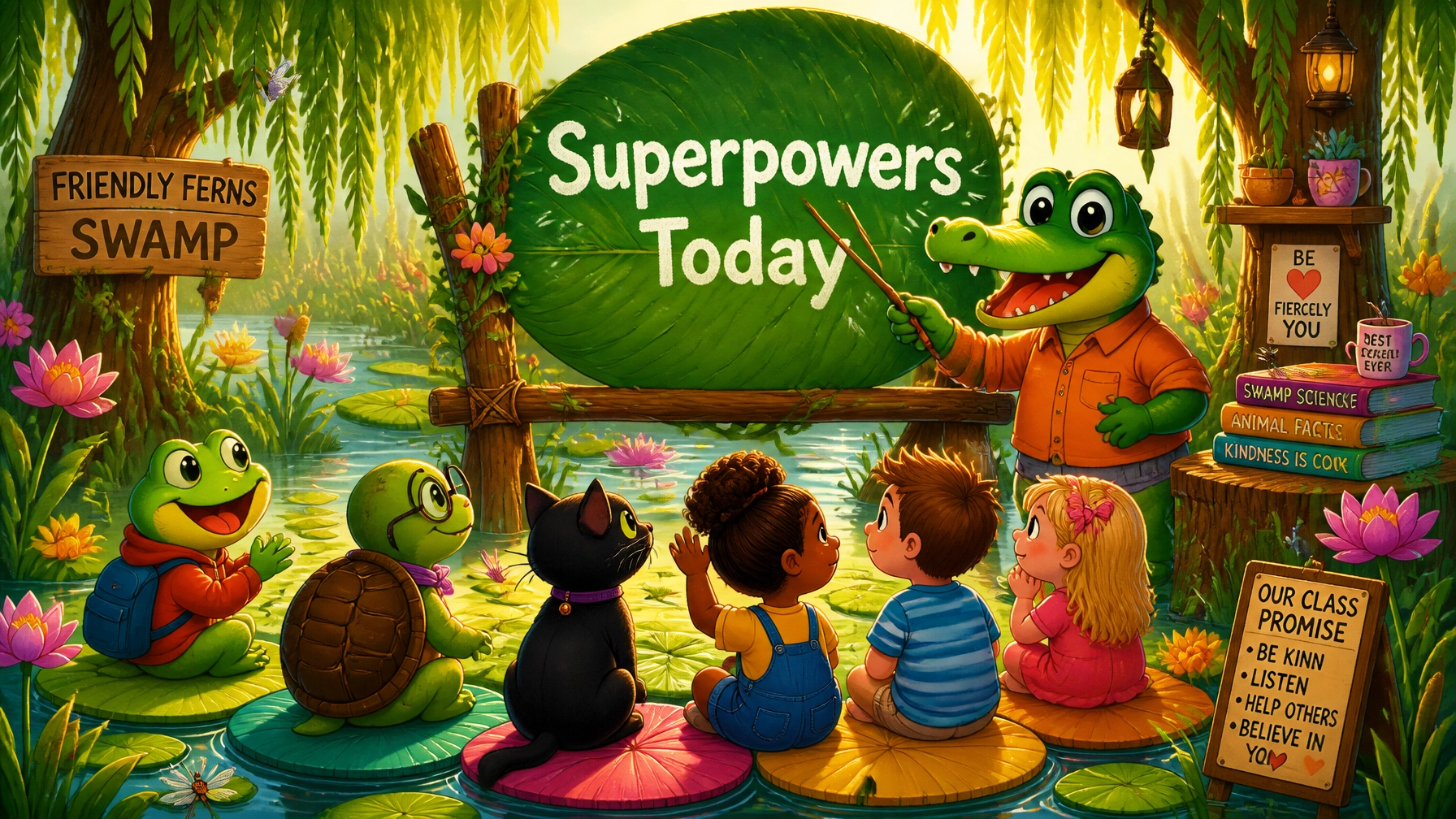
You’ve seen it in your classroom a thousand times. The child who can’t stop tapping their pencil against the desk, the one who stares out the window while the rest of the class is on page forty-two, and the student who melts down because the fluorescent lights are just a little too "loud" today. As an educator, your heart aches to reach them, but the standard curriculum often feels like a rigid box that these brilliant, neurodiverse minds simply weren't built to fit inside. The frustration is mutual: you feel like you’re failing to unlock their potential, and they feel like they’re "broken" before the first bell even rings.
But what if the "disruption" wasn't a problem to be solved, but a signal of a superpower waiting to be harnessed? At XTERMIGATOR KIDS, we believe that a disability is not an inability: it is quite literally your greatest superpower. By stepping into the whimsical world of the Friendly Ferns Swamp, we can help students (and teachers) reframe invisible disabilities like ADHD, autism, and anxiety as unique "character stats" in the great story of learning.
Bridging the Gap: Transforming "Disruptive" into "Determined" with Story-Driven Learning
The primary challenge in any inclusive classroom is making the invisible visible. When a child has a physical disability, the world understands they need a ramp. When a child has Executive Function (the brain's command center for managing tasks, focus, and emotional control) challenges, the world often just sees "laziness" or "defiance."
"I spent years trying to 'quiet' my ADHD students because I thought that was the only way they could learn," admits Sarah Miller, a veteran elementary school teacher with fifteen years of experience in inclusive classrooms. "It wasn't until we introduced the character of Zoomy the Frog from the Xtermigator's Big Heart series that the lightbulb finally went off. My students didn't see a 'problem child' in Zoomy; they saw a high-speed engine that just needed a specialized steering wheel. Suddenly, they weren't 'naughty' anymore: they were just 'zoomy.'"
By using characters that embody specific neurodiverse traits, educators can provide a safe, third-person perspective for children to explore their own struggles. This approach utilizes Neuroplasticity (the brain's amazing ability to reorganize itself by forming new neural connections) by creating positive emotional associations with learning and self-regulation.

Character worksheets like this one for Tebow the Cat help students identify their own "hidden" strengths through the lens of a loyal, observant friend.
The Friendly Ferns Approach: How Whimsical Characters Make Complex Struggles Relatable
In the Friendly Ferns Swamp, every character has a challenge that they’ve turned into a strength. These aren't just stories; they are mirrors. When we talk about Autism Spectrum Disorder (a developmental condition that affects how people communicate and interact with others), we often focus on the "deficits." In our swamp, we look at Shelly the Turtle.
Shelly might take a little longer to process a question, and she might prefer the quiet of her shell when the swamp gets too noisy: a classic sign of Sensory Overload (when the five senses take in more information than the brain can process). However, Shelly is also the swamp’s greatest observer and a beacon of patience.
"When we read about Shelly, my autistic son finally had the words to tell me, 'Mom, I'm just in my shell right now, but I'm still listening,'" says David Chen, a parent and community workshop leader. "That emotional transformation: moving from 'I'm weird' to 'I'm like Shelly': changed our entire household dynamic. He stopped seeing his need for quiet as a weakness and started seeing it as his 'Observation Mode.'"

Using worksheets for Shelly the Turtle allows educators to discuss patience and the importance of taking one's time in a fast-paced world.
Tools for the Toolbox: Practical Strategies for ADHD, Autism, and Anxiety
Understanding is the first step, but practical tools are the second. For students with ADHD or Anxiety, the "unseen" nature of time and schedules can be a major source of stress. This is where the marriage of storytelling and technology becomes vital.
One of our favorite digital tools to recommend to families and educators is the Cozyla Digital Calendar. For a child who struggles with transitions, seeing their day laid out with visual cues and Friendly Ferns Swamp icons can drastically reduce anxiety. It turns a chaotic day into a predictable map.
- For ADHD (The Zoomy Frogs): Use high-stimulation, short-burst activities. Allow for "fidget breaks" where students can channel their energy just like Zoomy before a big jump.
- For Autism (The Shellys): Provide "Shell Zones": quiet corners with soft lighting where a student can retreat if the sensory input becomes too much.
- For Anxiety (The Tebows): Use "Observational Check-ins." Like Tebow the Cat, let these students observe a new activity from the sidelines before asking them to jump in.

Digital organization tools can help neurodiverse children visualize their day, reducing the "invisible" stress of transitions and scheduling.
"We implemented a 'Swamp Station' in our resource room," shares Maria Rodriguez, a special education coordinator. "We have the books, the character posters, and a digital schedule. The students don't feel like they are going to 'remedial help' anymore; they are going to 'The Swamp' to fuel up their superpowers. The shift in their self-esteem is palpable. We aren't fixing them; we are equipping them."
From Inclusion to Celebration: Building a Classroom Where Differences Are Superpowers
The ultimate goal of using the Friendly Ferns Swamp curriculum isn't just "inclusion" (the act of including all students in a regular classroom). Inclusion is the baseline. Our goal is celebration. When a student understands that their "Zoomy" energy makes them a great brainstormer, or their "Shelly" patience makes them a fantastic editor, the entire classroom culture shifts.
“Different is beautiful. Together, we are unstoppable.” This isn't just a slogan on our XTERMIGATOR KIDS flags; it’s a biological fact of a healthy ecosystem. A swamp needs the fast-moving dragonfly, the steady turtle, and the watchful alligator to thrive. Your classroom is no different.
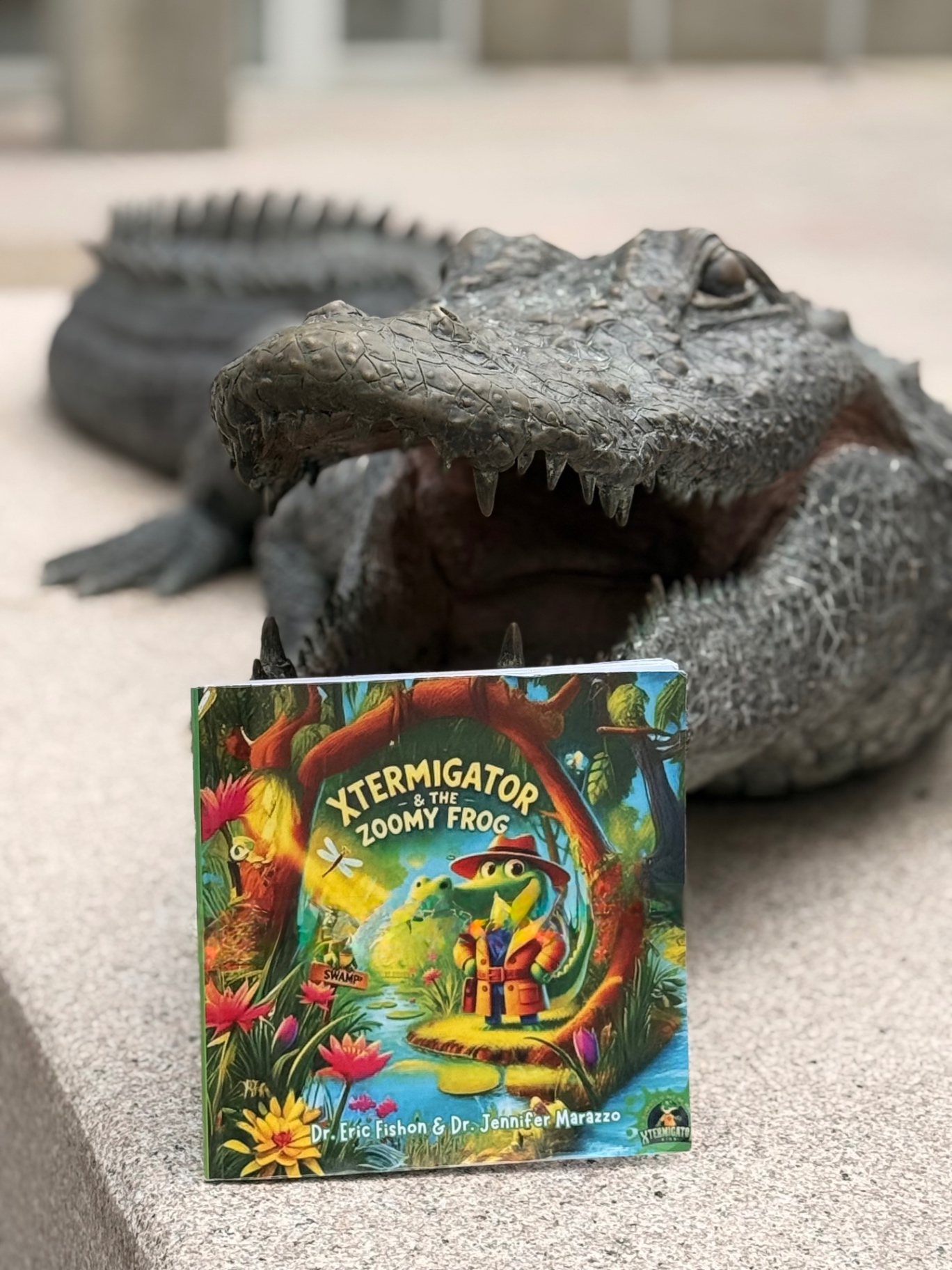
The book "Xtermigator & the Zoomy Frog" serves as a foundational text for teaching children about ADHD through an empowering, whimsical narrative.
As we look toward the future of education, we envision classrooms where every IEP (Individualized Education Program, a legal document that details a child's specific learning needs and goals) is viewed as a "Superpower Manual." We hope to see more schools adopting storytelling as a primary tool for disability awareness, moving away from clinical labels and toward character-based empowerment.
We invite you to explore our Resource Hub for free educational materials, or perhaps start your journey with Xtermigator & The Zoomy Frog to see how your "disruptive" students can become your most "determined" heroes.
The Friendly Ferns Swamp is growing every day, and there is always a lily pad waiting for you and your students. Let’s stop trying to make every child a "standard" fish and start celebrating the unique, swamp-dwelling, superpower-wielding individuals they truly are.