
Have you ever felt like your child was navigating a thick, foggy marsh without a map? You see their brilliance: the way they can name every dinosaur from the Cretaceous period or how they notice the tiniest ladybug on a leaf: but the world often only sees the "fog." For parents of children with invisible disabilities like ADHD, autism, anxiety, or learning differences, the daily struggle isn't always about a physical barrier. It’s about the exhaustion of trying to fit a square peg into a round hole, the heartbreak of a "meltdown" being labeled as "bad behavior," and the quiet worry that your child might never feel like they belong.
At XTERMIGATOR KIDS, we believe the swamp isn't a place to get lost; it’s a place to find your strength. In our home of Friendly Ferns Swamp, we don’t see disabilities as things that need to be "fixed." We see them as unique neurological blueprints. As we often say, a disability is not an inability: it’s your greatest superpower.
Reframing the "Invisible" as a Source of Strength
When we talk about invisible disabilities (conditions that aren't immediately apparent to an observer, such as neurodivergence or chronic mental health challenges), the focus is often on the deficit. But what if we shifted the lens?
Expert and educator Lorraine Driscoll notes that recognizing these "superpowers" can transform a child’s entire trajectory. She writes: “Becoming aware of your child’s strengths or ‘superpowers’ can actually be useful in developing IEPs (Individualized Education Programs), managing behavior at home, and learning what motivates your child.”
In the Friendly Ferns Swamp, our characters don’t just "cope" with their differences; they lead with them. Take Xtermigator, for example. While others might see a big alligator, his "Big Heart" allows him to perceive emotions and needs that others miss. He uses his hyper-awareness (a trait often found in those with sensory processing sensitivities) to ensure every creature in the swamp feels safe.
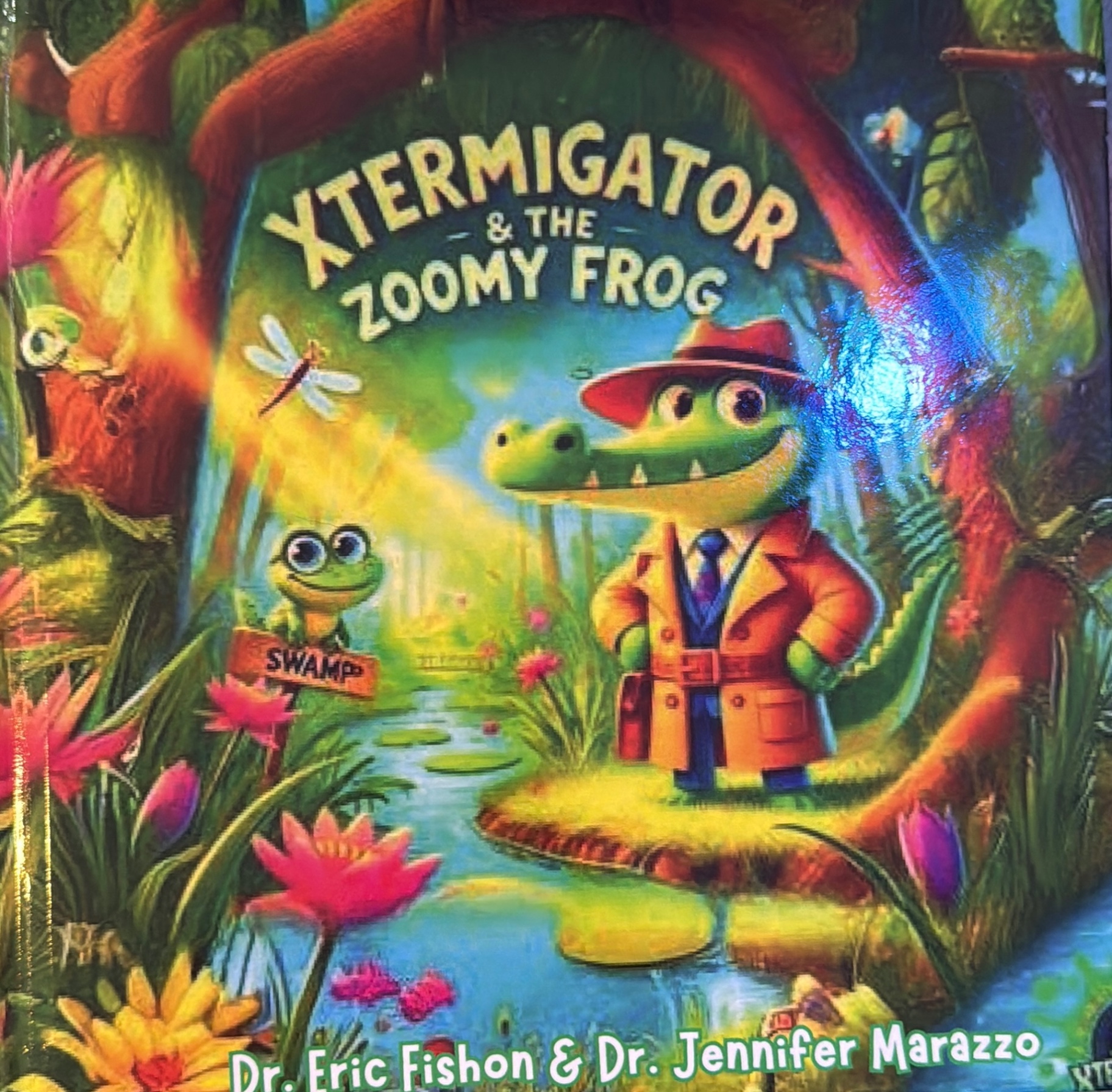
The "Xtermigator & The Zoomy Frog" book helps children identify with characters who turn their unique traits into investigative strengths.
Why Neurodiversity is the Ultimate Survival Skill
In nature, a swamp with only one type of plant wouldn't survive. It needs the ferns, the moss, the towering trees, and the murky water to thrive. The same is true for our communities. Neurodiversity (the concept that neurological differences are a natural and valuable part of human variation) is essential.
Autism advocate and professor Temple Grandin once famously said, “There needs to be a lot more emphasis on what a child can do, instead of what they can’t do.”
When we look at a child with ADHD, we might see a struggle with executive functioning (the mental skills that help us manage time, pay attention, and remember details). But if we look closer, we see a "Zoomy Frog" with incredible divergent thinking and the ability to hyper-focus on passions. When we see a child with anxiety, we are often looking at a person with a highly tuned "threat detection system" who is deeply empathetic and observant.
Navigating the Swamp with the Right Tools
Understanding that your child has a superpower is the first step, but even superheroes need gadgets. Transitioning from "struggling" to "thriving" often requires practical support that respects the way a neurodiverse brain works.
One of the biggest challenges for families in the swamp is organization. Because many children with invisible disabilities struggle with working memory or transitions, a standard paper planner often isn't enough. This is why tools like the Cozyla Digital Calendar are so transformative. By providing a visual, interactive way to see the day, it reduces the "cognitive load" (the amount of mental effort being used in the working memory) and allows the child to feel in control of their environment.

Visual schedules provide the structural 'map' children need to navigate their day with confidence.
Building an Inclusive Ecosystem for Every Explorer
Inclusion isn't just about putting everyone in the same room; it’s about making sure the room is built for everyone. For educators and parents, this means moving beyond "tolerance" and toward "celebration."
Clinical psychologist Tracy Packiam Alloway, who writes about learning differences, explains the impact of this shift: “I wanted them to see what their superpower was.” Her work emphasizes that when children see themselves as capable, they are more likely to persist through the "hard parts" of their day.
To help with this, we’ve developed resources like the Tebow the Cat Introductory Worksheet. Tebow represents the "cool, loyal, and observant" side of the swamp. By using these worksheets, children can identify their own traits: like being a "night owl" or having a "calming strength": and see them as valid, positive parts of their identity.

Worksheets like Tebow’s help translate complex feelings into relatable character traits.
Turning "Meltdowns" into Breakthrough Moments
We would be remiss if we didn't acknowledge that life in the swamp can be messy. There are days when the "superpower" feels like a burden. A sensory overload isn't a choice; it’s a physiological response. However, when we approach these moments with kindness and curiosity rather than punishment, we create space for emotional transformation.
I remember a mother telling us about her daughter, who has autism and would often become overwhelmed in loud stores. Instead of seeing it as a "problem," they began calling it her "Sonic Hearing." They equipped her with "superhero silencers" (noise-canceling headphones) and a small Xtermigator plush. The shift from "I'm a kid who screams" to "I'm a hero with sensitive ears" changed everything. She felt empowered to advocate for her needs rather than ashamed of them.
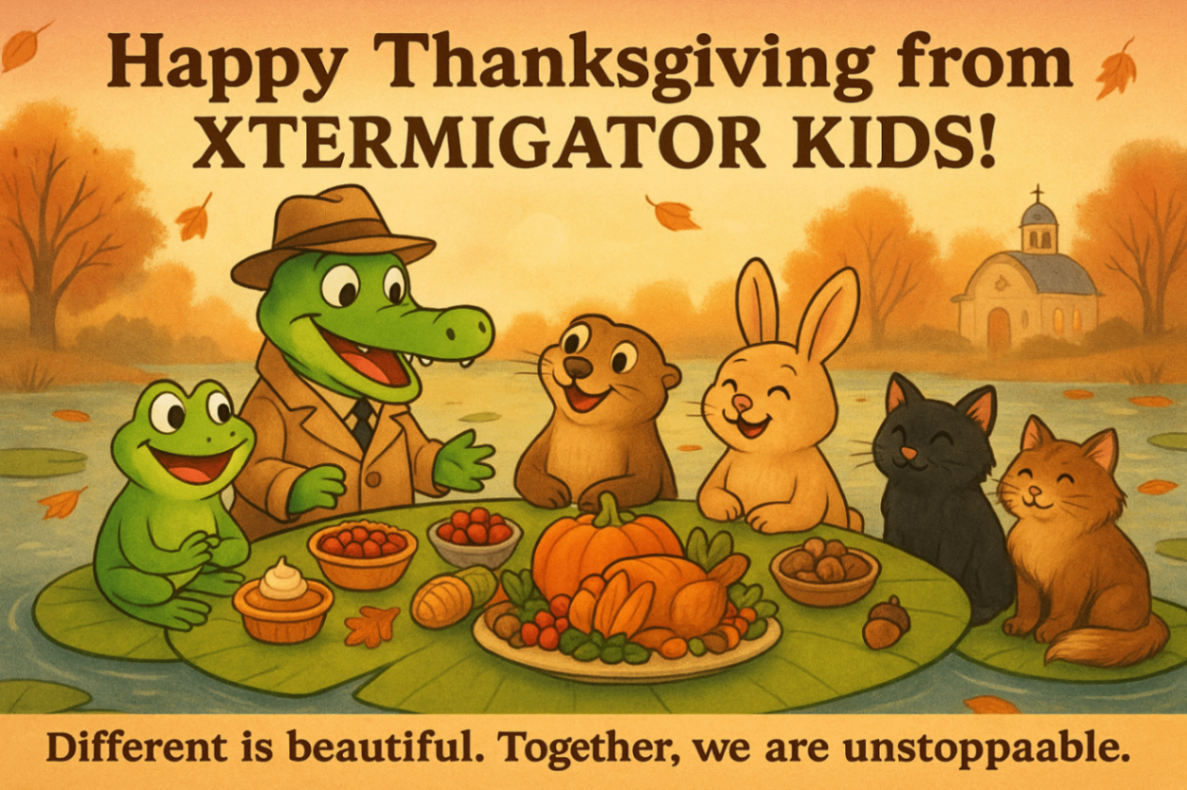
Community and acceptance are the foundation of a truly inclusive environment.
A Future Where Every Voice is Heard
As we look toward the future of education and family life, our aspiration at XTERMIGATOR KIDS is to see a world where the "invisible" is finally seen and celebrated. We hope for classrooms where "fidgeting" is recognized as a tool for focus, and where "daydreaming" is seen as the birth of a new world.
Inclusion in the swamp matters because every child deserves to know that they are not a mistake. They are a vital part of the story. Whether you are a parent, a teacher, or a "Zoomy Frog" yourself, remember: your path might be different, your pace might be unique, but your potential is limitless.
Keep exploring, keep being kind, and never forget that your disability is just the origin story of your greatest superpower.
Want to bring the magic of Friendly Ferns Swamp into your home? Check out our Resource Hub for free worksheets and more stories from the "Xtermigator's Big Heart" series.