
You’re standing in the middle of a crowded grocery store. The fluorescent lights are buzzing with a high-pitched hum that feels like a physical needle against your skin. The floor-waxer in the next aisle sounds like a jet engine, and the scent of the seafood counter is suddenly, violently overwhelming. For many children with autism or sensory processing sensitivities, this isn't just a "bad trip to the store": it’s a neurological emergency.
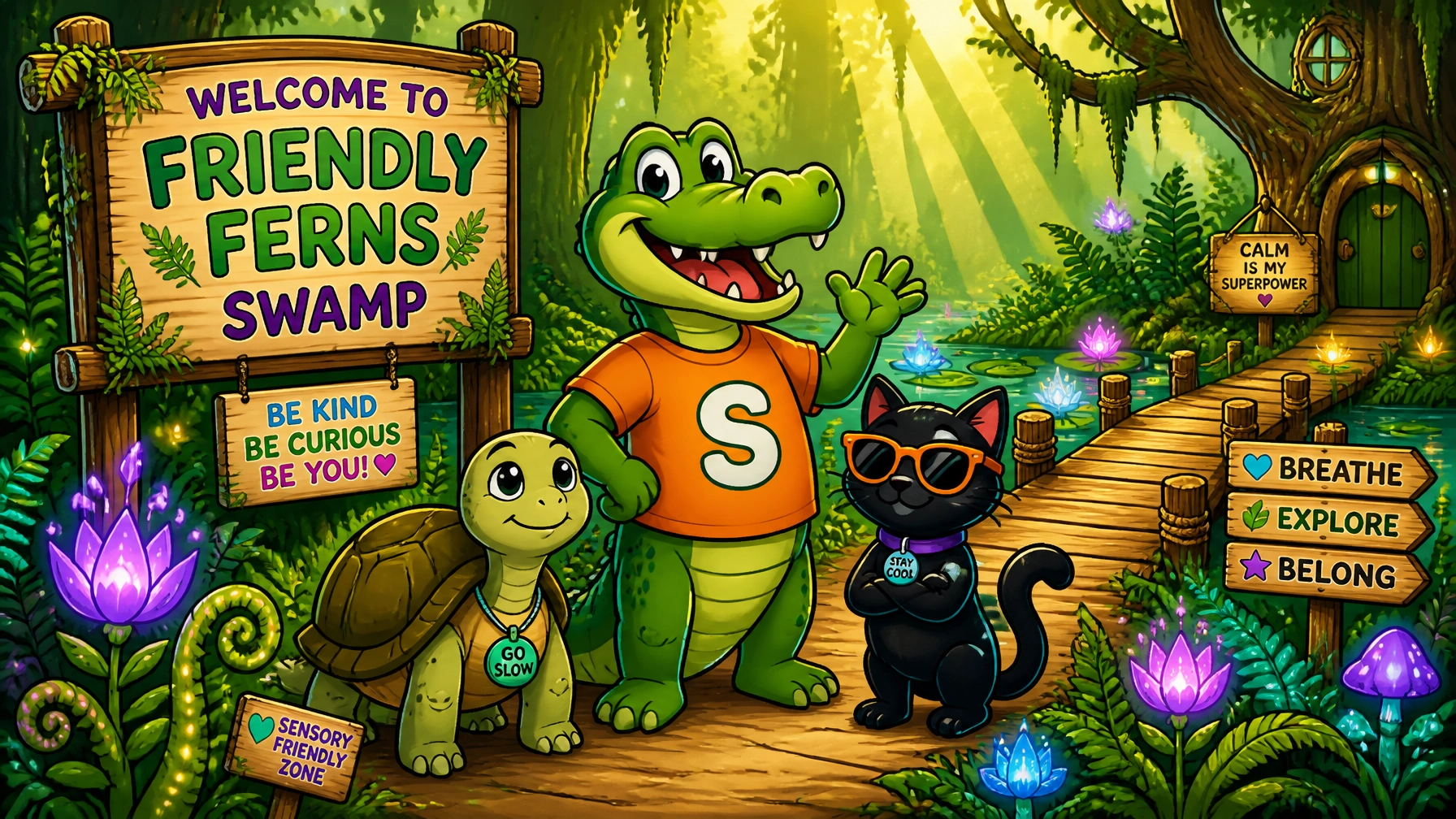
When the world feels like a chaotic swamp of unpredictable noises, textures, and lights, children with unseen disabilities often find themselves lost in the "fog" of sensory dysregulation (a state where the nervous system is over-stimulated and unable to process environmental input). But here at Friendly Ferns Swamp, we know a secret: the swamp isn't scary once you have a map.
Mapping the Muddy Waters: Understanding the Unique Sensory Profile
The first step in navigating any terrain is knowing exactly what you’re dealing with. Every child has what experts call a sensory profile (a personalized map of how an individual perceives and reacts to sensory stimuli). Some kids are "sensory seekers," looking for deep pressure and big movements, while others are "sensory avoiders," retreating from loud noises or itchy clothing tags.
"I used to think my son was just being 'difficult' at birthday parties," says Sarah, a parent and community member. "Then I realized that for him, the sound of balloons popping was like a literal explosion. Once we understood his profile: that he’s hyper-sensitive to sudden auditory input: we could pack his 'swamp gear' and give him the tools to feel safe."
To start mapping your child’s world, keep a sensory diary. Note the time of day, the specific environment, and the behavior you see. Are they covering their ears? Are they spinning? Are they "crashing" into furniture? These aren't just random acts; they are attempts to regulate their nervous system.

Tracking triggers is the first step toward turning a sensory "melt-down" into a "steady-down."
Shelly’s Slow-Down Sanctuary: Building a Calm-Down Zone
In the Friendly Ferns Swamp, our friend Shelly the Turtle is the master of the "Slow-Down." Shelly knows that when the world gets too fast, you need a shell to retreat into. In your home or classroom, this looks like a Calm-Down Corner or a Sensory Safe Zone.
A successful sanctuary should address multiple senses to help with vestibular regulation (the sense of balance and spatial orientation) and interoception (the ability to sense what is happening inside your body, like hunger or a racing heart).
Key elements for your sanctuary:
- Soft, Dim Lighting: Avoid harsh fluorescents. Use string lights or a small lamp with a warm bulb.
- Sound Control: Have noise-canceling headphones or a white noise machine nearby.
- Proprioceptive Input: Items like beanbags, weighted blankets, or "lap pads" provide deep pressure that calms the nervous system.
- Visual Muting: Keep the area free of clutter. A small tent or a canopy can help "wall off" the rest of the room’s visual noise.
"When we introduced the 'Shelly Spot' in my classroom," explains Mr. Henderson, a second-grade teacher, "it changed the entire dynamic. It wasn't a 'time-out' spot; it was a 'power-up' spot. The kids learned that when they felt their 'engines' running too fast, they could take five minutes with a weighted lizard and come back ready to learn."
You can find excellent resources for setting up these spaces, including Shelly the Turtle's calm-down worksheets, in our printable products section.

Shelly the Turtle reminds us that being slow and patient is a superpower of its own.
Tools for the Trek: Heavy Work and the Sensory Go-Bag
Sometimes, you can't stay in the sanctuary. You have to head out into the "Great Unknown" (also known as the dentist’s office or the school assembly). This is where Xtermigator’s "Heavy Work" comes into play. Heavy Work refers to activities that provide proprioceptive input: pushing, pulling, or carrying weight: which helps ground the body and reduce anxiety.
Before a big transition, try "wall push-ups" or having your child carry a backpack with a couple of books in it. This "muscle work" tells the brain where the body is in space, providing a sense of security.
Additionally, every swamp explorer needs a Sensory Go-Bag. This is a portable toolkit designed to mitigate sensory overload on the fly.
What’s in a Swamp Go-Bag?
- Noise-canceling headphones (for auditory protection).
- Fidget tools (like putty or textured stones for tactile grounding).
- Chewelry (non-toxic silicone jewelry for children who need oral sensory input).
- Sunglasses or a hat (to dim bright overhead lights).
- A "Break Card" (a simple visual cue they can show you when they’ve had enough).

A well-stocked go-bag is like a shield for the soul in high-sensory environments.
Navigating the Fog Together: Parent-Teacher Collaboration
One of the most significant hurdles for families is the "Transition Gap": the difference between how a child is supported at home versus at school. To bridge this, clear communication is vital.
"We believe that a disability is not an inability: it's your greatest superpower," says Eric Fishon, owner of XTERMIGATOR KIDS. "But even a superhero needs a team. When parents and teachers share the same 'swamp map,' the child doesn't have to spend all their energy trying to survive the environment. They can spend it on being a kid."
Strategies for a successful Parent-Teacher Partnership:
- The Shared Profile: Give the teacher a one-page "About Me" sensory profile. List what "calms" (e.g., deep pressure, soft music) and what "triggers" (e.g., the school bell, wet glue).
- Consistent Visuals: Use similar visual schedules or coloring pages at home and school to provide a sense of predictability.
- The "Exit Strategy": Agree on a signal or a "Safe Zone" in the classroom where the child can go without having to ask for permission out loud, which can sometimes increase anxiety.
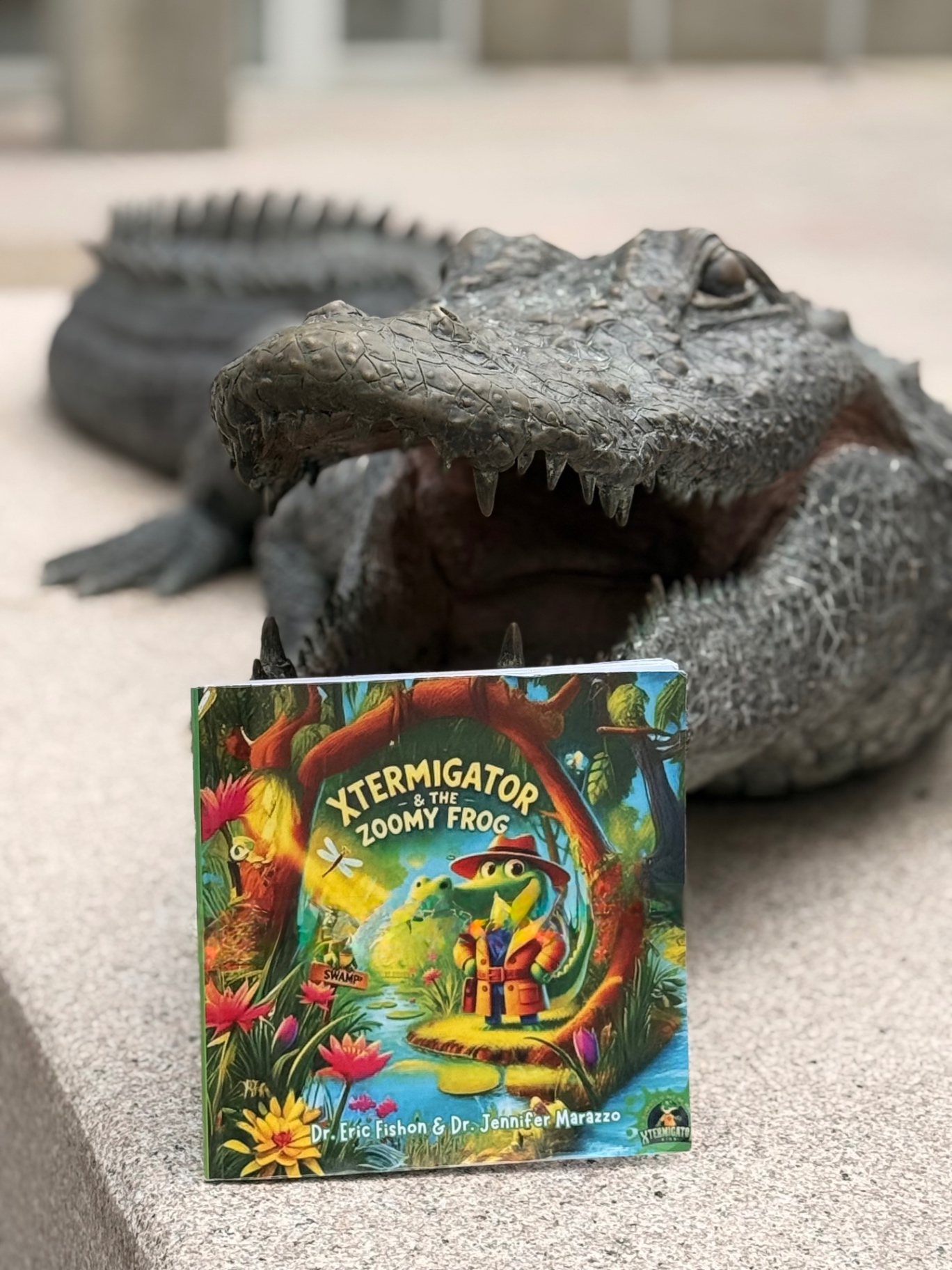
Storytelling through books like "Xtermigator & the Zoomy Frog" helps peers understand and include their neurodiverse friends.
The Superpower of Seeing Differently
The journey through the sensory swamp isn't about "fixing" the swamp or "fixing" the child. It’s about building the bridges, providing the tools, and celebrating the unique way your child sees the world. A child who notices the hum of the lights might also be the one who notices the tiny, beautiful dragonfly no one else saw. A child who feels textures deeply might grow up to be an artist with an incredible sense of touch.
We are looking toward a future where every school, playground, and shop is designed with the "Friendly Ferns" philosophy: where inclusion isn't an afterthought, but a foundation. We dream of communities where a child wearing noise-canceling headphones isn't seen as "different" in a way that isolates, but is seen as a prepared explorer, ready for the adventure.
If you’re looking for more ways to support your little explorer, check out our featured downloads for interactive resources that make learning about disabilities fun and accessible.
Remember: The swamp is full of life, and with the right gear, you won't just survive( you'll thrive.)