
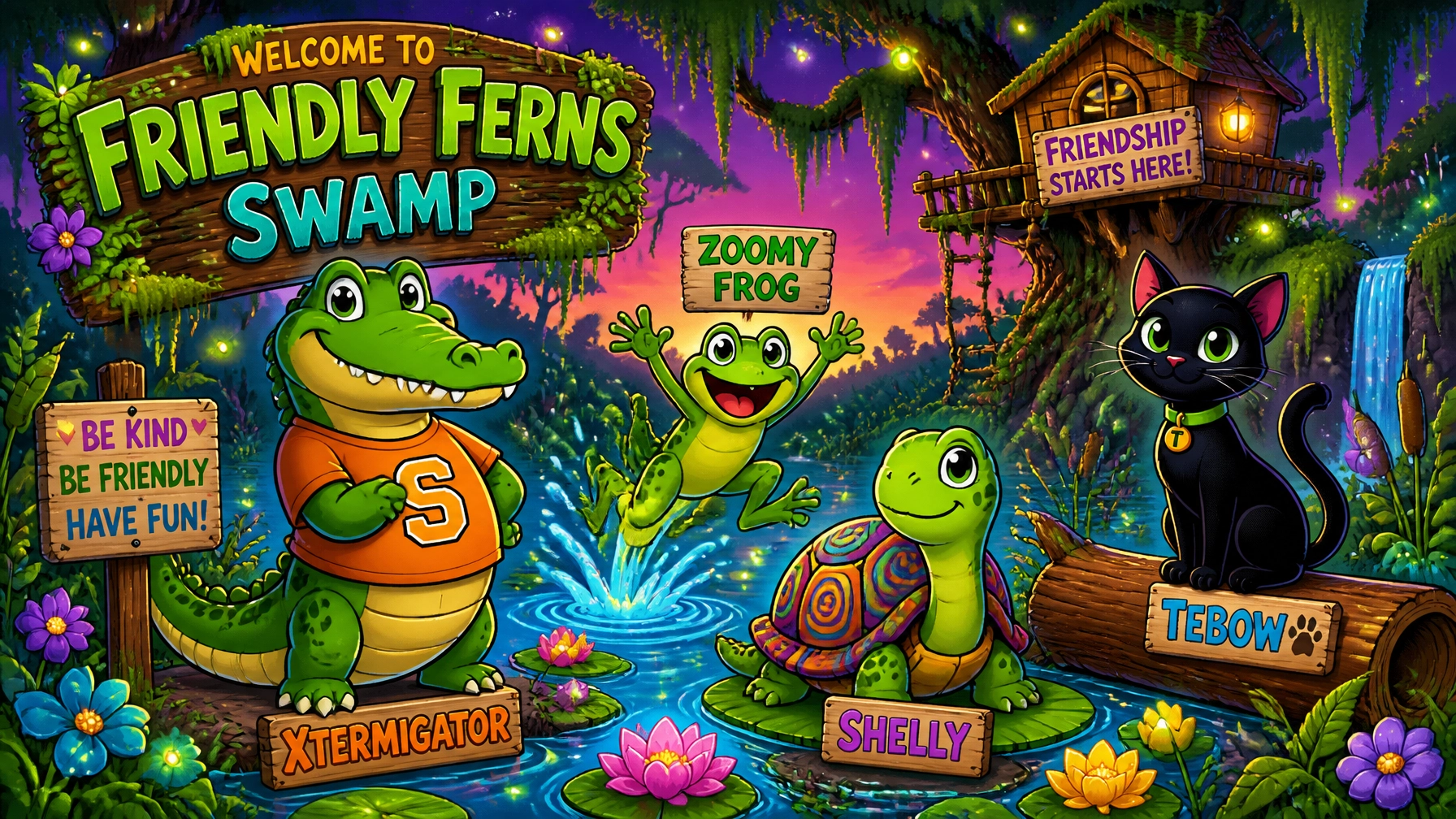
It happens during the school play, at the crowded birthday party, or even just during a quiet afternoon of homework. You see your child struggling, but to the rest of the world, nothing looks "wrong." They might be spinning in circles, covering their ears, or staring at a blank page with tears in their eyes. The frustration builds because these challenges are invisible: hidden beneath the surface like the roots of a cypress tree in the Friendly Ferns Swamp.
For many parents, the hardest part isn't the disability itself; it’s the feeling of being misunderstood. When a child has a broken leg, everyone knows to open the door. But when a child has ADHD, autism, or anxiety, the world often sees "behavior" instead of a "brain-based difference." This gap in understanding can leave families feeling isolated, wondering how to bridge the distance between their child’s potential and their daily struggles.
Understanding the "Invisible" in Invisible Disabilities
When we talk about invisible disabilities, we are referring to neurodiversity (the concept that brain differences are natural variations in the human genome). These aren't illnesses to be "cured," but rather different ways of processing the world.
"The first time we heard the term 'executive function' (the mental skills that help us manage time, pay attention, and remember details), it was like a lightbulb went off," says Sarah, a mother of two who uses our ADHD Focus Tracker. "We finally realized our son wasn't being 'difficult' on purpose; his brain's internal filing cabinet was just organized differently. Seeing it as a mechanical difference changed our entire approach from frustration to coaching."
Invisible disabilities often manifest in three main ways:
- Executive Functioning Challenges: Difficulty with planning, organizing, and staying on task (often seen in ADHD).
- Sensory Processing Differences: Heightened or lowered sensitivity to light, sound, touch, or taste (commonly associated with Autism).
- Emotional Regulation: Intense feelings that can lead to meltdowns or "shutting down" when overwhelmed (frequently linked to Anxiety).
Meet the Heroes: Why a Disability is Actually a Superpower
In the Friendly Ferns Swamp, we don't just "deal" with disabilities: we celebrate them. Every character in our world has a trait that might seem like a hurdle but is actually their greatest strength. This shift in perspective is the heartbeat of the "Xtermigator’s Big Heart" series.
Zoomy Frog: The Power of High-Energy Ideas

Zoomy Frog’s "speedy brain" allows him to think of solutions faster than anyone else, even if he occasionally forgets where he parked his lily pad.
Zoomy Frog represents the ADHD experience. While others might see a frog who can't sit still, Xtermigator sees a friend with an "Idea Engine" that never stops. When the swamp faces a problem, Zoomy is the first to leap into action with five different creative solutions.
"My daughter saw herself in Zoomy," shares Michael, a local educator. "She used to say her brain felt 'too loud.' After reading Xtermigator & The Zoomy Frog, she started calling her energy her 'Turbo Boost.' It turned a source of shame into a source of pride."
Shelly the Turtle: The Gift of Deep Observation

Shelly shows that moving at your own pace allows you to see the beautiful details that others might rush past.
Shelly is our champion for Autism and sensory focus. She might be slower to join the group dance, but she is the one who notices the tiny, glowing moss that helps the friends find their way home in the dark. Her "Super Observation" (the ability to process intense detail that others miss) makes her the swamp’s best problem-solver.
As noted on her introductory worksheet, Shelly reminds kids that being "quiet" or "slow" isn't a lack of ability: it’s a sign of deep thinking. Parent tip: Encourage your child to share one "tiny detail" they noticed today to build their confidence in their unique perspective.

From Melting Down to Stepping Up: Emotional Transformations
The true magic of the Friendly Ferns Swamp happens when a child realizes they are not "broken." We call this the "Swamp Shift": the moment the narrative moves from "I can't do this" to "How can I use my power to solve this?"
"We used to have daily meltdowns during transitions," says Eric Fishon, creator of XTERMIGATOR KIDS. "But once we started using storytelling to explain how our brains work, the anxiety started to melt away. We started using tools like the Cozyla Digital Calendar and our custom word games to make learning interactive rather than intimidating."
This emotional transformation isn't just about the child; it’s about the family. When parents stop trying to "fix" the invisibility and start "seeing" the child, the dynamic changes.
"It's about moving from 'compliance' to 'connection.' When we understand the neurological 'why' behind the behavior, we can meet them with empathy instead of an ultimatum." : Dr. Aris, Neurodiversity Specialist.
Building an Inclusive Ecosystem in Your Own "Swamp"
Creating an inclusive environment doesn't require a total overhaul of your life. It starts with small, intentional shifts in how we communicate and play.
- Use Inclusive Language: Instead of "What's wrong?", try "What does your brain need right now?"
- Celebrate "Small" Wins: In the swamp, a successful trip to the grocery store is just as big a deal as winning a race.
- Visual Supports: Use tools like our Scavenger Hunt to provide structure and clear goals, which reduces the cognitive load (the amount of mental effort used in the working memory).

Teamwork in the swamp means every ability: visible or invisible: is essential for the journey.
Forward-Looking Aspirations: A World of Superpowers
Our dream at XTERMIGATOR KIDS is a future where "invisible disability" is a term of empowerment, not a diagnosis of exclusion. We envision a world where every classroom has a "Quiet Corner" like Shelly’s log and every playground celebrates the "Turbo Energy" of the Zoomy Frogs.
As we continue to grow our resource hub, we are committed to providing the tools: from detective word games to personalized tutoring: that help kids navigate their own swamps with confidence.
Remember: A disability is not an inability. It is simply a different map for the same beautiful journey. Whether your child is an otter, a cat, or a gator, they have a superpower waiting to be discovered.
Are you ready to find yours? Join the adventure at the Xtermigator Kids Shop and let's start uncovering those hidden strengths today.
Our mission is simple: to make sure every child knows they belong.