
You’ve likely been there: sitting in a small, windowless school conference room, surrounded by a mountain of paperwork that seems to only highlight what your child can’t do. The Individualized Education Program (IEP) meeting often feels like a clinical audit of deficits. You hear words like “delay,” “deficit,” and “non-compliant” repeated until the child you know: the one who builds intricate LEGO cities or remembers every fact about prehistoric sharks: feels lost in the jargon.
This is the "Deficit-Model Trap." It’s an exhausting experience that leaves parents feeling defeated and children feeling like they are a "problem" to be solved. But there is a massive shift happening in special education, and it sounds a lot like our motto here at XTERMIGATOR KIDS: a disability is not an inability—it’s your greatest superpower.
Enter the Strengths-Based IEP. It’s not just a feel-good trend; it’s a neurodiversity-affirming approach that is fundamentally changing how we support our kids.
Moving Beyond "What's Wrong": The Power of Strengths-Based Thinking
For decades, the IEP process was designed to identify a student’s "weaknesses" and create goals to "fix" them. A strengths-based IEP flips the script. It starts with the whole child (their interests, talents, and preferred ways of thinking) and uses those as the engine to drive progress.
"When we focus only on deficits, we miss the most important tool we have: the child’s natural motivation," says Dr. Sarah Miller, a special education consultant and frequent collaborator with inclusion programs. "A strengths-based IEP isn't about ignoring challenges; it’s about using what the child can do to help them navigate what is hard."
(In Friendly Ferns Swamp, we don't try to teach a turtle to fly like a dragonfly; we help Shelly use her legendary patience and steady pace to lead the way through the thickest fog.)

Meet the Swamp Squad: How Characters Model Neurodivergent Talents
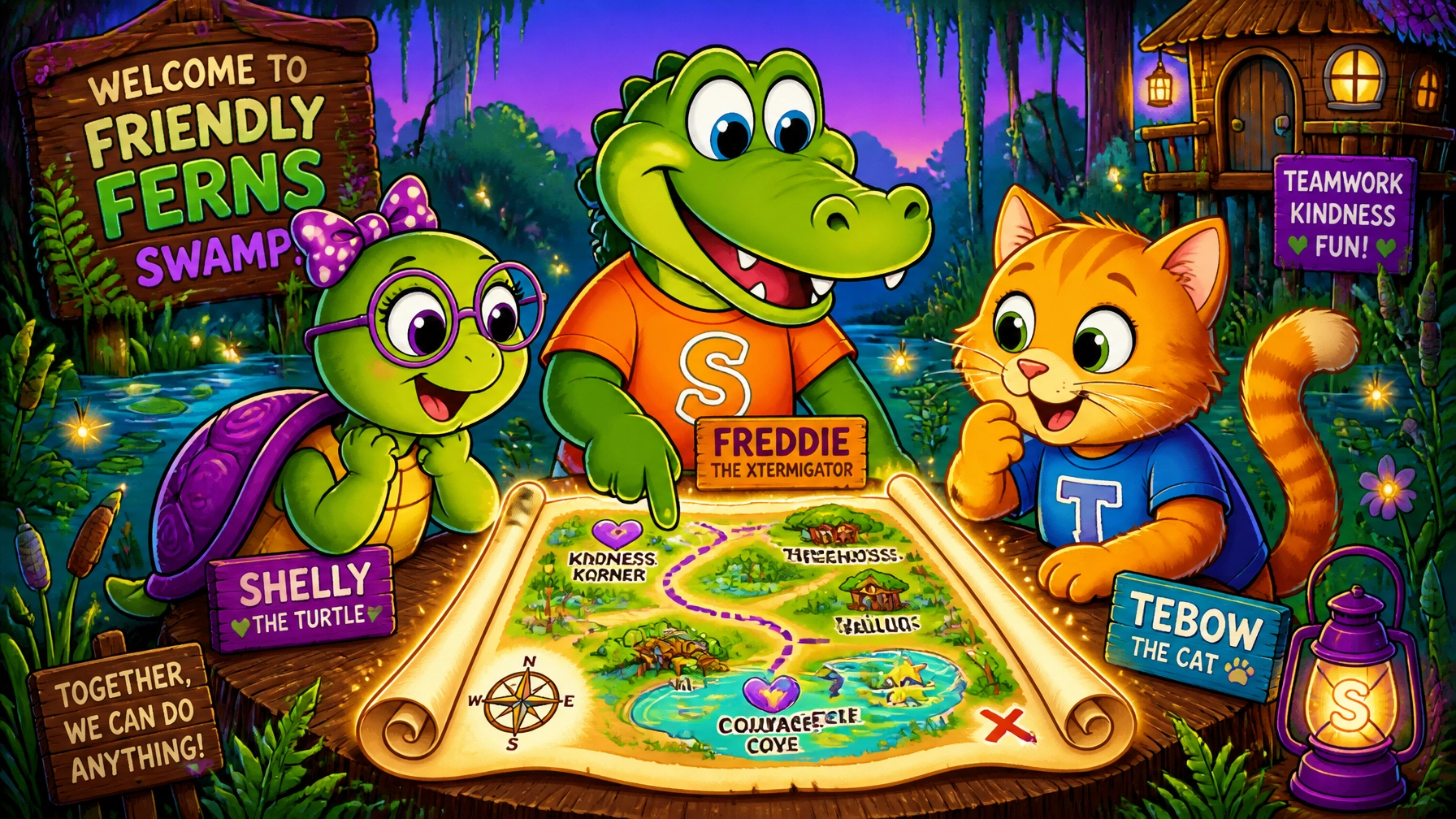
At XTERMIGATOR KIDS, we use our characters from the Friendly Ferns Swamp to illustrate these concepts for kids and educators alike. Each character has a unique "swamp power" that might look like a disability to some, but is actually a vital part of the team.
- Freddie the Xtermigator: Freddie has a "Big Heart" and a lot of energy. In a traditional IEP, he might be labeled as "impulsive." In a strengths-based IEP, we see his enthusiasm and bravery. We use his drive to lead the team to help him work on executive function (the mental processes that enable us to plan, focus attention, and juggle multiple tasks).
- Shelly the Turtle: Shelly moves slowly and methodically. A deficit-based model might focus on her "slow processing speed." A strengths-based model celebrates her calmness and observational skills. She is the one who notices the tiny details others miss.
- Tebow the Cat: Tebow is incredibly observant and loves the quiet of the night. His "sensitivity" to noise or lights—often seen as a sensory processing challenge—is actually his heightened awareness.
When we rewrite an IEP through this lens, we aren't just changing the words; we are changing the child's identity from a "student with a delay" to a "team member with a specialized skill set."
The Technicalities of a Superpower IEP
So, what does this look like on paper? It’s not just about adding a "strengths" section at the beginning and then moving on to the deficits. It requires weaving those strengths into every single goal and accommodation.
- Present Levels of Performance (PLAAFP): Instead of just listing test scores, this section should describe how the child learns best. (Example: "Johnny has a deep interest in mechanics and demonstrates high engagement when using hands-on models.")
- Using Strengths to Remove Barriers: If a student struggles with written expression (the physical or mental act of writing) but has high verbal intelligence, a strengths-based IEP might allow them to use speech-to-text tools. This isn't a "cheat"—it’s leveraging a strength to bypass a barrier.
- Goal Design: Instead of a goal that says "Student will sit still for 20 minutes," a strengths-based goal might say, "Using his high interest in science, the student will engage in a lab activity for 20 minutes, using a sensory seat to maintain focus."
Technical Note: This approach aligns perfectly with Universal Design for Learning (UDL), a framework to improve and optimize teaching and learning for all people based on scientific insights into how humans learn.
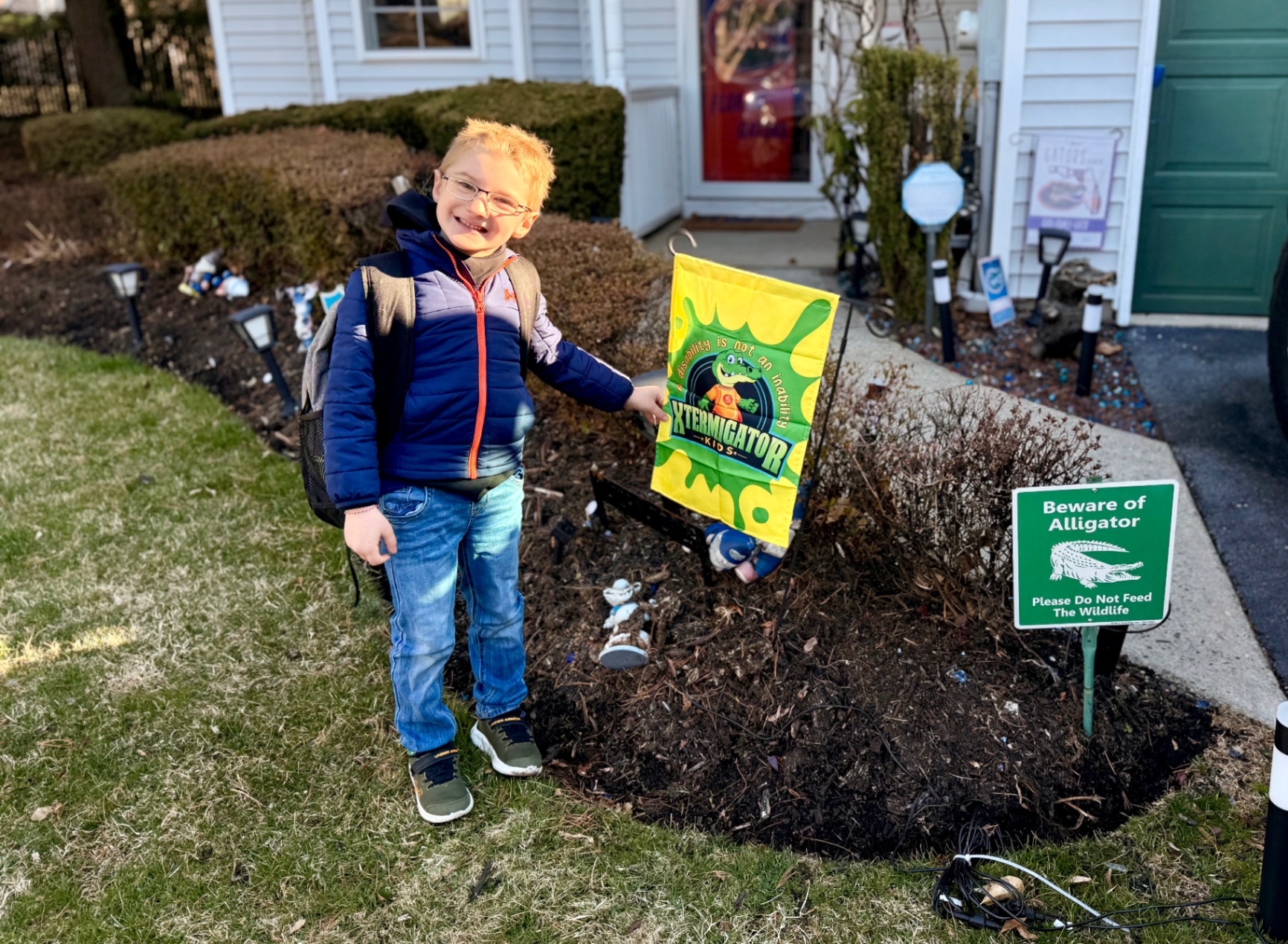
The XTERMIGATOR KIDS flag in a family garden, a symbol of pride and the superpower mindset.
Real Voices: Why Families are Making the Switch
The shift to strengths-based planning isn't just an educational theory; it's a lifeline for families who have felt sidelined by the system.
"For years, IEP meetings felt like a funeral for my son's potential," shares Maria G., a parent of an autistic 10-year-old. "When we finally insisted on a strengths-based approach, the whole room changed. We started talking about his incredible memory and his kindness. Suddenly, the teachers were excited to work with him, and he started feeling like he actually belonged in the classroom."
This sentiment is echoed by educators who use the XTERMIGATOR KIDS resources. "When I use characters like Freddie or Shelly in my classroom," says elementary teacher Kevin L., "the kids stop seeing their IEP as a 'bad thing.' They see it as their personal playbook for how to be a hero in the swamp."
From Resistance to Resilience: The Emotional Transformation
The most profound impact of a strengths-based IEP isn't the academic progress (though that usually follows); it's the emotional transformation. When a child sees their name on a document that highlights their "superpowers," their self-esteem (the confidence in one's own worth or abilities) skyrockets.
We’ve seen it happen in our personalized tutoring sessions. A child who was once resistant to reading becomes a "detective" like Freddie, hunting for clues in the text. A child who was anxious about math becomes a "swamp engineer" like Romeo the Otter.
It is in these moments—when a child realizes they aren't "broken," just differently wired—that true learning begins.
A Future Where Every Child is an Xtermigator
As we look toward the future of education, the goal is clear: we want to move toward a world where every IEP is a "Superpower Plan." We are constantly expanding our resource hub with tools like the Cozyla Digital Calendar to help families organize these strengths-based routines at home.
We envision a classroom where neurodiversity is celebrated as much as any other form of diversity. A place where "different" is seen as "beautiful" and where every child—whether they are a fast-moving Freddie or a slow-and-steady Shelly—has the map they need to navigate their own swamp.
If you're ready to start this journey, take a look at your child's current IEP. Can you find their superpowers in those pages? If not, it might be time to bring a little of the Friendly Ferns Swamp spirit to your next meeting. Remember: your child isn't an inability waiting to be fixed. They’re a superpower waiting to be seen.
Frequently Asked Questions about Strengths-Based IEPs
Q: Does a strengths-based IEP mean my child won't get the help they need for their struggles?
A: Not at all. It means their struggles are addressed through the lens of their strengths. Instead of just working on what's hard, we use what's easy to build a bridge to what's hard.
Q: How can I prepare for a strengths-based IEP meeting?
A: Start by making a list of your child's "superpowers": the things that make them light up. Share this list with the team before the meeting and ask how these interests can be integrated into their goals.
Q: Are strengths-based IEPs legally required?
A: While the term "Strengths-Based" isn't a legal requirement in the same way the IDEA (Individuals with Disabilities Education Act) is, the law does require that the IEP team considers the "strengths of the child" when developing the plan.