
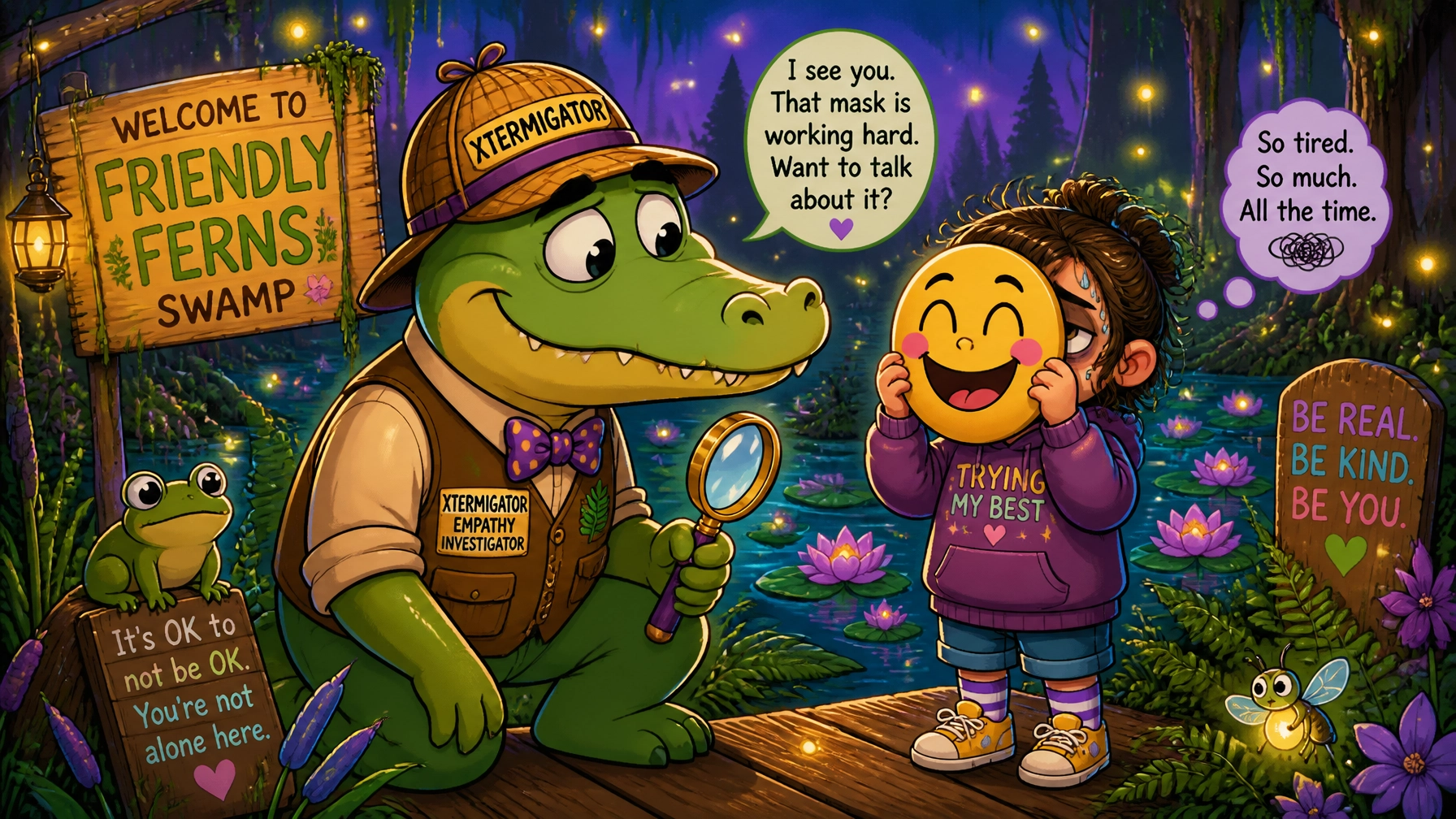
It’s 4:00 PM on a Tuesday. Your child walks through the front door after a long day of school. To their teacher, they were the "perfect" student: quiet, compliant, and helpful. But the moment the door clicks shut, the explosion happens. Tears, a full-blown meltdown over the "wrong" color snack plate, or a sudden, stony withdrawal into their bedroom.
As a parent, you’re left scratching your head. “The teacher said they had a great day! Why are they falling apart now?”
If this sounds familiar, your child might be "masking." In the world of neurodiversity: covering ADHD, autism, anxiety, and learning differences: masking is the intense effort a child makes to hide their natural traits to fit in, stay safe, or avoid negative attention. While it looks like "good behavior" from the outside, it is often a silent, exhausting battle.
At XTERMIGATOR KIDS, we believe that understanding these unseen challenges is the first step toward turning them into superpowers. Let’s dive into the swamp of the mind with our Friendly Ferns Swamp crew to uncover the signs that your child is working much harder than they let on.
The Hidden Weight of the "Invisible Mask"
Masking (the conscious or unconscious suppression of neurodivergent traits) is not a choice made out of deceit. It is a survival strategy. Imagine trying to walk through a thick, muddy swamp while pretending you’re actually strolling down a paved sidewalk. You have to monitor every step, adjust your balance constantly, and hide your heavy breathing so no one notices you’re struggling.
"Masking is like a child wearing a heavy backpack they never take off," says our lead educational consultant. "They might look like they're standing tall, but every muscle is under strain. Eventually, the backpack has to come off, and that’s when we see the exhaustion or the 'after-school collapse.'"
A mask isn't a lie; it's a shield. In the Friendly Ferns Swamp, even our bravest explorers sometimes feel the need to hide their true selves to feel safe.
1. The "Dr. Jekyll and Mr. Hyde" School-to-Home Shift
The most common sign of masking is a drastic difference in behavior between school and home. This is often called after-school restraint collapse (the phenomenon where a child holds their emotions together in a high-pressure environment only to release them in a safe space).
If your child is described as "angelic" or "no trouble at all" by educators, but they are highly reactive, rigid, or emotional at home, they are likely masking during the day. They are using every ounce of their executive functioning (the mental skills used to manage time, pay attention, and regulate behavior) to stay "perfect" at school. By the time they reach their safe harbor: you: their tank is empty.
2. Social Mimicry: Following Romeo the Otter’s Lead

Romeo the Otter is the social butterfly of the Friendly Ferns Swamp, but even he knows how exhausting it can be to try and match everyone else’s rhythm.
Does your child seem to "morph" their personality based on who they are with? This is social mimicry. They might copy a peer’s slang, interests, or even their physical gestures to avoid standing out. While some level of social adaptation is normal, neurodivergent children often do this to an extreme degree because they feel their natural reactions are "wrong" or "weird."
If you notice your child sounds like a completely different person after spending time with a specific friend group, they might be masking their true self to find social safety.
3. Suppressing the "Zoomies": The Freddie the Frog Dilemma

Freddie the Frog has a lot of energy: we call them the 'zoomies'! In school, Freddie might try to sit perfectly still, but inside, he’s ready to leap into the clouds.
Many children with ADHD or autism use stimming (self-stimulatory behaviors like humming, rocking, or fidgeting) to regulate their nervous systems. Masking often involves "hiding the stim."
A child might sit perfectly still in class, looking attentive, while actually experiencing high levels of internal sensory distress. When they get home, you might see them suddenly burst into movement: spinning, jumping, or pacing. This isn't "acting out"; it's their body finally getting the sensory input it was denied all day.
4. Extreme Perfectionism and "People-Pleasing"
"I just want to be good," a 9-year-old student once told us during a community workshop. "If I’m perfect, nobody notices that I don’t understand the instructions."
Masking often manifests as intense perfectionism. A child may become devastated by a minor mistake or a single point lost on a quiz. This stems from the fear that any "slip-up" will reveal their hidden struggles. They may also become "over-compliant," never questioning authority and always saying what they think adults want to hear, rather than what they truly feel.
5. The "Fine" Fog and Difficulty Asking for Help
If you ask your child how their day was and the answer is always a flat, vague "fine," they might be in a "fine" fog. When a child is masking, they are often so disconnected from their own needs and feelings that they genuinely struggle to articulate what went wrong.
They may also refuse to ask for help in class, even when they are completely lost. To a masking child, asking for help is an admission that the mask has failed. They would rather "stay under the radar" than risk being seen as different or "incapable."
6. Chronic Physical Symptoms Without a Medical Cause
The body often speaks what the mind tries to hide. Chronic stomachaches, headaches, or intense fatigue are major red flags.
"We see so many kids with 'Sunday Scaries' that start on Saturday morning," notes Eric Fishon, owner of XTERMIGATOR KIDS. "The physical stress of maintaining a mask for 30+ hours a week is enough to make anyone feel physically ill. It's an internal pressure cooker."
If your child frequently feels sick before school or activities, it’s worth investigating if the environment is demanding more masking than they can handle.
7. Deep Social Exhaustion and Withdrawal
Does your child need hours of "cave time" (solitary time in a dark or quiet room) after school? While some introversion is normal, the social exhaustion caused by masking is profound.
For a neurodivergent child, a "fun" birthday party or a school assembly can feel like running a marathon while solving a Rubik's cube. If they come home and immediately retreat from the family, they aren't being rude: they are recovering from a sensory and social overload.
How to Help Your Child "Take Off the Mask"
Knowing the signs is only half the battle. The goal isn't to force the mask off: sometimes masks are necessary for safety: but to create a world where they don't need them so often.
Create a "Mask-Free Zone" at Home
Make your home a place where "different" is celebrated. Use resources like the Tebow the Cat worksheet to talk about unique traits. Let them stim, let them have the "zoomies," and let them express big feelings without immediate correction.

Use "Low-Demand" Decompression Rituals
When your child gets home, skip the "How was your day?" interrogation. Instead, offer a high-protein snack, a quiet environment, and perhaps a digital tool like the Cozyla Calendar to help them see what’s coming next without the pressure of conversation.
Advocate for "Unseen" Support
Talk to your child's teacher about masking. Explain that while they look "fine" at school, the cost is being paid at home. Advocate for sensory breaks, movement opportunities, and clear visual instructions (like our Xtermigator Flipbooks) to reduce the cognitive load on your child.
Forward-Looking: From Masking to Mastering
Our dream at XTERMIGATOR KIDS is a world where every child feels safe enough to be their authentic self. We are working toward a future where "masking" is a choice, not a requirement for acceptance.
By identifying these signs, you aren't just "fixing" a behavior: you are validating your child’s lived experience. You are telling them, "I see how hard you are working, and you don't have to do it alone."
Remember, a disability is not an inability: it’s your child's greatest superpower, and every superhero deserves a home base where they can finally hang up their cape and just be themselves.
Want to dive deeper into the world of neurodiversity with Xtermigator and the crew? Check out our latest book Xtermigator & The Zoomy Frog or join our Community Connection to share your story with other families.
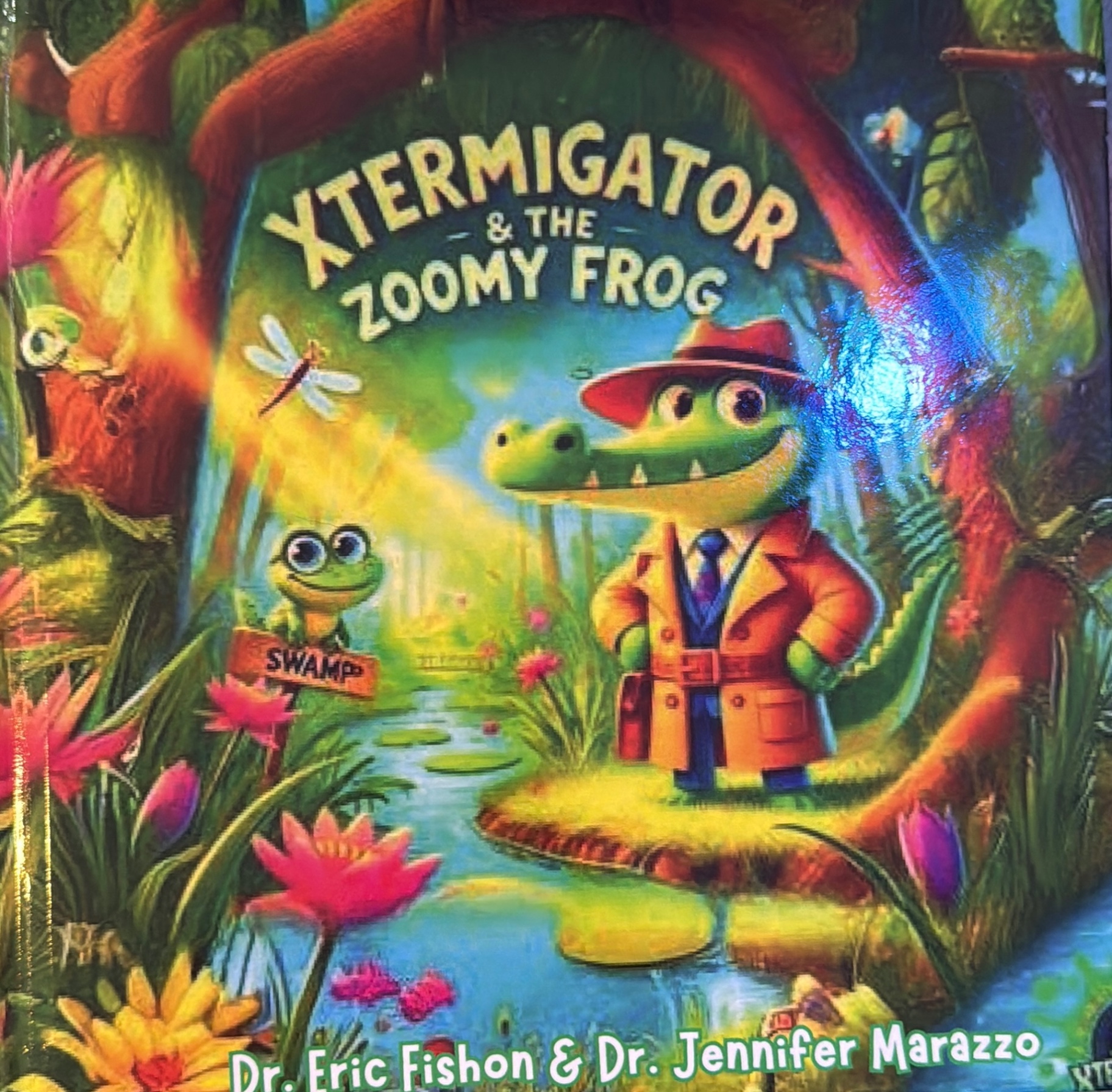
Get your copy of Xtermigator & The Zoomy Frog today!