
It starts with a missed shoe. Then a forgotten backpack. By the time the school bell rings, the morning has already felt like a marathon. For families of neurodiverse children, those navigating ADHD, autism, anxiety, or learning differences, the transition from the safety of home to the high-demand environment of a classroom can feel like trekking through a deep, muddy marsh without a map.
"The biggest hurdle isn't the disability itself; it's the environment that wasn't built for it," says Eric Fishon, founder of XTERMIGATOR KIDS. "When a child's brain processes the world differently, the standard 'one-size-fits-all' classroom can lead to sensory overwhelm and a sense of failure before the first lesson even begins. We need to bridge that gap between the 'Classroom' and the 'Cozy Corner', creating spaces where they feel seen, understood, and empowered."
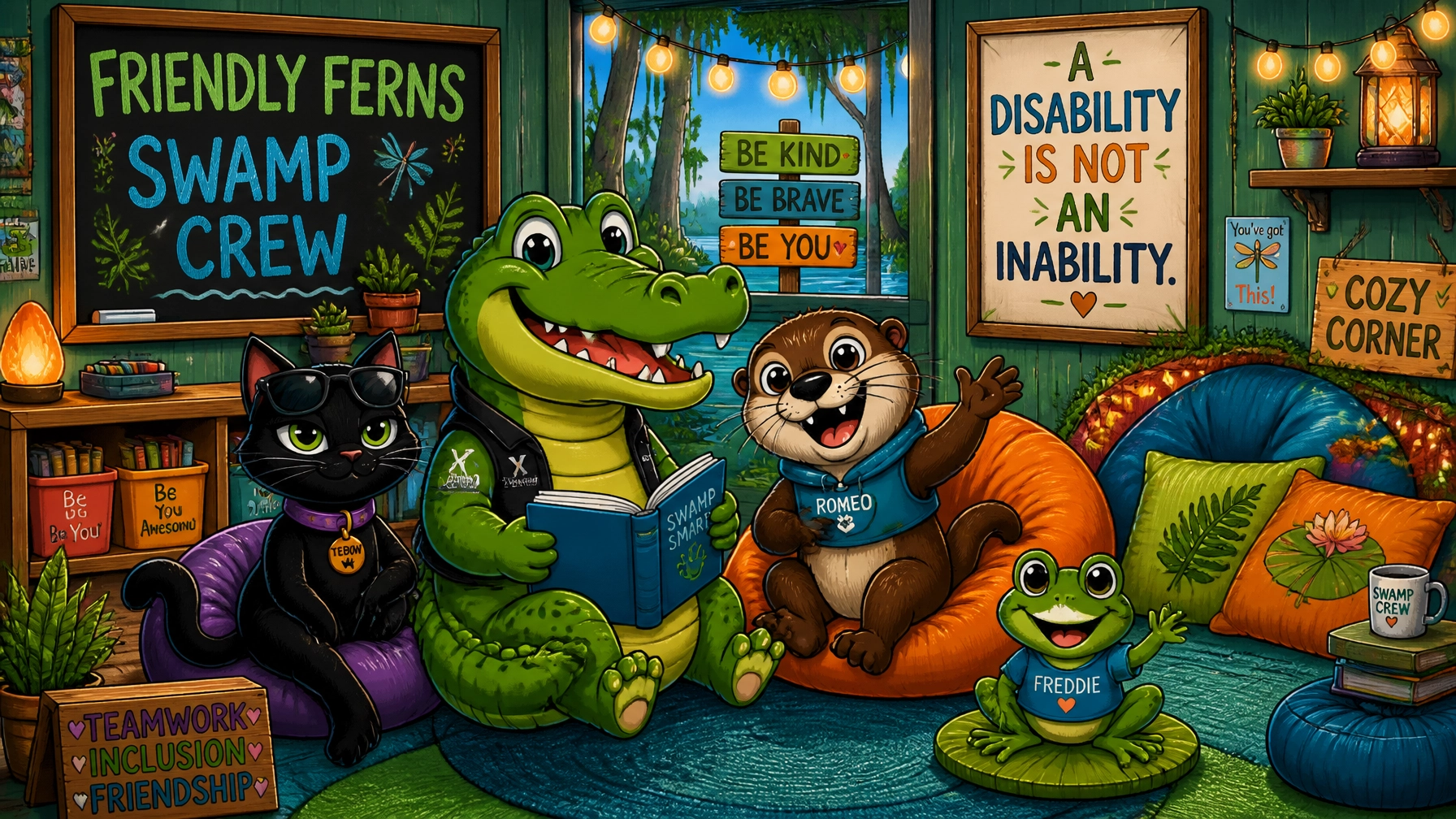
In the Friendly Ferns Swamp, we believe that understanding these unseen disabilities (conditions that are not immediately apparent to others but significantly impact daily life) is the first step toward true inclusion. Whether you are a parent at the kitchen table or a teacher at the whiteboard, supporting neurodiversity requires a shift in perspective.
Welcome to the swamp, a place where every unique trait is a tool for adventure.
Harnessing "Big Energy": ADHD Strategies for School and Home
Meet Romeo the Otter. Romeo is the heartbeat of the swamp, fast-moving, curious, and always ready for the next big thing. But sometimes, Romeo’s "big energy" makes it hard for him to sit still during a long story or focus on a single lily pad.
For children with ADHD (Attention-Deficit/Hyperactivity Disorder), the classroom can be a minefield of distractions. Executive functioning (the mental processes that enable us to plan, focus attention, and juggle multiple tasks) is often where the struggle lies.
To support "Romeos" in your life, consider these actionable strategies:
- Strategic Seating: In the classroom, seat the student away from high-traffic areas like doors or pencil sharpeners.
- Movement Learning: Incorporate physical activity into lessons. Have kids "hop" while spelling or use a standing desk.
- Visual Checklists: At home, use a visual schedule. Seeing the steps for "getting ready for school" reduces the mental load of remembering.
"I used to think my son was just being defiant," shares Sarah, a parent and educator. "Once we realized his 'refusal' was actually executive dysfunction (the brain's inability to initiate a task), everything changed. We stopped asking 'Why won't you?' and started asking 'How can we break this down?' He didn't need a lecture; he needed a checklist and a five-minute movement break."
Creating Predictability: Autism Support and the Power of Routine
Tebow the Cat is observant, loyal, and loves the quiet of the night. He thrives when he knows exactly what to expect. For autistic children, the world can often feel loud, unpredictable, and overstimulating.
Sensory regulation (the ability to manage and respond to sensory input) is a primary goal for autism support at home and school. When a child feels regulated, they are ready to learn.
Tebow reminds us that being observant and having a calm routine is a superpower.
Key Strategies for the "Tebows" in Your Group:
- The "Cozy Corner": Designate a "safe space" with soft lighting, weighted blankets, and noise-canceling headphones. This allows for a "sensory reset" when the environment becomes too much.
- Visual Predictability: Use tools like the Cozyla Digital Calendar to help children visualize their day.
- Clear, Concrete Language: Avoid metaphors or sarcasm. Be direct. Instead of "Get your head in the game," try "Please open your book to page ten."
"Routine is the safety net for my daughter," says Mark, a middle school teacher. "If the schedule changes at school, we use a 'Change Card' to visually signal it. It transforms a potential meltdown into a manageable transition."
Calming the Swamp: Strategies for Anxiety in Children
Freddie the Frog is the most sensitive member of our crew. He feels everything deeply, and sometimes the "what-ifs" of the day make his tummy do flip-flops. Anxiety in children often manifests as stomachaches, irritability, or even total "freezing" during tasks.
Supporting a child with anxiety requires emotion coaching (the process of helping a child identify and regulate their feelings).
- Validate, Don't Dismiss: Instead of saying "You're fine," try "I can see you're feeling worried right now. Let's take three 'swamp breaths' together."
- The "Safe Person": At school, identify a "safe person" (a counselor, nurse, or specific teacher) the child can go to without judgment when they feel overwhelmed.
- Processing Time: Give kids 5-7 seconds to process a question before expecting an answer. This reduces the pressure and lowers the heart rate.
You can find more in-depth techniques in our ultimate guide to anxiety in the classroom.
Learning Differently: Patience and the Journey of Learning Differences
Shelly the Turtle is patient and kind. She might take a little longer to get across the swamp, but her perspective is invaluable. For kids with learning differences (such as dyslexia or dyscalculia), the pace of a traditional curriculum can feel like a race they are destined to lose.
Shelly’s patience reminds us that everyone learns at their own pace.
Inclusive strategies for learning differences:
- Multi-modal Instruction: Use visuals, audio recordings, and hands-on activities to teach the same concept.
- Focus on Effort, Not Outcomes: Celebrate the "bravery" it took to try a difficult math problem rather than just the grade on the paper.
- Self-Advocacy: Teach children to say, "I need more time for this" or "Can you show me a picture of that?"
"When we shifted our focus to Shelly’s strengths: her loyalty and observation: her confidence soared," notes Eric Fishon. "The same is true for our kids. When they realize their brain isn't 'broken,' but just wired differently, they start to see their unique path as an advantage."
From Advocacy to Empowerment: Your Greatest Superpower
Supporting neurodiverse children isn't just about managing "behaviors"; it's about fostering a superpower mindset. We must move away from the idea that these children need to be "fixed" and instead recognize that they are already whole.
A disability is not an inability : it's your greatest superpower.
This is the message XTERMIGATOR KIDS carries into schools and homes every day. When we provide the right tools: whether it's a guide to invisible disabilities or a whimsical book about a brave alligator: we are telling these children that they belong exactly as they are.
Our mission is to ensure every child knows that their difference is their secret superpower.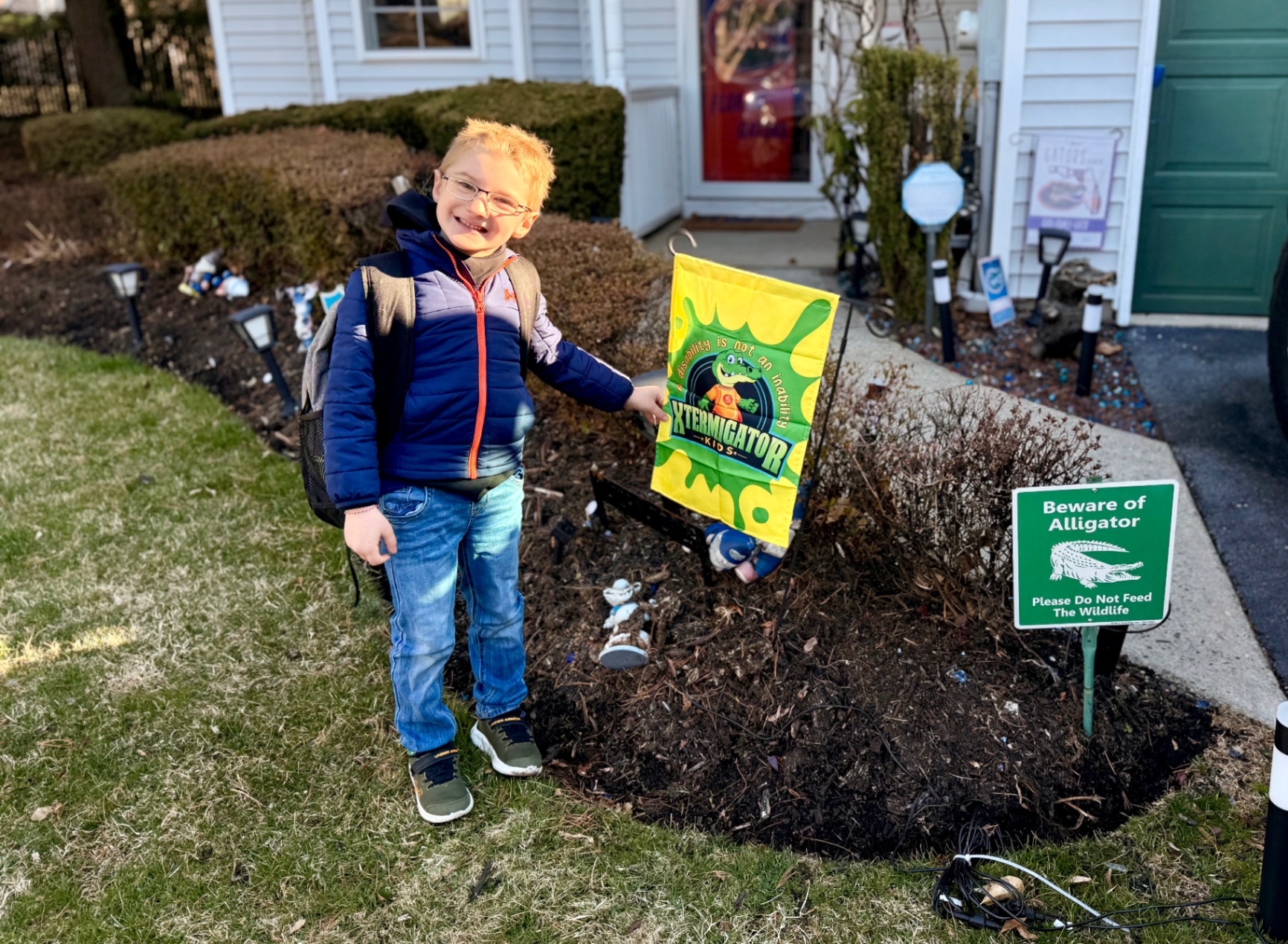
As we look toward the future, our hope is for a world where "inclusive education" isn't a special category, but the standard. We dream of classrooms that look more like "Friendly Ferns Swamp": vibrant, diverse, and filled with characters who help each other through the mud and celebrate each other's unique lights.
Ready to start your journey?
- Explore our resources on neurodiversity.
- Check for signs of masking (when a child hides their neurodivergent traits to fit in).
- Join our community to help every child find their superpower.