
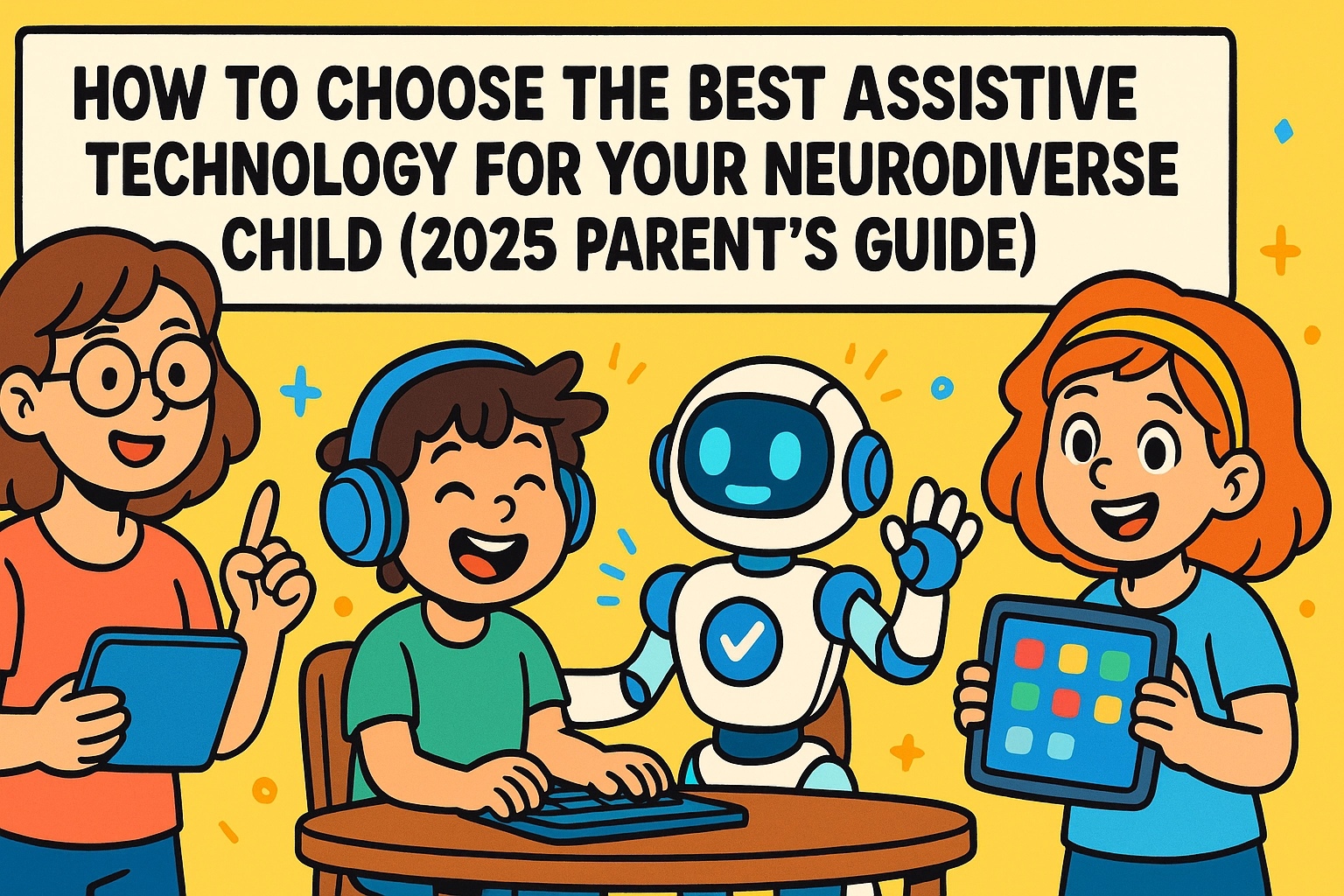
Picture this: It's Christmas morning, and while other families are gathered around the tree sharing stories and unwrapping gifts, your neurodiverse child is overwhelmed by the sensory chaos. The twinkling lights feel too bright, the excited voices sound too loud, and the sudden change in routine has triggered a meltdown that leaves everyone feeling frustrated and disconnected from the holiday magic.
If this scenario feels familiar, you're not alone. Many parents of neurodiverse children face unique challenges during the holidays, but here's the empowering truth: the right assistive technology can transform these overwhelming moments into opportunities for connection, learning, and genuine celebration.
Understanding Your Child's Unique Holiday Technology Needs
The holidays amplify both the joys and challenges of raising a neurodiverse child. Between disrupted routines, sensory overload from decorations and gatherings, and the social expectations of family events, December can feel like navigating a minefield. However, the most effective assistive tools combine reading support and personalized features that adapt to each child's needs, creating bridges rather than barriers during special occasions.
"The technology that works best for my son isn't the most expensive or the most advanced," shares Maria Rodriguez, mother of eight-year-old Alex who has autism and ADHD. "It's the technology that understands him as an individual and grows with his needs, especially during stressful times like the holidays."
Creating Holiday Magic Through Communication Technology
For children who struggle with verbal communication, the holidays can feel particularly isolating. Imagine wanting to tell your grandmother how much you love her homemade cookies or express excitement about a special gift, but lacking the words to do so effectively.

Augmentative and Alternative Communication (AAC) apps like Proloquo2Go have revolutionized how non-speaking children participate in holiday conversations. These platforms can be customized with holiday-specific vocabulary, words like "grateful," "excited," "Christmas morning," or "family time", allowing children to actively engage in festive discussions rather than remaining silent observers.
Dr. Sarah Chen, a pediatric speech-language pathologist, notes: "The beauty of modern AAC technology is its adaptability. Parents can create holiday-themed communication boards that include not just basic needs, but emotional expressions and family traditions specific to their celebrations."
The key lies in choosing platforms that offer intuitive customization. Look for AAC apps that allow you to:
- Add family photos to communication boards (like pictures of specific relatives or holiday traditions)
- Record family members' voices for more personal connections
- Create seasonal vocabularies that can be easily swapped in and out
- Adjust complexity levels based on your child's developmental stage
Transforming Holiday Overwhelm with Sensory-Smart Solutions
The twinkling lights, caroling music, and excited family chatter that define traditional holiday celebrations can overwhelm neurodiverse children's sensory systems. This is where wearable assistive technology becomes invaluable.
Smart sensory devices like noise-canceling headphones with built-in scheduling features help children predict and manage sensory challenges. AngelSense, for example, combines GPS tracking with customizable schedule reminders, perfect for helping children understand the sequence of holiday events and feel more secure about transitions between activities.
"Before we started using sensory-regulating technology, Christmas was honestly a struggle," admits Jennifer Thompson, whose daughter has sensory processing disorder. "Now, Emma can use her noise-reducing headphones during loud family moments and still feel included. She even helped us create a 'holiday sensory schedule' on her device that lets her prepare for each part of our Christmas day."
Building Social Confidence for Holiday Gatherings
Holiday gatherings often involve extended family members and family friends, people your neurodiverse child may not see regularly. This can create anxiety around social interactions and age-appropriate conversation skills.

AI-powered social skills platforms like Auticare create safe, structured environments for children to practice holiday-specific social interactions. These systems adjust difficulty levels based on your child's progress, meaning they can practice everything from "Hello, Aunt Susan" greetings to navigating gift-giving etiquette at their own pace.
The technology uses extended reality (XR) to simulate realistic social scenarios. Children might practice making eye contact while saying thank you for gifts, initiating conversations about holiday traditions, or managing the social complexity of group gift-opening sessions.
"What amazes me most is how these AI systems understand that social skills aren't one-size-fits-all," explains Dr. Michael Park, a developmental pediatrician. "The technology adapts to each child's communication style while building their confidence for real-world interactions."
Supporting Academic Continuity During Holiday Breaks
The two-week winter break can disrupt learning routines for neurodiverse children who thrive on consistency. However, educational assistive technology can maintain skill-building momentum while honoring the relaxed pace of the holidays.
Text-to-speech tools like NaturalReader become particularly valuable when children want to engage with holiday-themed books or family stories but struggle with reading comprehension. These platforms convert written words to speech with adjustable speed and tone, supporting both visual and auditory learning pathways.
Consider creating "holiday learning adventures" using assistive reading technology:
- Audio versions of family favorite holiday stories
- Customized holiday vocabulary building exercises
- Interactive holiday-themed educational games that adjust to your child's learning pace
Technology That Grows with Your Family's Holiday Traditions
The most successful assistive technology implementations involve the whole family, creating inclusive traditions that honor your child's needs while bringing everyone together.
Collaborative planning apps help neurodiverse children understand and participate in holiday preparations. Visual schedule creators allow families to map out holiday activities together, giving children ownership over their celebrations while reducing anxiety about unexpected changes.
"We use technology to create our family's 'Christmas countdown calendar,'" shares the Wilson family, whose son has ADHD and autism. "Each day, he uses his tablet to check off completed activities and preview what's coming next. It's become a cherished tradition that helps him feel excited rather than anxious about the holidays."

Essential Features to Prioritize in Your Holiday Technology Selection
When evaluating assistive technology options, especially with the holidays approaching, focus on these critical capabilities:
Immediate Customization Potential: Choose platforms that allow quick adjustments for holiday-specific needs without requiring extensive technical knowledge.
Multi-Sensory Integration: Look for tools that address your child's complete sensory profile, not just one aspect of their neurodiverse needs.
Family-Inclusive Design: Select technology that allows multiple family members to participate and understand your child's assistive tools.
Offline Functionality: Ensure critical features work without internet connectivity: essential during holiday travel or family gatherings where Wi-Fi may be unreliable.
Professional Integration: Choose platforms that allow easy sharing with therapists, teachers, and other professionals who support your child's development.
Making 2025 Your Family's Most Inclusive Holiday Year Yet
As we look toward the new year, the landscape of assistive technology continues expanding with unprecedented sophistication and personalization. The tools available today aren't just accommodations: they're empowerment devices that help neurodiverse children actively participate in the magic of family celebrations.
The research consistently shows that responsible implementation, accessibility, and continuous adaptation are essential for ensuring assistive technology tools truly benefit your child. This means involving your child's therapeutic team (speech therapists, occupational therapists, educational specialists) in technology selection and regularly evaluating whether tools continue meeting evolving needs.
Remember: the goal isn't to "fix" your child for the holidays, but to provide them with the tools they need to experience joy, connection, and belonging during these special family moments. The right assistive technology doesn't change who your child is: it amplifies their unique strengths and helps their authentic personality shine through during celebrations.
As you consider which assistive technologies might transform your family's holiday experiences, start small and build gradually. Perhaps begin with one communication app or sensory regulation tool, then expand based on what brings the most meaningful improvement to your child's holiday participation.
This Christmas season, your neurodiverse child deserves to experience the full wonder of family traditions, the excitement of gift-giving, and the warmth of holiday connections. With thoughtfully chosen assistive technology as your ally, this holiday season can become a launchpad for a year filled with greater independence, communication, and family joy.
Looking for more resources to support your neurodiverse child's development? Explore our collection of inclusive educational materials at XTERMIGATOR KIDS, where disabilities are never seen as inabilities( especially during the most wonderful time of the year.)