
Feeling Stuck? The Challenge of Fast, Inclusive Transformation
Every teacher’s been there: it’s 7:55am, the bell rings at 8, and you’re staring at a blank, boring classroom: wondering how on earth you’re going to spark joy (and inclusion) for every learner, especially kids with unseen disabilities. “I want my neurodiverse students to feel excited and safe here,” says Nicole, a 4th-grade teacher in Orlando. “But I never have the time or energy to pull off a Pinterest-worthy, sensory-smart setup.”
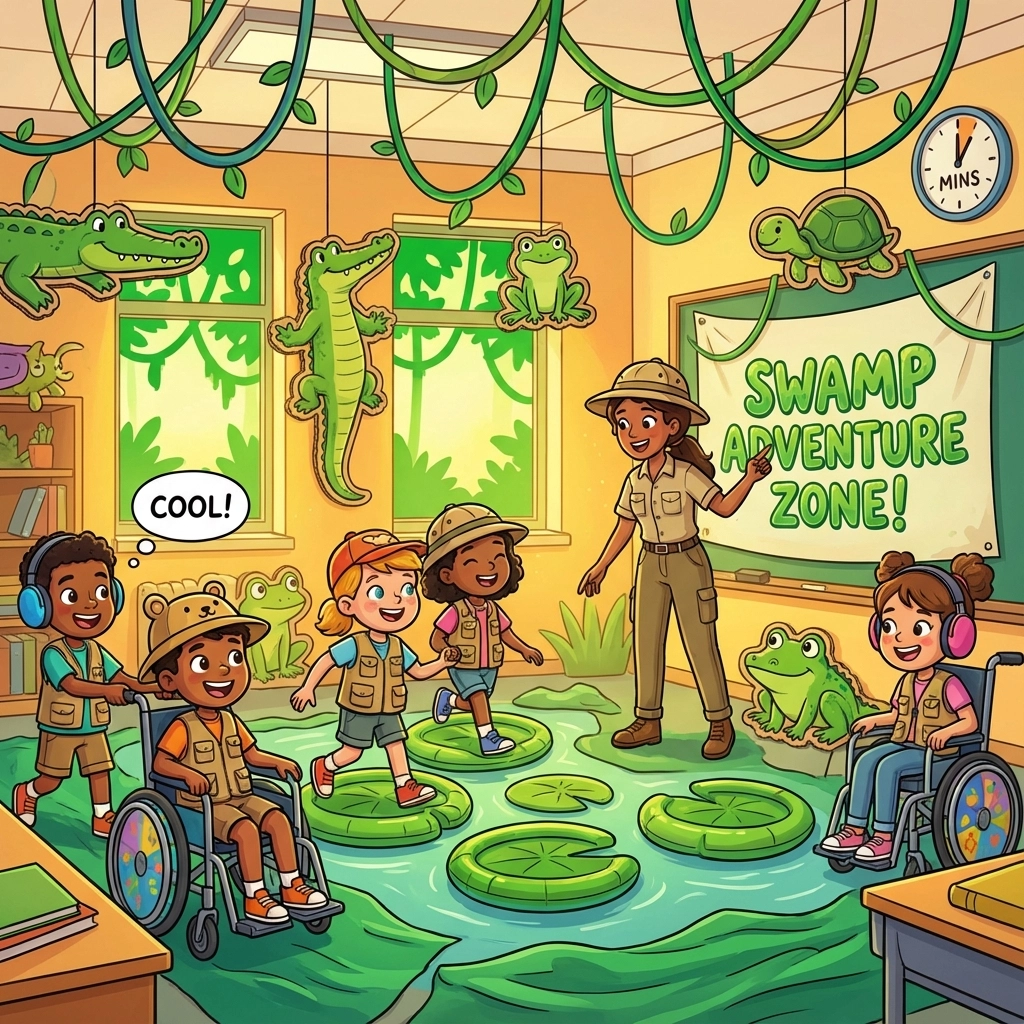
The good news? You don’t need a Hollywood set or hours of prep. In just five minutes, you can create a classroom inspired by XTERMIGATOR KIDS’ Friendly Ferns Swamp: a playful, accessible ecosystem where every child finds their footing.
Why Swamp Adventures Speak to All Kids (But Especially to Neurodiverse Learners)
“There’s just something about seeing an alligator wear a detective hat or pretending we’re on the lookout for ‘Zoomy’ frogs,” shares Mr. Robinson, a special educator. “It means my students with ADHD or anxiety aren’t left out: there’s a character for everyone to connect with, and the swamp isn’t scary, it’s safe.”
Swamps are naturally diverse habitats: they’re messy, layered, and full of surprises (just like a neurodiverse classroom!). In transforming your room into this kind of world, you signal to students: “Every way of learning belongs here.”
Five-Minute Swamp Setup: The Easiest, Most Impactful Hacks
1. Repurpose and Reimagine: Don’t Reinvent
No need for craft store runs or elaborate builds. Grab what you already have:
- Brown or green paper: Drape it over tables or chairs to make “swamp stumps” or “lily pads.”
- Plastic animals: Pull out those frogs, turtles, and gators from your classroom stash (or borrow from a neighbor).
- Green streamers or scarves: Hang from your whiteboard or bookshelf as “swamp vines” (they double as fidget tools: clutch for sensory needs!).
- Sticky notes: Turn them into “bugs” fluttering across the wall, each with a student’s name or a positive word.
“My kids love seeing a paper frog named after them on the wall. It’s a little thing that says: You’re unique and valued here,” explains Ms. Wright, a first-grade teacher.
2. Visuals + Texture + Movement = Sensory Success
“The most important thing isn’t how it looks, but how it feels for kids who process the world differently,” says occupational therapist Angela Lee. “Layer textures: soft scarves for ‘moss,’ smooth paper for ‘water.’ Add things students can gently touch or rearrange.”
- Put a cozy green rug or towel in a reading corner: call it “The Alligator’s Nest,” where anyone can retreat if things get too overwhelming.
- Stick felt or foam “lily pads” to the floor, letting students hop, sit, or wiggle on them.
- Play a 30-second loop of gentle swamp sounds (frog croaks, bird calls, water trickling): instant atmosphere without sensory overload.
Italicized note: Photo shows a reading nook with green cushions, a plush alligator, and a sensory bin loaded with colorful fidgets.
3. Inclusive Activities: Accessible and Adaptable for All
“I love simple movement games,” says Ms. Diaz, who teaches an inclusive 2nd grade class. “Everyone can participate, but I offer choices: leap like a frog, wriggle like an eel, or just tap the floor if big movements are hard today.”
Try these:
- Let students help place swamp creatures: each kid can select the critter or plant that represents them best.
- Launch a five-minute “animal parade”: students choose a movement (jump, slither, wave their hands) for their swamp alter-ego.
- Provide coloring sheets of Friendly Ferns Swamp characters; offer high-contrast options and large-print outlines for visually impaired students.
Italicized caption: Friendly Ferns character coloring pages laid out on desks; every page is different, every child included.
4. “Your Story Belongs Here” Wall
Inclusion is about voice and belonging as much as décor.
- Use a big piece of brown butcher paper: Label it “Our Swamp Stories.”
- Kids (and you!) can add drawings, words, or symbols throughout the day: a time they felt brave, a favorite sensory tool, something that makes them feel calm.
- Model with your own story: “I get nervous during loud assemblies. My fidget helps. Here’s a picture of it!”
“When my students see me contribute, it’s like a switch flips: they know it’s safe to be themselves,” reports Mr. Lee, a 3rd grade teacher.

Friendly Ferns Swamp characters gather on lily pads: each with a story to share. Different is beautiful, together we are unstoppable.
5. Accessibility in Every Corner (Not an Afterthought!)
“Swamp adventures work best when every piece is flexible for all abilities,” says Dr. Mara Fen, educational psychologist. She recommends a quick checklist:
- Can a wheelchair user reach the “animal parade” path or reading nook?
- Have you planned a quiet, “mossy” cool-down spot for kids who need a break?
- Are visuals high-contrast, with simple words or icons for non-readers and ESL learners?
- Is every activity ‘opt-in’: no forced participation, just invitation?
Italicized note: Visual shows paper “stumps” spaced apart for easy wheelchair navigation, a “Quiet Zone” basket holding noise-canceling headphones and tactile toys.
Emotional Breakthrough: When Inclusion “Clicks”
“One of my students, Caden, usually hid behind his desk during group activities,” recalls Ms. Wright. “But as soon as we did our swamp-themed day, he volunteered to lead the ‘frog hop.’ He even invited another shy classmate to join. I nearly cried: it was the first time he’d ever wanted to be seen.”
Moments like these: when room set-up leads to real community: stick with everyone involved. It’s about more than paper decorations; it’s about shifting culture.
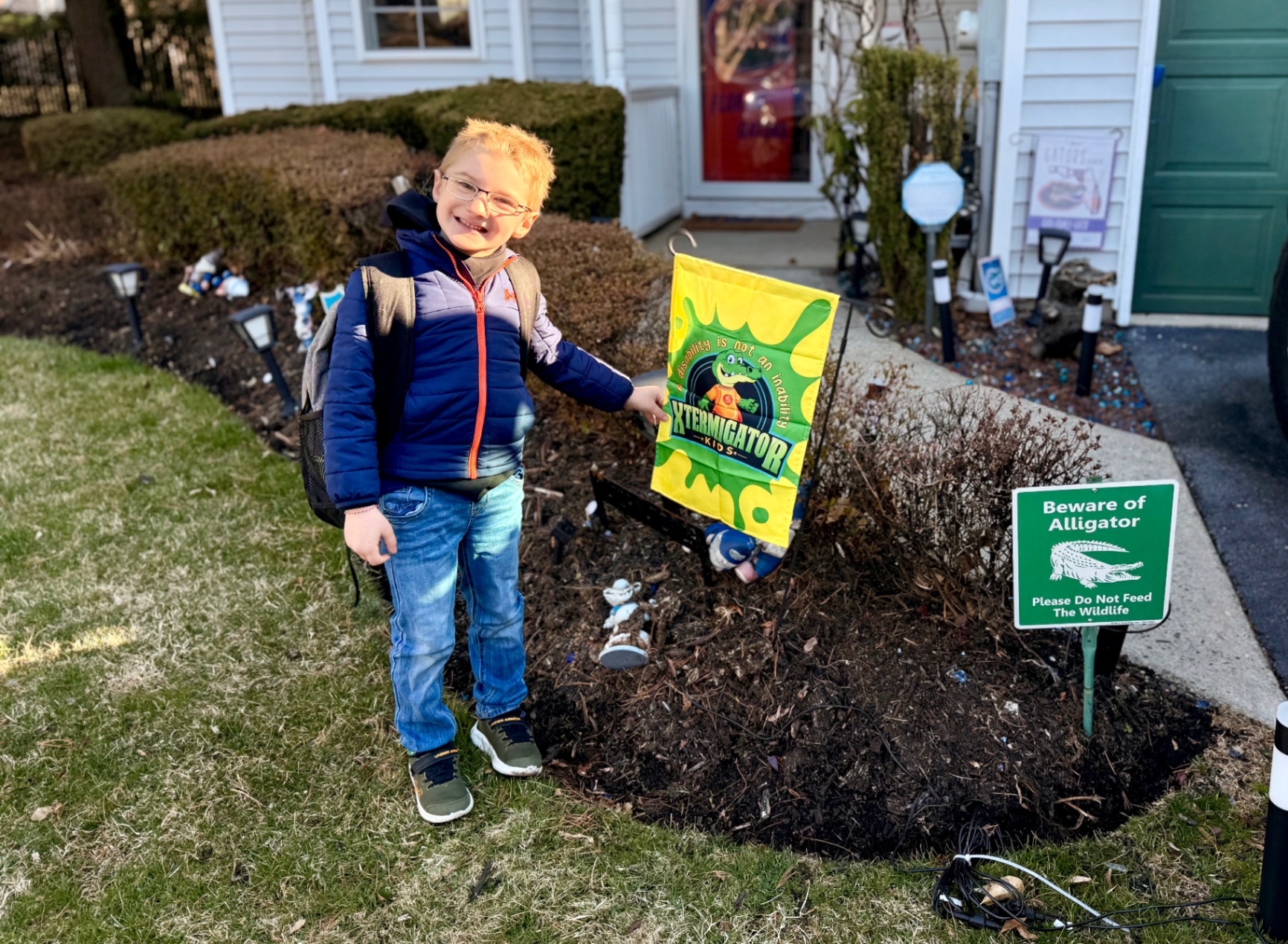
A student stands outside with the XTERMIGATOR KIDS flag: “A disability is not an inability.” Inclusion starts with small daily choices.
Quick Tips for Real-Life Chaos (From Classroom Experts)
“Laminate everything!”
“Green paper rips fast. I make reusable ‘swamp stumps’ from laminated sheets or fabric scraps.” –Ms. Patel
“Keep a swap bin.”
“Fidget spinners, soft moss balls, bean bags: whatever’s safe and won’t distract. Rotate daily to keep things fresh for sensory seekers.” –Mr. Henry
“Build time for transitions.”
“I give a five-minute warning: ‘Swamp time is about to start! If you want to join, hop to a lily pad, or just listen for a bit.’” –Ms. Chen
(Optional) Swamp-Themed Extension Ideas for Later
- Partner older and younger students for a ‘Swamp Buddy’ reading session: builds social connections and lets neurodiverse mentors shine
- Introduce a digital version of the Friendly Ferns Swamp for hybrid or virtual classrooms (try https://xtermigatorkids.com/community-connection to connect with other educators)
- Encourage parents to share what “swamp” means at home: what helps their child feel included on rough days
Looking Ahead: Dreaming Even Bigger
What if every day, not just special occasions, had a little bit of this playful, safe, inclusive magic? As one fifth-grader told us, “When the class is the swamp, I know I can just be me. That’s the best part.”
At XTERMIGATOR KIDS, our hope is that every classroom feels like Friendly Ferns: layered, lively, and inviting. Swamp adventures aren’t just decorations; they’re reminders that every learning style, every background, every “quirk” is welcome.
Want more ideas or printable resources? Visit XTERMIGATOR KIDS for templates, guides, and stories from teachers who’ve transformed their rooms: all in five minutes or less.