
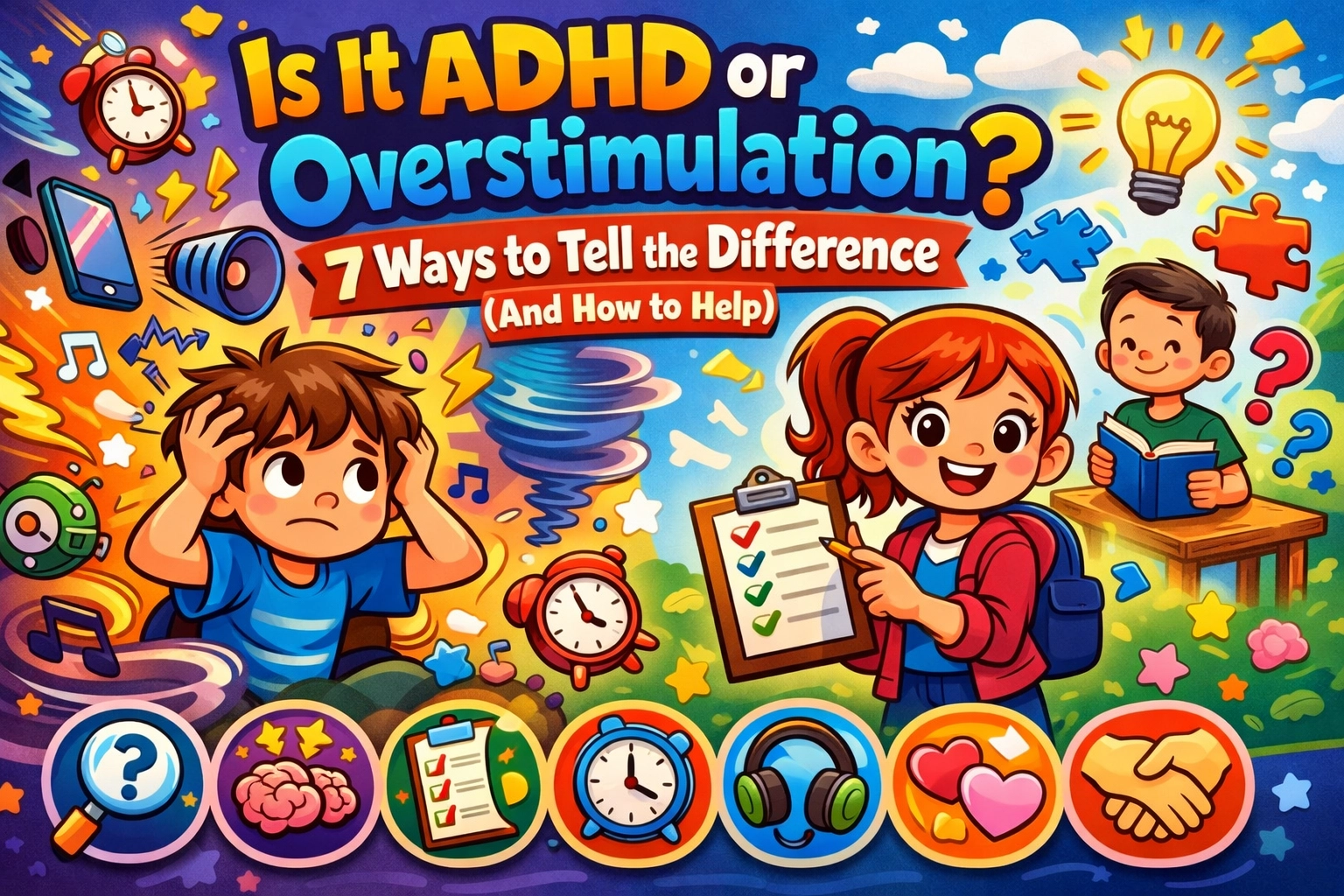
You're at the grocery store with your child. Twenty minutes ago, they were doing great, helping you find items, chatting about their day, maybe even being silly in that sweet way that makes you smile. Then suddenly, they're melting down in aisle seven. The meltdown looks a lot like their typical ADHD behavior, but something feels different. More intense. More desperate.
Here's what many parents don't realize: overstimulation isn't something separate from ADHD. It's actually one of ADHD's sneakiest symptoms. And understanding when your child tips from "managing their ADHD" to "completely overwhelmed by sensory input" can be the difference between a five-minute reset and a two-hour recovery period.
The ADHD Stimulation Paradox (And Why Your Kid's Behavior Seems So Inconsistent)
Kids with ADHD have what researchers call "impaired attentional control." In plain English? Their brain struggles to filter out what doesn't matter. While neurotypical kids can tune out the humming refrigerator, flickering fluorescent lights, and background conversations at the same time, kids with ADHD are trying to process everything at once.
This creates what experts call "the ADHD stimulation paradox." The ADHD brain feels under-activated (that's why your child seeks out stimulation, spinning, jumping, fidgeting), but once stimulation increases, it can rapidly tip into overload. It's like their nervous system is constantly adjusting between "not enough" and "way too much," which is exactly why their behavior can seem so inconsistent from one moment to the next.

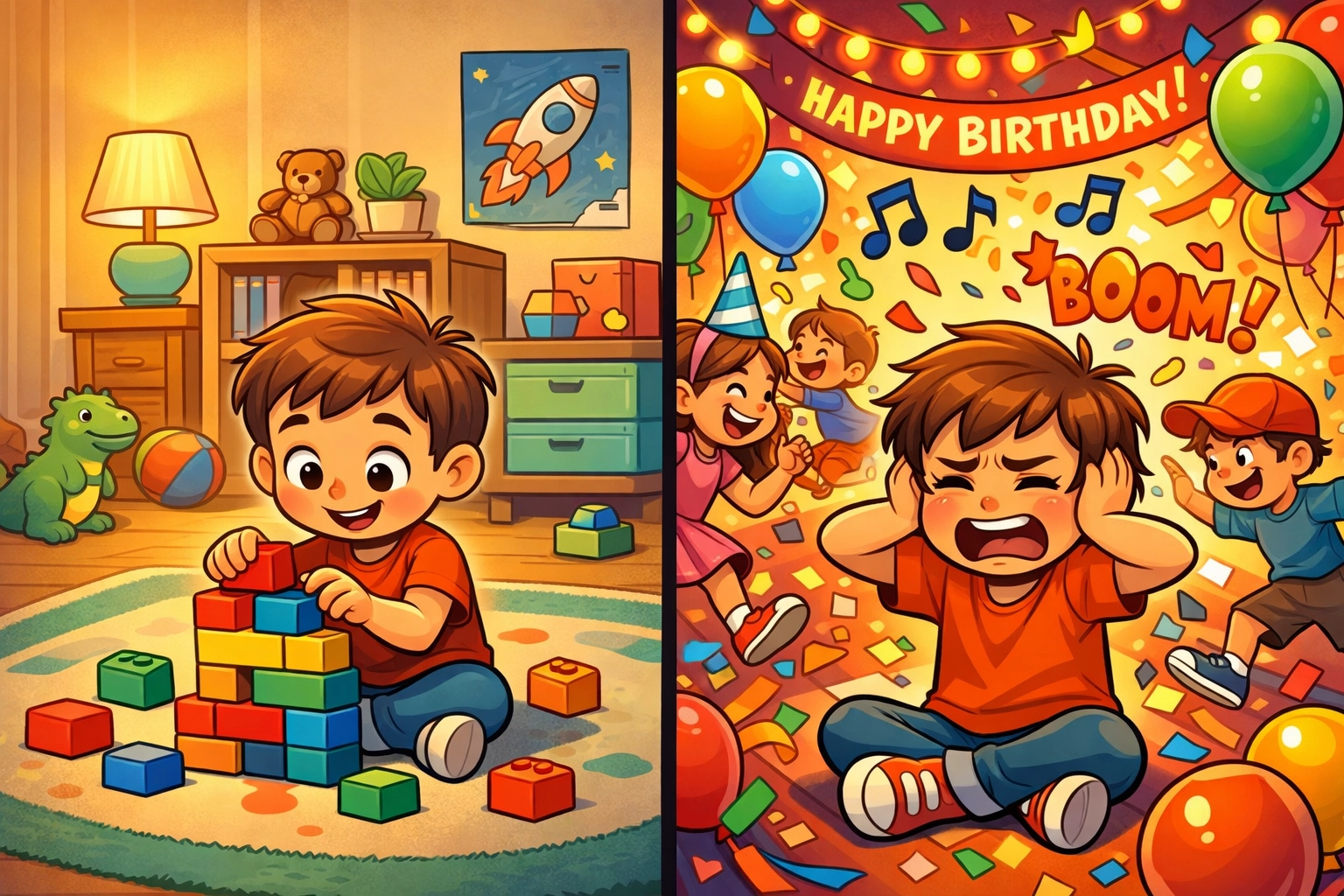
One mom described it this way: "My son can handle the noise at his friend's birthday party for about 45 minutes. Then it's like someone flipped a switch. The same sounds that energized him suddenly make him cover his ears and cry. That's when I know, it's not just ADHD hyperactivity anymore. He's overstimulated."
7 Signs Your Child Has Crossed Into Overstimulation Territory
1. The Energy Shift Goes From "Up" to "Chaotic"
ADHD energy is active and intense, but it usually has direction (even if that direction changes rapidly). Overstimulation energy looks frantic and purposeless, running in circles, throwing things without intention, or what one occupational therapist calls "tornado behavior." Their body is moving, but nothing is actually getting done.
2. They Can't Process Simple Instructions Anymore
Earlier in the day, your child could follow multi-step directions just fine. Now, when you say "Please put on your shoes," they stare at you blankly or ask "What?" three times. This isn't defiance, their brain's processing system is genuinely overloaded. The sensory information flooding in has used up all their cognitive bandwidth.
3. Physical Symptoms Suddenly Appear
Watch for complaints about stomach aches, headaches, or feeling dizzy (when nothing else suggests illness). Many kids also display physical tension, clenched fists, tight shoulders, or grinding teeth. One physical education teacher noted: "I can always tell when a student with ADHD is overstimulated. Their whole body looks tense, like they're bracing for something, even when they're supposedly relaxing."
The XTERMIGATOR KIDS mission emphasizes that understanding invisible challenges, like overstimulation, helps every child thrive.
4. Emotional Regulation Completely Crashes
Kids with ADHD already struggle with emotional regulation, but overstimulation takes this to another level. Small disappointments trigger massive reactions. They might cry at something that wouldn't normally bother them, or laugh hysterically at nothing in particular. Their emotions aren't just big, they're erratic and unpredictable.
5. They Seek Extreme Sensory Input or Complete Withdrawal
Some overstimulated kids will crash into things repeatedly, squeeze themselves into tight spaces, or ask for very tight hugs (seeking proprioceptive input to calm their nervous system). Others do the opposite, they'll hide under blankets, cover their ears, or say "everyone leave me alone" more desperately than usual. Both responses are the nervous system trying to regulate itself.
6. Sleep and Appetite Patterns Get Disrupted
A child who's experiencing regular overstimulation might resist sleep more intensely than usual (because their nervous system is still in overdrive), or conversely, crash and need immediate rest. Similarly, they might refuse foods they normally like or demand constant snacks as their body tries to regulate stress through eating.
7. They Literally Tell You, If You Listen
Many kids will say things like "it's too loud," "everything feels wrong," "I'm so tired," or "my brain hurts." Believe them. Kids with ADHD often have excellent self-awareness about their internal state, even if they struggle to regulate it. As one school counselor explained: "When a child says 'everything is annoying me today,' that's not moodiness. That's their brain signaling that their sensory tolerance is maxed out."
What Actually Triggers Overstimulation in Kids with ADHD?
Understanding common triggers helps you spot patterns and intervene earlier:
Cognitive overload happens during homework, standardized testing, or situations requiring sustained focus (especially without breaks). The brain uses so much energy trying to maintain attention that it has nothing left for processing other sensory information.
Lack of sleep is huge. Even one night of poor sleep significantly impairs the ADHD brain's ability to filter sensory information. That's why Mondays are often harder, weekend sleep schedules threw off their regulation.
Environmental sensory bombardment includes loud or repetitive noises, bright or flickering lights, strong smells, tags in clothing, or crowded spaces. Places like grocery stores, shopping malls, and school cafeterias are overstimulation trifectas.

"Different is beautiful. Together, we are unstoppable." Teaching kids about diverse needs, including sensory differences, creates more understanding environments.
Schedule disruptions and transitions create overstimulation because the ADHD brain already struggles with executive function. When routines change, their brain works overtime trying to process the new expectations, leaving less capacity for sensory filtering.
How to Help When Overstimulation Hits (And How to Prevent It)
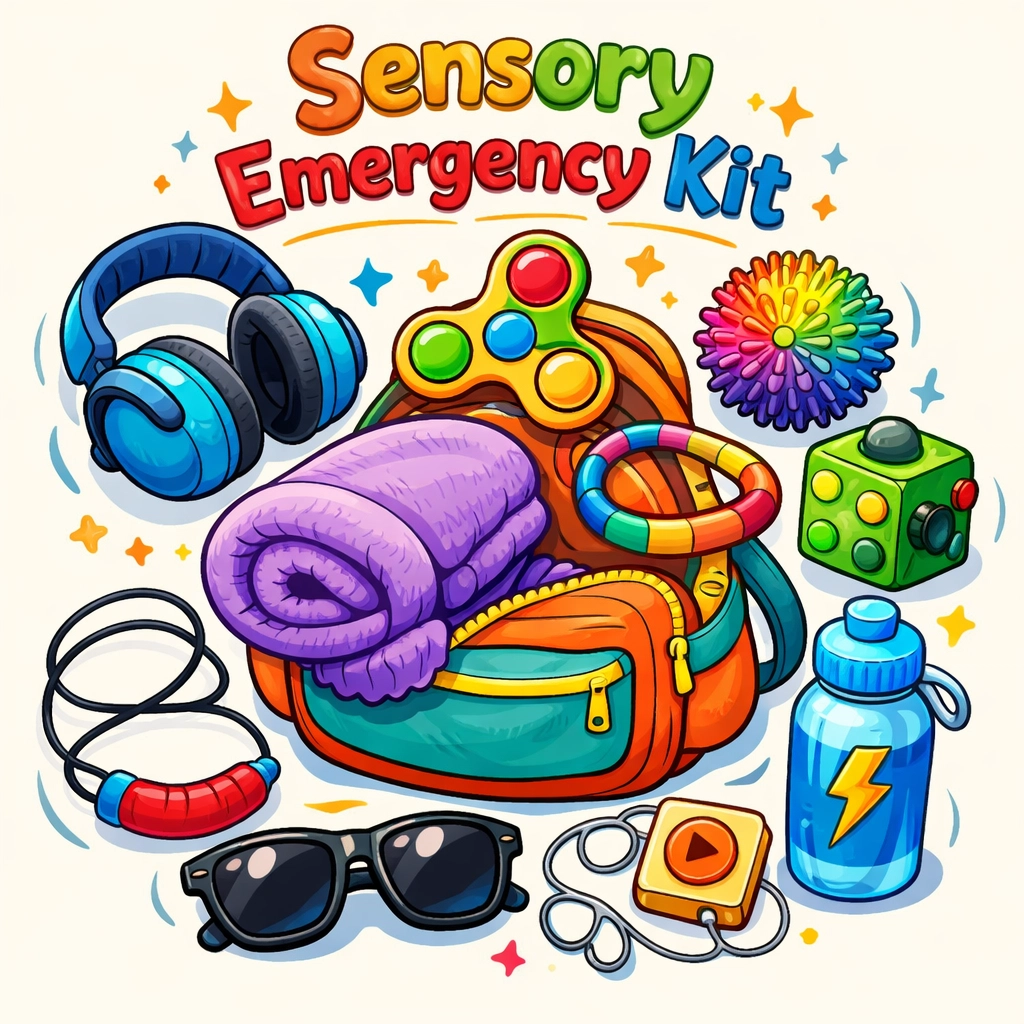
Create a sensory "emergency kit." Keep items handy that help your child's nervous system reset: noise-canceling headphones, fidget tools, chewing gum, a soft blanket, or even a playlist of calming music they choose themselves. One mom keeps a "reset bag" in her car with these items, and she says it's cut their public meltdowns by about 70%.
Establish a "capacity check-in" routine. Before entering potentially overwhelming situations, ask your child to rate their capacity on a scale of 1-10. This helps them develop self-awareness and gives you critical information. If they're starting at a 6, you know you have less margin before overstimulation hits.
Build in sensory breaks proactively. Don't wait for the meltdown. After 30-45 minutes of intense stimulation (birthday parties, shopping trips, school events), take a scheduled 10-minute break somewhere quiet. This prevents the overflow rather than trying to manage it after the fact.
Prioritize sleep like it's medication (because for ADHD brains, it basically is). A consistent sleep schedule, yes, even on weekends: dramatically improves sensory processing capacity. That means your child can handle challenging environments much better when they're well-rested.
Reduce multitasking expectations. When your child is already dealing with environmental stimulation (like at a restaurant), don't also expect them to make eye contact, sit perfectly still, and engage in complex conversation. Let them use one fidget quietly, or let them take breaks outside. Choose your priorities.
Teach them about their own nervous system. Kids as young as five can understand simple explanations like "Your brain is working extra hard today, so normal sounds feel extra loud." This reduces shame and helps them advocate for their needs. Resources like XTERMIGATOR KIDS coloring pages can help introduce these concepts in accessible, age-appropriate ways.
Communicate with teachers and caregivers. Share what overstimulation looks like for your specific child, and what helps them reset. One teacher shared: "When a parent tells me their child does better with assignments broken into smaller chunks and five-minute movement breaks every 30 minutes, I'm happy to accommodate. I just need to know."
Looking Forward: Building a World That Works for ADHD Brains
Understanding overstimulation as an ADHD symptom: not a character flaw or behavior problem: changes everything. It shifts our response from "Why can't you just handle this?" to "What can we adjust so your brain has what it needs?"
As awareness grows, we're seeing more schools implement sensory-friendly spaces, stores offer "quiet hours," and public spaces provide accommodations that benefit everyone (not just neurodivergent kids). But the most powerful change happens at home, when families recognize that supporting a child's sensory needs isn't "giving in": it's giving them the tools to eventually manage their nervous system independently.
Because here's the truth: Kids with ADHD who learn to recognize and communicate their sensory limits become adults who can advocate for their needs, set appropriate boundaries, and create environments where they genuinely thrive. And that's the goal: not to eliminate overstimulation entirely (that's impossible), but to build awareness, strategies, and support systems that help them navigate a stimulating world.
Your child's brain isn't broken. It's just processing the world differently. And once you understand the signs of overstimulation, you can help them find their balance between the stimulation they need and the overwhelm they don't.