
“But they look perfectly fine!”
If you’ve heard this phrase: or perhaps even thought it yourself while watching a child struggle during a quiet library hour or a busy birthday party: you aren’t alone. It’s one of the most common hurdles families face when navigating the world of neurodiversity. Because you can’t see a "glitch" in executive functioning (the brain's management system for planning and focus) or a sensory processing overload (when the brain struggles to organize information from the senses), it’s easy for onlookers to mistake a biological struggle for "bad behavior."
At XTERMIGATOR KIDS, we live and breathe the Friendly Ferns Swamp, a place where every creature: from the high-energy Zoomy Frog to the patient Shelly the Turtle: brings something unique to the table. We know that explaining invisible disabilities like ADHD, autism, anxiety, and learning differences can feel like trying to catch a slippery minnow with your bare hands.
Pictured: Ollie the Otter often says, "My brain has about 42 tabs open at once, and I can't find where the music is coming from!"
To help bridge the gap, we sat down with Ollie and the rest of the crew to round up the top 10 things every parent, educator, and friend should know about the superpowers hiding in plain sight.
1. "Invisible" is not a synonym for "Imaginary"
Just because a challenge doesn’t require a wheelchair or a cast doesn’t mean it isn’t real. As Xtermigator often reminds us during our educational workshops, invisible disabilities are rooted in biology.
“Think of it like the wind in the swamp,” says Xtermigator. “You can’t see the wind itself, but you can definitely see the lily pads dancing and the trees swaying. Just because the 'wind' in someone's brain is invisible, doesn't mean it isn't moving things around in there!”
When we explain this to kids, we emphasize that some of the most important things in life: like love, air, and gravity: are invisible too. Using concrete comparisons helps children understand that a brain working differently is just a factual part of nature.
2. The Swamp Ecosystem thrives on Diversity
In the Friendly Ferns Swamp, we don't want every animal to be an alligator. If everyone were an alligator, who would help us find the hidden shiny stones like Tebow the Cat? Or who would teach us about the slow-and-steady magic of the moss like Shelly the Turtle?
Neurodiversity (the concept that brain differences are natural variations in the human genome) is our greatest asset. When we explain invisible disabilities, we frame them as a necessary part of the "Human Ecosystem." Some brains are built for deep focus on one thing, while others are built to notice everything at once. Both are essential for the swamp to thrive.
3. Sensory "Super-Senses" can be a lot to handle
Many children with autism or sensory processing differences experience the world at a "Volume 10" when everyone else is at a "Volume 3."

Shelly the Turtle explains: "Sometimes the sound of a dragonfly's wings feels like a helicopter landing in my living room. My headphones aren't for blocking people out; they're for keeping the 'too-much' away so I can stay present."
(Sensory Processing: How the brain receives and responds to information that comes in through the senses.) For kids with these "super-senses," a itchy tag on a shirt or a flickering fluorescent light can be physically painful. When we teach this, we ask other kids to imagine their favorite song being played through a giant speaker right next to their ear. Suddenly, the "meltdown" looks a lot more like a reasonable reaction to pain.
4. The "Zoomy" Energy isn't about ignoring rules
If you’ve met the Zoomy Frog, you know he’s always on the move. To an outsider, it might look like he’s being disruptive. But to Ollie and the crew, we know it’s just his ADHD (Attention-Deficit/Hyperactivity Disorder) brain seeking the stimulation it needs to function.
“I’m not trying to be loud,” Zoomy Frog once shared during a toddler storytime. “My motor just runs a little faster than the other frogs. When I wiggle, it actually helps me hear what Xtermigator is saying better!”
It’s a breakthrough moment for many parents when they realize that "fidgeting" is often a tool for concentration, not a sign of boredom. We call these "stims" or "fidgeting for focus."
5. The "Shell" Defense is a response to Anxiety
Sometimes, kids with invisible disabilities might "shut down" or hide, much like Shelly withdrawing into her shell. This is often a sign of anxiety (a persistent feeling of worry or fear that is out of proportion to the situation).
Parent Tip: When a child hides or refuses to participate, it’s rarely defiance. It’s usually their nervous system saying, "I don't feel safe yet."
In the swamp, we never poke at Shelly’s shell to make her come out. We wait, we offer a "calm-down corner," and we let her know we’re there when she’s ready. Explaining this to peers helps them learn that "giving space" is a form of kindness.
6. Accommodations are just "Swamp Gear" for Success
We wouldn't send a fox into the deep water without a boat, right? Accommodations (tools or changes made to help a person succeed) are simply the "gear" a child needs for their specific environment.
Whether it’s extra time on a test, a Cozyla Digital Calendar to help with daily routines, or a weighted blanket, these aren't "unfair advantages." As our motto says, "A disability is not an inability: it's your greatest superpower," but every superhero needs their gadgets!

7. Language is the bridge to understanding
Should you say "a child with autism" (person-first language) or "an autistic child" (identity-first language)? The crew at Friendly Ferns Swamp suggests a simple rule: Ask!
"I like being called an Otter," Ollie says. "It's who I am! But some people like to be called 'a person who has fur.' Both are okay as long as we’re being respectful."
(Identity-first language: Positioning the disability as an inherent part of the person's identity. Person-first language: Emphasizing the person before the disability.) In our Neurodiversity 101 guide, we dive deeper into how the words we choose can empower or accidentally limit a child’s self-image.
8. A Disability is not an Inability
This is the heart of everything we do at XTERMIGATOR KIDS. Having a learning difference (challenges in areas like reading, writing, or math) doesn't mean a child isn't smart. In fact, many neurodiverse children have average to above-average IQs!
"I might take a different path through the reeds," says Tebow the Cat, "and I might take a little longer to read the trail signs, but I always find the best stars in the sky that no one else noticed."
When we focus on what a child can do: their creativity, their hyper-focus, their empathy: we change the narrative from "fixing a problem" to "cultivating a talent."
9. The Power of the "Pause"
Processing speed (the time it takes for the brain to take in, make sense of, and respond to information) varies wildly. For some in the swamp, like Shelly, a question might need a few extra seconds to land.
Italicized Note: In a world that demands instant answers, the most inclusive thing you can do is wait ten seconds after asking a neurodiverse child a question. Let the "swamp mist" clear so they can find their words.
When educators and parents practice the "Power of the Pause," they reduce the pressure that often leads to anxiety and meltdowns.
10. Empathy is the best map we have
At the end of the day, you don't need to be an expert in neurology to support a child with an invisible disability. You just need empathy.
"We don't always know what someone else is carrying in their backpack," Xtermigator reminds us. "But we can always choose to walk beside them."
By teaching our children to look beyond the surface, we’re raising a generation of "Swamp Detectives" who see the value in every single person they meet.
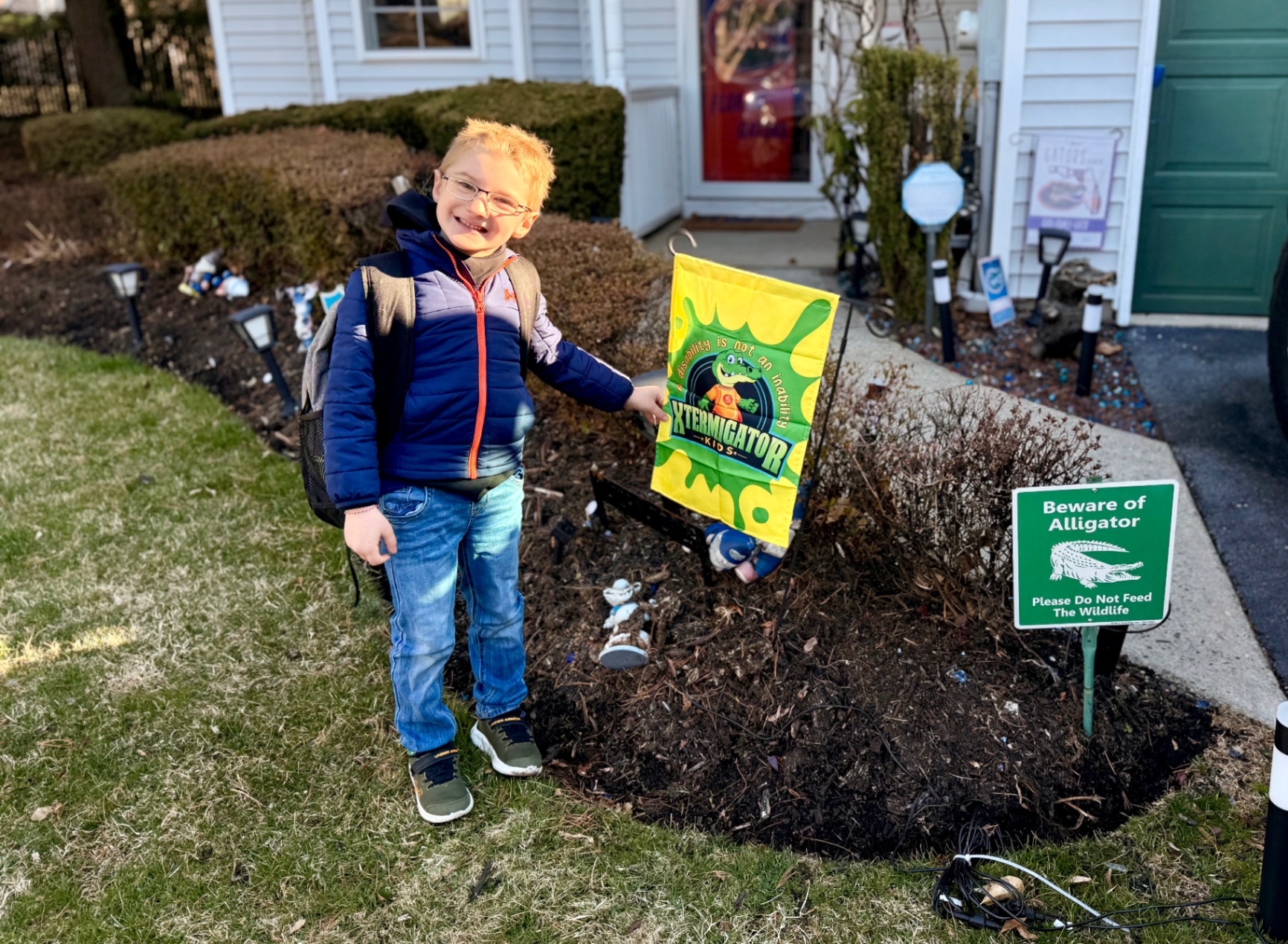
Looking Ahead: A Swamp Where Everyone Belongs
Our hope for the future isn't just that people "tolerate" invisible disabilities, but that they celebrate them. We imagine a world where every school is as inclusive as the "Fern Fort" education center: where flexible seating is the norm, and where a child’s unique way of seeing the world is treated like a treasure map.
As we continue to grow the Friendly Ferns Swamp through our books and inclusion programs, we invite you to join us. Whether you're a parent looking for resources or an educator wanting to liven up your classroom, remember: different isn't just beautiful( it's unstoppable.)