
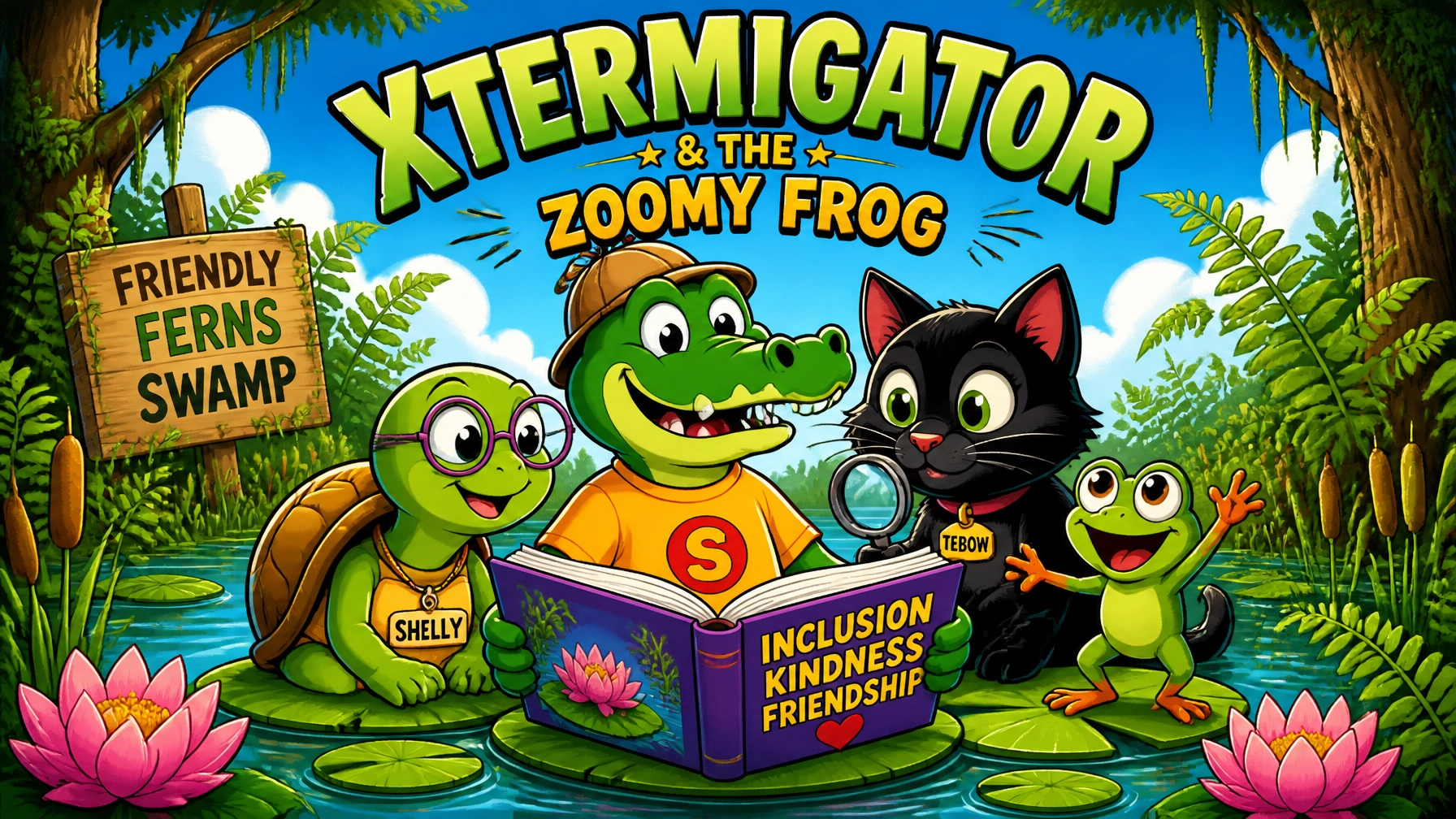
"Why is he making that loud noise, Mommy? Is he being bad?"
Every parent has been there: that heart-stopping moment in the grocery store or the park when your child points out a behavior they don't understand. Often, that behavior stems from an invisible disability (a physical, mental, or neurological condition that isn't immediately apparent to others). Whether it’s ADHD (Attention-Deficit/Hyperactivity Disorder), autism, anxiety, or learning differences like dyslexia, these "unseen" challenges can be confusing for young children to grasp.
The problem is that if we don't provide the vocabulary for these differences, kids often fill in the blanks with labels like "weird," "naughty," or "mean." At XTERMIGATOR KIDS, we believe that a disability is not an inability: it’s a superpower waiting to be understood.
"The hardest part for my daughter wasn't the ADHD itself," shares Sarah M., a parent and educator. "It was the feeling that her friends thought she was just 'not listening' on purpose. Once we started talking about how her 'internal engine' just runs a bit faster, everything changed. Her friends didn't see a 'bad kid' anymore; they saw a friend who sometimes needed a little more space to move."
Teaching inclusion isn't just about being polite; it’s about building a world where every child feels seen. Here is our 5-step guide to teaching your children about invisible disabilities through the magic of storytelling and empathy.
1. Define the "Invisible" Using Simple Metaphors
Before a child can be inclusive, they need to understand that what we see on the outside doesn't always tell the whole story. Just like the thick mist that sometimes rolls through the Friendly Ferns Swamp, invisible disabilities are real, even if you can't touch them or see them with your eyes.
Explain to your child that brains are like different kinds of computers. Some are great at graphics (art), some are super fast at math, and some need a little extra time to process a command.
Parent Tip: Use the "Invisible Backpack" analogy. Everyone carries a backpack. Some backpacks are full of rocks (challenges like anxiety or sensory overload) that make walking a bit slower. You can't see the rocks, but you can see that the person is working really hard to keep up.
"We often tell our students that brains are like thumbprints: no two are exactly alike," says Dr. Aris, a pediatric specialist. "When you frame it as 'brain diversity' rather than 'something wrong,' you remove the stigma immediately."
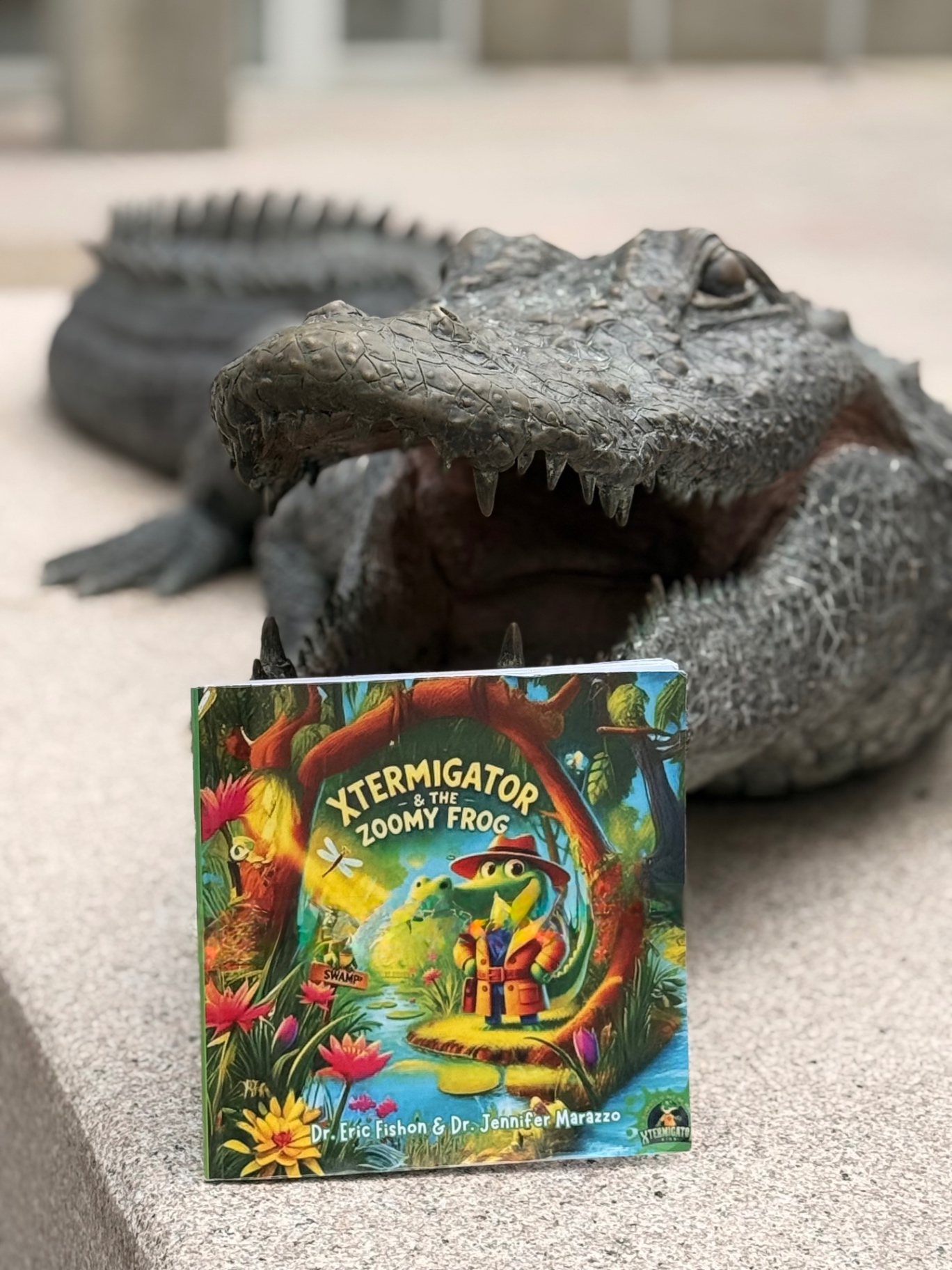
The story of "Xtermigator & the Zoomy Frog" is a perfect way to introduce the concept of "zoomy" energy (ADHD) in a relatable, whimsical way.
2. Use Storytelling to Bridge the Gap
Children live in the world of stories. It is much easier for a child to understand Executive Function (the brain's management system for focus and planning) when they see it through the eyes of a character like Romeo the Otter or Shelly the Turtle.
In the Xtermigator’s Big Heart series, we use the residents of the swamp to model different abilities. When a child reads about a character who feels overwhelmed by loud noises (sensory processing) or someone who needs a special routine to feel safe, they aren't just reading a book: they are practicing empathy.
"Stories provide a 'safe' place to ask questions," explains Eric Fishon, founder of XTERMIGATOR KIDS. "Kids can ask, 'Why is the frog so jumpy?' and through that character, they learn that it’s okay to be jumpy, and it’s okay to need a friend who understands."
3. Practice the "Pause-Ask-Listen" Strategy
Inclusion is an active skill. When your child sees a peer acting in a way that seems "different," teach them the P-A-L method:
- Pause: Before judging or laughing, take a breath. Remind yourself: “Maybe there’s something I don’t know about what they’re going through.”
- Ask: If appropriate, ask kindly, "Are you okay?" or "Do you want to play a different way?"
- Listen: Believe what the other child says. If they say a noise is too loud, don't tell them "It's not that bad." Believe their experience.
This approach helps children move from being passive observers to active allies. It shifts the narrative from "What is wrong with them?" to "How can I be a friend?"

Using worksheets like Shelly’s helps kids reflect on their own strengths while learning to value the patience required for others.
4. Reframe Challenges as "Superpowers"
At XTERMIGATOR KIDS, our core message is that a disability is not an inability. In fact, many invisible disabilities come with incredible strengths.
- ADHD can bring high energy, creativity, and "hyper-focus" (the ability to get really absorbed in a task you love).
- Autism can bring a unique perspective, incredible attention to detail, and deep honesty.
- Dyslexia is often linked to excellent problem-solving and "big picture" thinking.
When you talk to your kids, highlight these strengths. Use the characters from the Friendly Ferns Swamp to show how every animal’s unique trait helps the whole community. Tebow the Cat is observant and loyal: his quiet nature is his strength, not a weakness.
"My son used to be ashamed of his 'fidgets' at school," shares Mike, a father of two. "But after we started calling them his 'focus tools' and talked about how they helped his 'super-brain' stay on track, he started explaining them to his friends with pride. Now, his friends think he’s a genius for knowing how his brain works so well."

True inclusion happens when we celebrate our differences together.
5. Create "Inclusion Moments" at Home
Teaching about disabilities shouldn't be a one-time "lecture." It should be woven into your daily life. You can do this by:
- Watching diverse media: Choose shows and movies that feature neurodiverse characters.
- Discussing "Fairness": Explain that "fair" doesn't mean everyone gets the same thing: it means everyone gets what they need to succeed. (Like someone needing glasses to see, a friend might need a quiet corner to think).
- Modeling Kindness: Let your kids see you being patient with others in public. Your actions will always speak louder than your words.
As we look toward the future, our hope is that the next generation won't even need a "guide" for inclusion. We aspire to a world where children naturally see a "Zoomy Frog" or a "Slow Turtle" and simply think, “I’m glad you’re here, exactly as you are.”
By using the resources at XTERMIGATOR KIDS, you’re not just teaching your child about disabilities; you’re teaching them how to be a better human.
Join the Xtermigator’s Big Heart mission today and help us spread kindness throughout the swamp!