
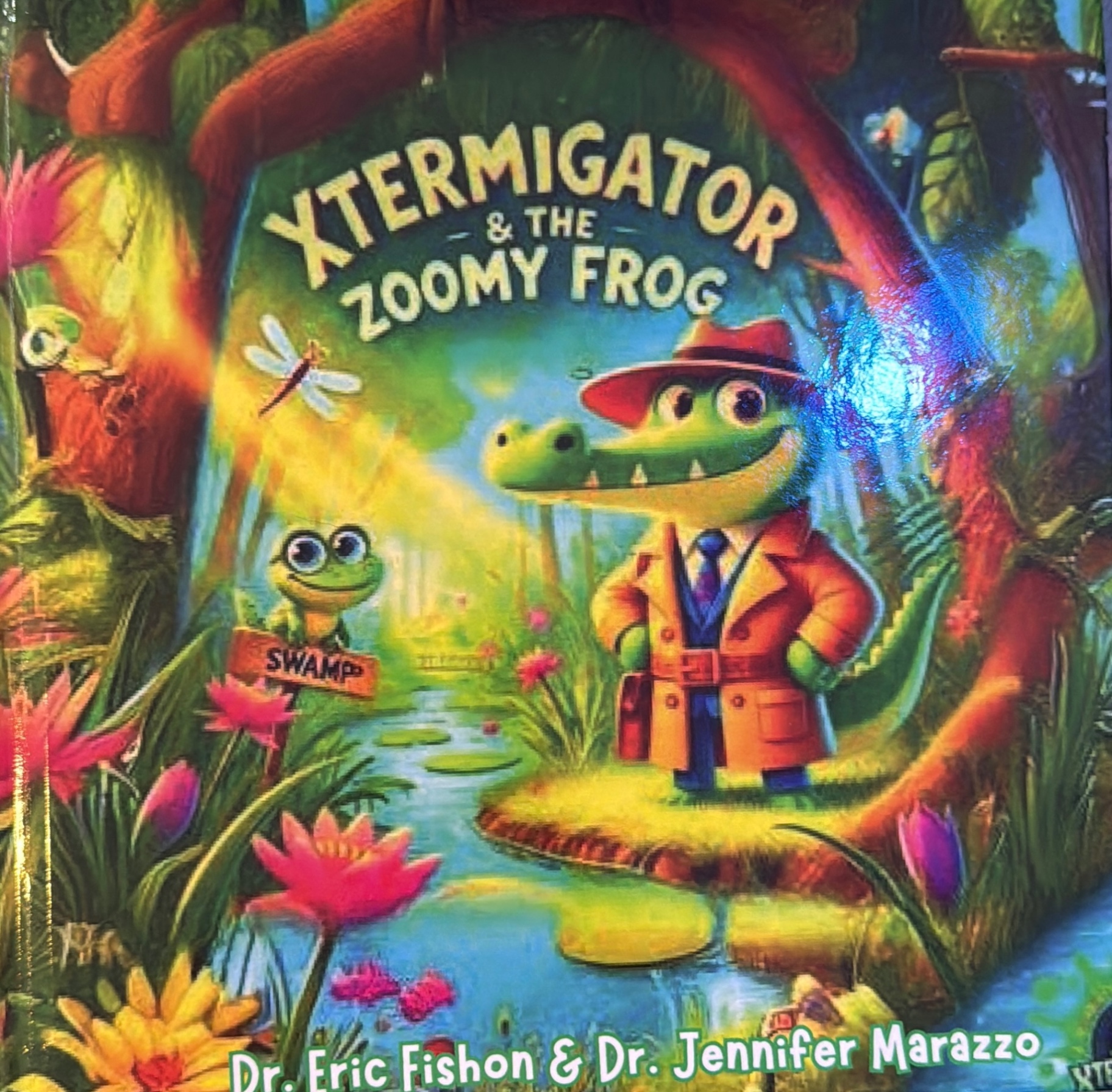
Have you ever felt like you’re trying to navigate a thick, foggy marsh without a map? One minute your child is a whirlwind of creativity, and the next, they’re stuck in a "muddy" meltdown because the tags on their shirt feel like sandpaper. For many parents and educators, the initial journey into neurodiversity: the natural variety in how human brains are wired: can feel overwhelming. You see the struggle, the frustration in their eyes, and the "why can't I just do it like the others?" moments that tug at your heartstrings.
But here in the Friendly Ferns Swamp, we see things differently. We believe that what the world often labels as a "disability" is actually a unique set of skills waiting to be unlocked. As we like to say, "a disability is not an inability: it’s your greatest superpower."
Navigating the Map: Understanding the Neurodiversity Landscape
Before we dive into the mossy depths of the swamp, let's clear up the terminology. Neurodiversity (the concept that there is no 'right' way for a brain to work) isn't just a buzzword; it's a movement that celebrates the beautiful spectrum of human thinking.
"When we first realized our son was neurodivergent, we were scared of the labels," says Sarah J., a parent and educator who uses our educational workshops. "But once we started viewing his ADHD as a high-speed engine rather than a broken brake system, everything changed. He wasn't 'naughty'; he was just operating at a different frequency."
Whether you’re dealing with ADHD, autism, anxiety, or learning differences (like dyslexia or dysgraphia), the first step is identifying the "Superpower Profile" of your child.
The Xtermigator logo reminds us that even with an orange 'S' for Superpower, we are all part of the same friendly community.
From High-Speed Hops to Hyperfocus: Mastering ADHD Energy
In the Friendly Ferns Swamp, nobody represents the high-energy spirit of ADHD quite like the Zoomy Frog. For a child with ADHD (Attention-Deficit/Hyperactivity Disorder), the brain is often seeking dopamine (a chemical messenger that helps with focus and pleasure) at a faster rate than neurotypical brains.
The Benefit: Unmatched Creativity and Problem-Solving
While a child might struggle with executive function (the brain’s 'management system' that handles planning and organization), they often possess an incredible ability to hyperfocus on topics they love. This isn't a lack of attention; it's an abundance of it, just directed toward their passions.
"A child with ADHD is like a race car with bicycle brakes," explains Eric Fishon, owner of XTERMIGATOR KIDS. "They have all this incredible power and speed, but they need the right tools and 'track' to help them slow down when it matters. Once they find that balance, they become unstoppable innovators."
Parent Tip: Use visual timers and movement breaks to help the 'Zoomy Frogs' in your life transition between tasks without the 'muddy' frustration.
The Quiet Strength: Sensory Processing and Deep Observation
Not all superpowers are loud. Some, like those exhibited by Tebow the Cat or Shelly the Turtle, are found in the quiet moments of observation and deep sensory awareness.
The Benefit: Exceptional Attention to Detail and Integrity
For children on the autism spectrum, the world can sometimes feel "too much." Sensory processing differences (how the brain perceives lights, sounds, and textures) can lead to sensory overload. However, this same sensitivity often manifests as a superpower of "Sensory Super-Sight." These children notice the patterns in the leaves, the subtle shift in a friend's tone of voice, or the complex logic of a coding sequence that others might miss.
Tebow the Cat teaches us that being observant and loyal is a quiet kind of strength.
Shelly the Turtle reminds us of the power of patience. When a child takes longer to process a social cue or an instruction, they aren't "slow": they are often processing more data than we can imagine.
Turning Anxiety into the "Alertness" Superpower
Anxiety is often seen as a shadow over a child's life, but in the context of neurodiversity, it can be reframed as an advanced "Early Warning System."
The Benefit: Empathy and Strategic Planning
A brain that is highly attuned to potential risks (the 'fight or flight' response) is also a brain that is incredibly empathetic and careful. Children with anxiety often think ten steps ahead. They are the planners, the ones who make sure everyone is safe, and the ones who care deeply about the feelings of those around them.
In our book series, Xtermigator’s Big Heart, we explore how these characters use their specific traits to help one another. It’s not about "fixing" the anxiety; it’s about learning to use that alertness to help the whole swamp community stay safe and connected.
The Friendly Ferns Swamp is a place where every animal, no matter their speed or shell, belongs.
The Inclusion Toolbox: Practical Strategies for Home and School
Understanding neurodiversity is the first step, but how do we apply it in the "wild" of a classroom or a busy living room? Here are a few technical but relatable tools we recommend:
- Neuroplasticity-Based Play: The brain is like a muscle that can be shaped through positive, repetitive experiences. Interactive storytelling, like our Spotify stories, helps build new neural pathways in a low-stress environment (a state where the brain is most receptive to learning).
- Accommodations, Not Excuses: Providing a fidget toy or noise-canceling headphones isn't "cheating." It's providing "glasses for the brain."
- Positive Affirmation Mapping: Create a "Superpower Map" with your child. List their "Kryptonite" (hard things) and their "Superpowers" (strengths).
"We started using a digital calendar for our family organization," shares another community member. "It gave our daughter the visual structure she needed to feel in control of her day, reducing the 'swamp fog' of her executive function challenges."
The Emotional Breakthrough: When "I Can't" Becomes "I Can, Differently"
The most beautiful moments in the Friendly Ferns Swamp happen when a child has an "emotional transformation." This is the moment the lightbulb goes off, and they realize they aren't "broken."
We remember a young boy in one of our community workshops who struggled with reading (dyslexia). He thought he was "dumb" because the letters danced on the page. But when we asked him to build a model of the swamp based on a story we read aloud, he created a masterpiece that was more detailed than any of the other kids'.
Italicized Note: He realized his superpower was 3D spatial reasoning (the ability to visualize and manipulate objects in three dimensions).
His "I can't read" became "I can see stories in my head in 3D." That shift in perspective is the heart of what we do at XTERMIGATOR KIDS.

Forward-Looking Aspirations: A Swamp Where Everyone Shines
As we look toward the future, our hope is that every school, playground, and home becomes a "Friendly Ferns Swamp": a place where neurodiversity isn't just tolerated but celebrated as a vital part of the human experience. We are constantly expanding our resource hub to include more digital tools, multimedia content, and inclusive programs to ensure that no child feels left behind in the mud.
Our journey is just beginning. We dream of a world where a diagnosis is seen as a "user manual" for a brilliant, unique brain rather than a list of limitations.
Are you ready to discover the superpowers in your own home? Join us in the swamp, grab your detective hat, and let's start exploring. Every child deserves to feel like a hero in their own story. Let's make that a reality, one swamp adventure at a time.