
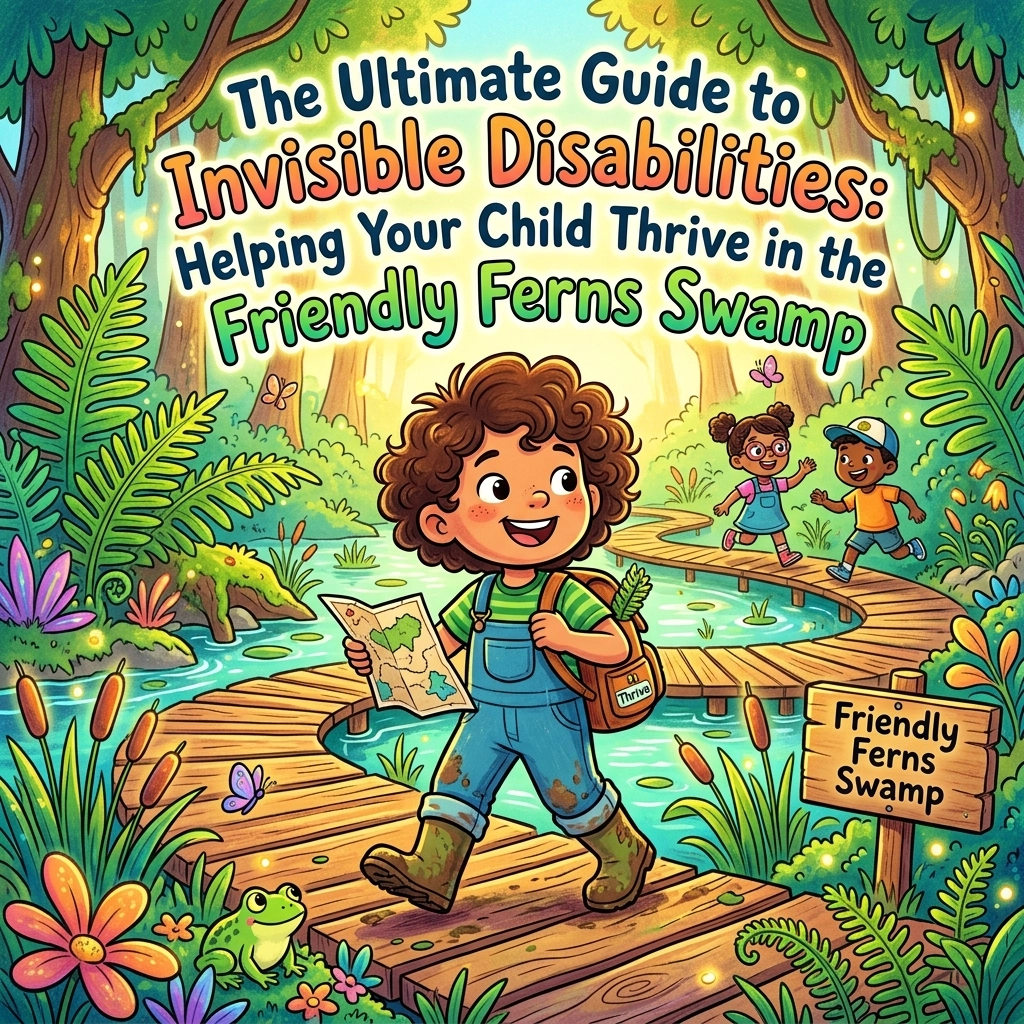
It starts with a look. You’re at the grocery store, and your child is having a complete meltdown because the humming of the refrigerator cases is too loud. To everyone else, it looks like a "tantrum." You’re at a school conference, and the teacher says your brilliant daughter just "isn't applying herself" because she can't seem to sit still or follow a three-step instruction. The weight of these moments, the judgment from strangers and the confusion from educators, can make parents feel like they are sinking in quicksand.
The hardest part of navigating invisible disabilities (conditions that aren't immediately apparent to the naked eye) is the constant need to explain, justify, and defend your child’s reality. Unlike a broken leg or a wheelchair, there is no visual cue for ADHD, Autism, Anxiety, or Dyslexia. As Eric Fishon, owner of XTERMIGATOR KIDS, often says, "The struggle isn't that our kids can't do it; the struggle is that the world expects them to do it in a way that doesn't fit their unique wiring."
Identifying the "Hidden" Challenges in the Swamp
When we talk about invisible disabilities, we are looking at a broad spectrum of neurodiversity (the concept that brain differences are natural variations in the human genome). These aren't "defects" to be fixed; they are different ways of processing the world.
In the Friendly Ferns Swamp, every creature has a different rhythm. A dragonfly zips, an alligator glides, and a turtle retreats. But in our modern world, we often demand that the turtle zip and the dragonfly sit still. This mismatch leads to what experts call "masking", the exhausting process where a child tries to hide their symptoms to fit in.
"I spent years wondering why my son could memorize every species of dinosaur but couldn't remember to put his shoes on," shared Sarah, a community member at the Community Connection. "Once we realized it was an Executive Functioning (the mental skills that help us plan, focus, and multitask) challenge, the shame disappeared. We realized he wasn't being 'difficult'; his brain's internal GPS just needed a different map."
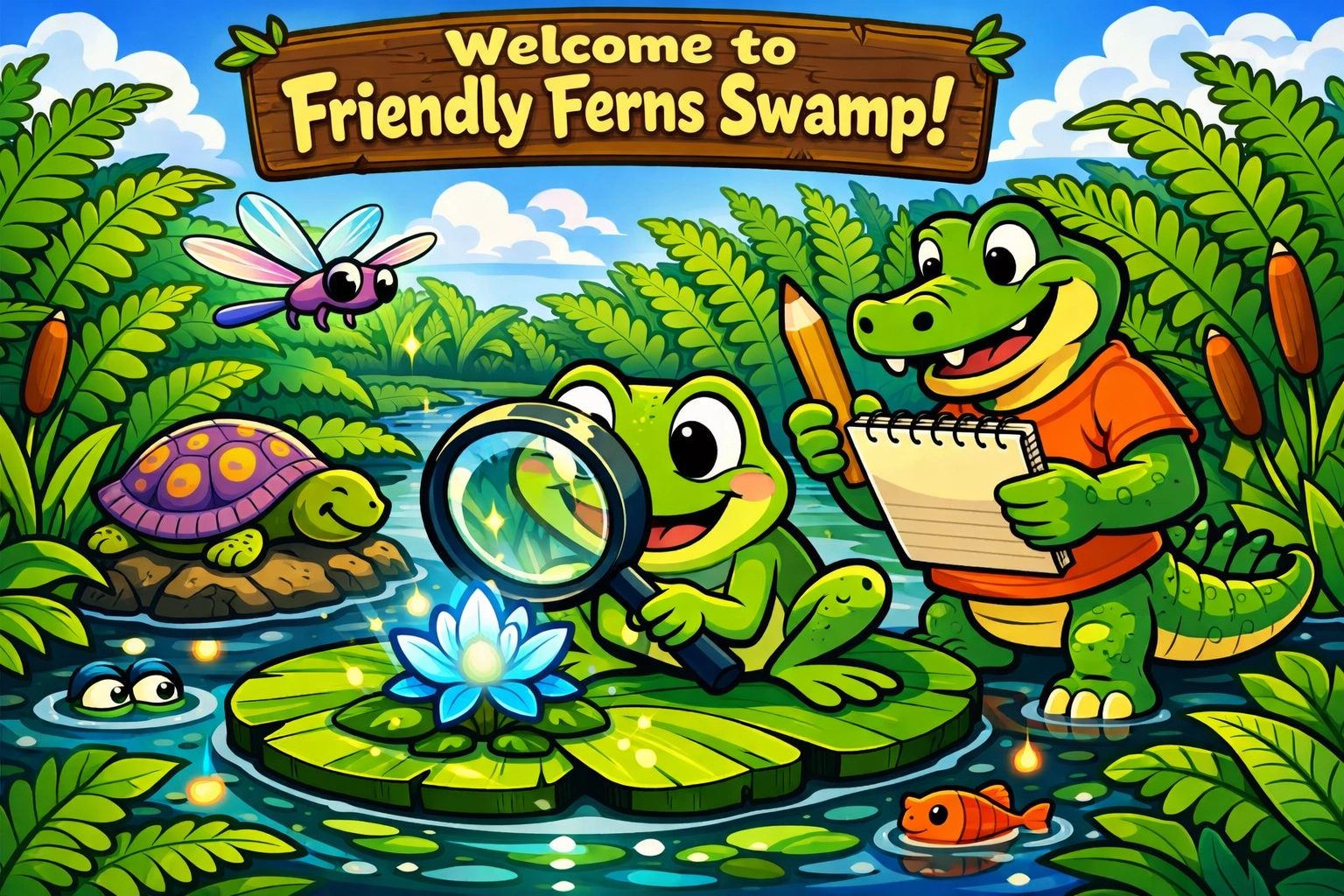
A whimsical illustration of various swamp animals using different tools to navigate, a frog with a magnifying glass, an alligator with a notebook, showing that everyone learns differently.
Turning "Inability" into a Superpower
At XTERMIGATOR KIDS, our core belief is that a disability is not an inability, it’s your greatest superpower. This isn't just a feel-good slogan; it’s a shift in perspective that changes how a child sees themselves.
Consider these common invisible disabilities through the lens of a superpower:
- ADHD (Attention-Deficit/Hyperactivity Disorder): We call this "High-Intensity Awareness." While the world sees a lack of focus, we see a brain that is noticing everything at once. These children are often the most creative problem solvers because they see connections others miss.
- Autism Spectrum Disorder (ASD): Think of this as "Deep-Dive Expertise." The ability to focus intensely on a specific interest allows these children to become true masters of their craft.
- Dyslexia: This is often "3D Spatial Intelligence." Many individuals with dyslexia excel in engineering and the arts because their brains process images and spatial relationships with incredible speed.
- Anxiety: We view this as "Hyper-Vigilant Protection." A child with anxiety is deeply in tune with their environment, often being the first to notice when someone else is upset or when something is out of place.
"When we frame these traits as superpowers, the child stops feeling broken," Eric Fishon explains. "In our book, Xtermigator & the Zoomy Frog, we show how Zoomy’s high energy isn't a distraction, it's what helps him save the day. It’s about finding the right environment for the gift to shine."
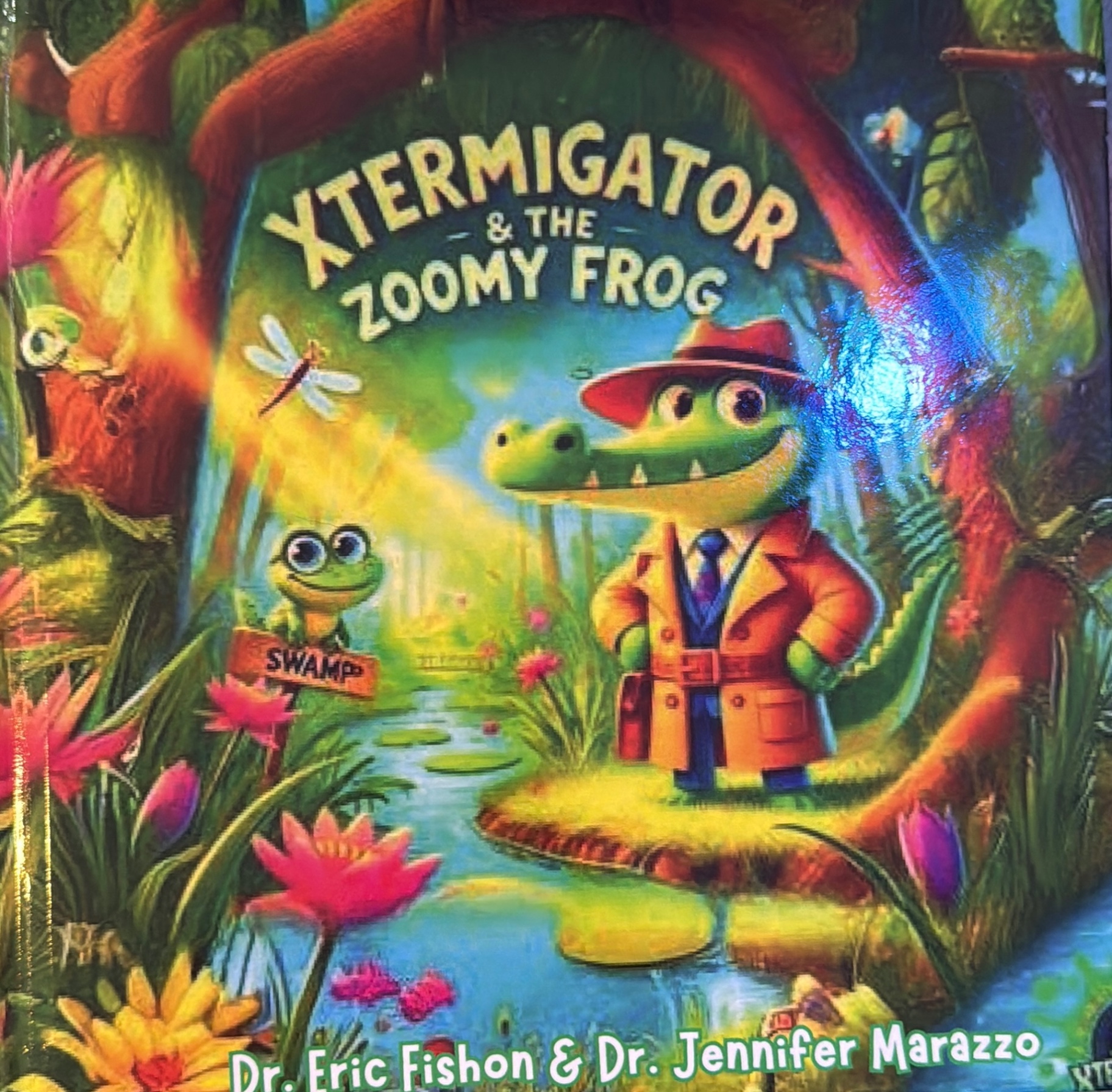
The cover of "Xtermigator & the Zoomy Frog" featuring Xtermigator and a very energetic frog friend in the Friendly Ferns Swamp.
Navigating the School System: IEPs, 504s, and Advocacy
One of the most daunting tasks for any parent is entering the "School Swamp." This is where technical terminology becomes your best friend. To ensure your child thrives, you need to understand the difference between an IEP (Individualized Education Program) and a 504 Plan.
An IEP is a map for specialized instruction. It is for children who require more than just "accommodations", they need a change in what they are learning or how they are being taught. A 504 Plan, on the other hand, is about "leveling the playing field" (providing changes to the environment so the student can learn alongside their peers). This might include extra time on tests, a quiet space for work, or the use of "fidgets" (small toys used to provide sensory input and improve focus).
Tips for your next school meeting:
- Bring a "Superpower Profile": Instead of just listing what your child can't do, start the meeting by listing their strengths.
- Use the "Pause, Ask, Listen" method: If a teacher says your child is "disruptive," pause. Ask, "What was happening in the room right before that behavior?" Listen for sensory triggers like loud bells or bright lights.
- Document everything: Keep a folder of all communications. You can check our FAQ page for more tips on organizing your advocacy efforts.
The Emotional Transformation: From Shame to Confidence
The true "win" isn't just getting an A on a spelling test; it’s the moment a child realizes they are proud of who they are. We call these "Transformation Moments."
I remember a young boy who was terrified of his own "big feelings" (emotional dysregulation). He thought he was a "bad kid" because he got overwhelmed easily. We introduced him to the characters of the Friendly Ferns Swamp, specifically the Xtermigator, who uses his big heart to protect others. We told him, "Your feelings are just a big engine. You just need to learn how to drive the car."
The shift was instantaneous. He went from hiding under desks to becoming a "Peace Captain" in his classroom. He recognized that his sensitivity was actually empathy, a superpower that allowed him to help other kids who were feeling lonely.
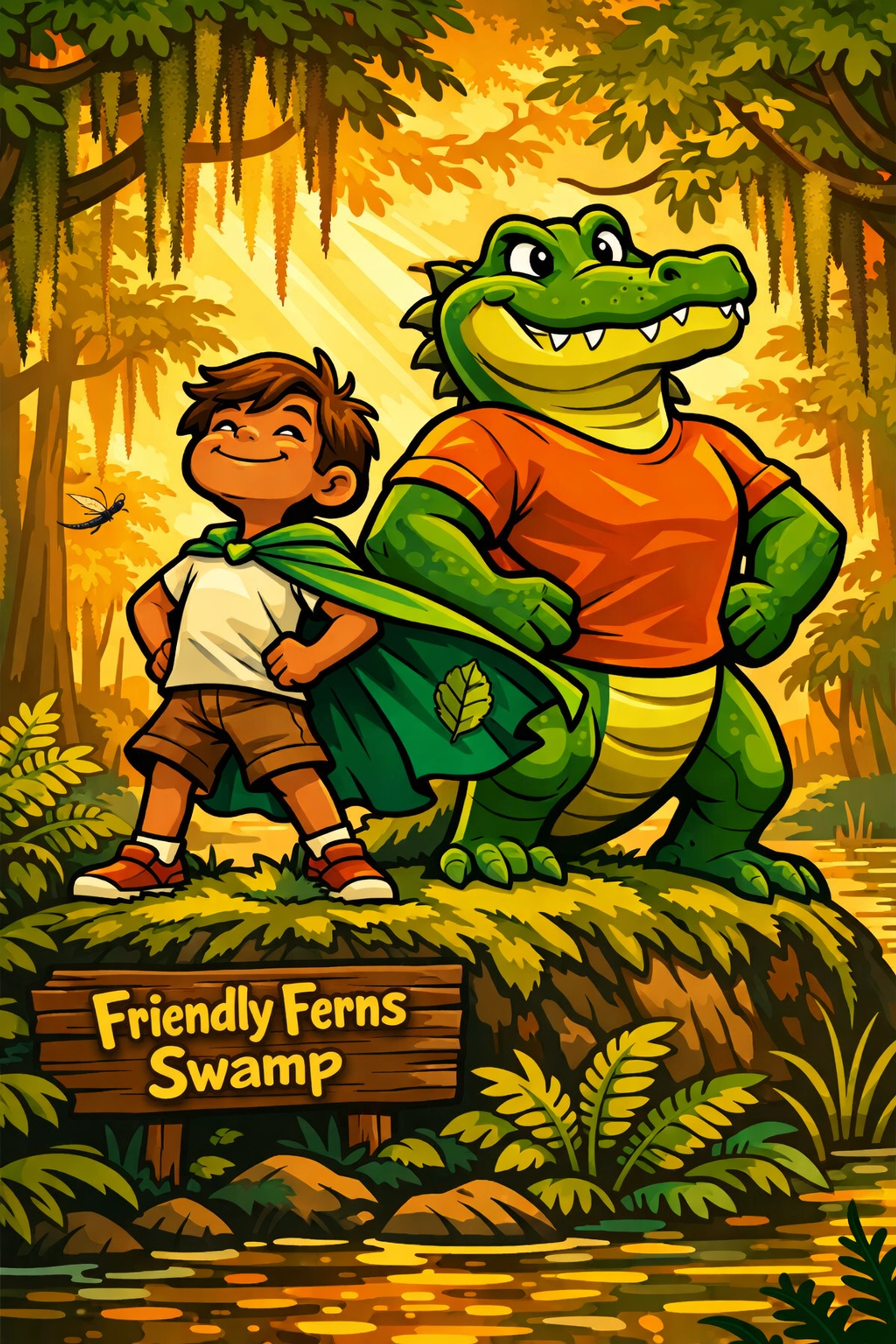
An AI-generated image of a young child wearing a cape with a swamp leaf emblem, standing confidently next to a cartoon alligator.
Building an Inclusive Community
Support shouldn't stop at the school gates. We need a community that understands that "different is beautiful." This is why we created the Community Connection and our forum. It’s a place where you don’t have to explain why your child is wearing noise-canceling headphones at a birthday party.
“Seeing my daughter interact with other kids who ‘get it’ was the first time she didn’t feel like an outsider,” says a parent from our forum. “In the swamp, everyone belongs.”
We encourage parents to be "Inclusion Ambassadors." When you’re at the park and see a child struggling, instead of a judgmental glance, offer a smile of solidarity. Better yet, introduce them to the world of XTERMIGATOR KIDS, where we celebrate the "Zoomy Frogs" and "Shelly Turtles" of the world.
Kindness is a superpower! Our Big Heart Series teaches children how to use their unique traits to spread positivity.
Looking Toward a Neuro-Inclusive Future
As we look ahead, our goal at XTERMIGATOR KIDS is to move beyond "awareness" and toward "acceptance and celebration." We dream of a world where a child walks into a classroom and their teacher asks, "What is your superpower?" rather than "What is your diagnosis?"
We are constantly expanding our resources, from new books in the product catalog to interactive guides for educators. We believe that by teaching children early on that their brains are amazing exactly as they are, we are raising a generation of confident, empathetic leaders.
The journey through the Friendly Ferns Swamp might be misty at times, and you might hit a few patches of thick mud. But remember: you aren't walking alone. There is a whole community of swamp-dwellers ready to lift you up.
Your child’s invisible disability isn't a wall; it’s a door to a different, more vibrant way of seeing the world. Let’s open it together.
Want to dive deeper into our stories? Check out our latest blog posts or join the conversation on our social pages.
Disclaimer: The information provided in this post is for educational purposes and is not a substitute for professional medical advice. Always consult with a qualified healthcare provider regarding any concerns about your child's development or health. Please review our Privacy Policy for more information.